An Anthology of Horror in Five Case Files Based on Original Short Stories by Evonne Smith First Draft — July 2026
FADE IN: INT. CONTAINMENT LAB – NIGHT Darkness, then the stutter-hum of fluorescent tubes waking one by one down a long low ceiling. Cinderblock walls painted the color of old teeth. A biohazard placard bolted to a blast door reads CONTAINMENT LEVEL 3 – AUTHORIZED PERSONNEL ONLY. Rain ticks against a single high window, reinforced with wire mesh. Somewhere deeper in the building, a compressor kicks on with a groan, then settles into a low mechanical breathing that never quite stops. A laminated sign zip-tied to a pipe reads: DECONTAMINATION PROTOCOL MUST BE FOLLOWED BEFORE EXIT. Someone has crossed out MUST with a marker and written, in smaller letters beneath it, ALWAYS. DR. MARA VOSS sits alone at a steel table, mid-forties, sleeves rolled, latex gloves snapped tight at the wrist. Her eyes are red-rimmed from too many nights like this one. A cold cup of coffee sweats a ring onto a case folder. A second, older ring has already dried beside it, and a third beside that — the geology of a very long night, or several. Around her, the table is an archive of terrible things: banker’s boxes swollen with photographs, a reel-to-reel recorder, a corkboard leaned against the wall, empty for now, waiting. A row of specimen containers lines the back counter, most of them empty, labeled, dated, initialed — an administrative calm laid over something that is not calm at all. At the center of it all, inside a clear evidence bag zip-sealed and tagged with a chain-of-custody label, sits a pair of sunglasses — heavy, wraparound, lenses the color of a bruise. Beside the bag: a squat glass jar, lid sealed with wax and tape, hand-labeled in block letters. INSERT – THE JAR LABEL SPECIMEN X. Back to Mara. She stares at the jar a long moment, the way you’d stare at a sleeping animal you weren’t sure was really asleep. Something inside it does not move. And yet. MARA (V.O.) Every outbreak starts the same way. Small. Local. Explainable. A man scratches a bite. A woman waters her flowers. A dog barks at nothing. 2. She pulls a legal pad toward her, uncaps a pen. Her handwriting is small, cramped, the writing of someone trying to fit an enormous thing into a very narrow margin. MARA (V.O.) (CONT’D) By the time anyone calls it what it is, it’s already spread. That’s the pattern. That’s always the pattern. Nobody sounds the alarm over one dead bird. One withered garden. One tired wife. She glances up at the empty corkboard leaning against the wall, as if she can already see the shape of what will eventually cover it — string, pins, names circled in red — and does not like what she sees. MARA (V.O.) (CONT’D) So I’m going to do what nobody else did. I’m going to write down every single one. In order. Before I lose the thread. She reaches for the topmost folder in the stack — thin, unremarkable, a case number stamped on the tab: 01. She opens the folder. Photographs slide loose: a suburban backyard, a bird feeder, an ordinary house with an ordinary porch light. A sticky note clipped to the first photo, in someone else’s handwriting, reads simply: WITNESS STATEMENT UNCHANGED AFTER THREE INTERVIEWS. FLAG. Mara reads it twice. Underlines FLAG with her pen, hard enough to nearly tear the paper. She looks once more at the evidence bag. At the sunglasses inside it, dark and patient. MARA (V.O.) (CONT’D) Case File One. SUPER: “CASE FILE 01 — SOUL-SUCKING NIGHTMARE” EXT. TESS AND GREGORY’S BACKYARD – MORNING CUT TO: Sunlight pours gold through the leaves of an old maple. Dew still clings to the grass, beading on spiderwebs strung between the porch rails like something deliberately hung for decoration. A hand-painted fairy feeder — a tiny shingled roof on a garden stake, thimble bowls for nectar — hangs from a shepherd’s hook, swaying gently in a breeze too faint to feel. 3. Birdsong. Real, layered, unhurried: chickadees, a cardinal’s bright three-note call, the papery flutter of wings settling and resettling on a feeder pole. It is, by any measure, a perfect morning — the kind that makes a person believe, for a while, that nothing bad has ever happened here or ever will. TESS, early thirties, still in a soft cotton robe, moves along the flower beds with a watering can, humming. She’s lovely in the unguarded way of someone who thinks no one’s watching. The humming becomes words — an old childhood song, half-remembered, sung under her breath. TESS (singing, quiet) …hush now, hush now, don’t you cry… the green things sleep till morning… She trails off, smiling faintly at the memory, and tips the can over a bed of marigolds. A cardinal drops onto the fairy feeder, dips its beak into the nectar. Tess watches it, delighted, forgetting the watering can until it overflows onto her slipper. She doesn’t seem to mind. She crouches at the marigold bed, fingers working gently through the soil, checking for the little green spears of something she planted weeks ago and has been waiting on ever since. TESS (to the flowers) Any day now. I know you’re in there. TESS (CONT’D) Oh — okay. Okay, I see you. She laughs at herself, sets the can down. And then, mid-laugh, something changes in her face. Small at first. A flicker. Her shoulders dip, as though a hand has come down flat on her back and pressed. She straightens, frowning, rolls her neck. TESS (CONT’D) (to herself) Weird. 4. The birdsong continues, indifferent. Tess breathes out, rubs the base of her neck with her knuckles, right where the skull meets the spine. There’s nothing there. Of course there’s nothing there. But the weight doesn’t lift. If anything, it settles, like something curling in to get comfortable. CLOSE ON TESS’S FACE The morning light is still gold. Her smile is still there. But her eyes have gone distant, glassy, the particular exhaustion of someone who has been quietly bled for a long, long time and has never once thought to ask why. She picks up the watering can again. Her arm trembles with the weight of it — an ordinary half-full watering can, nothing more. TESS (CONT’D) (to herself, softer) Come on. Come on, Tess. She keeps working. Bends for the trowel she dropped in the grass, and the effort of it — a simple thing, a bent knee, an outstretched hand — costs her more than it should. She has to brace a palm against her thigh to push herself back up, breathing through it like a woman twice her age. The cardinal watches her from the feeder, head cocked, utterly still, and does not fly away even when she straightens up an arm’s length from it. It simply watches, the way something watches a thing it has already decided is not a threat, and never will be again. INT. TESS AND GREGORY’S HOME – HOME OFFICE – DAY CUT TO: A small room off the kitchen, repurposed — a desk crowded with mugs, a corkboard of sticky notes, a laptop throwing pale light across Tess’s face. Through the window behind her: the yard, the feeder, the maple, all inches away and a world apart. Tess sits hunched, fingers hovering over the keyboard. She types a sentence. Deletes it. Types another. A space heater ticks under the desk, though the day outside is warm — she’s had it running for weeks now, unable to shake a cold that lives somewhere under her skin and never quite becomes a fever. 5. On the desktop, a document titled UNTITLED_STORY_DRAFT_9. Barely a paragraph in. Above it, in the browser’s other tabs: WHY AM I SO TIRED ALL THE TIME. IRON DEFICIENCY SYMPTOMS. IS IT NORMAL TO SLEEP 9 HOURS AND STILL. She hasn’t clicked into any of them today. She hasn’t clicked into any of them any day, really — just opens them, lets them sit there accusing her, and goes back to work. She stares out the window at a nuthatch working its way headfirst down the maple’s bark. TESS (muttering) Focus. She doesn’t move. The birdsong is muffled now, filtered through glass, the way everything good in her life seems lately to reach her secondhand — beautiful, and just out of reach. Her reflection ghosts faintly in the window glass, superimposed over the yard outside. For one unsettling beat, there’s a suggestion of something behind her shoulder in the reflection — a curve, a shadow — gone the instant she shifts in her chair. She rubs her eyes. Types again. The heaviness sits on her like a favorite blanket she can no longer remember choosing — familiar, suffocating, hers. TESS (CONT’D) (to the screen) Where was I going with you. She scrolls up, rereads what little she’s written, and her mouth twists — dissatisfaction, or something closer to grief, over a sentence that used to come so much easier than this. TESS (CONT’D) (muttering) You used to be good at this. She glances at the clock in the corner of the screen: 11:14 AM. She sighs, cracks her knuckles, tries again. Her phone buzzes once on the desk — a reminder notification, GREG’S CAKE – START BY 3, and she silences it without reading it fully, already knowing. The nuthatch outside finishes its bark and flies off. Tess watches it go, envious, before dragging her eyes back to the glowing rectangle in front of her — trapped indoors, again, by a deadline and by something she couldn’t name even if she tried. 6. CUT TO: INT. TESS AND GREGORY’S HOME – KITCHEN – AFTERNOON A wall calendar. Today’s date is circled twice in red marker, and beneath it, in Tess’s handwriting: GREG’S BDAY!! ‘ Tess stands at the counter, suddenly transformed — sleeves pushed up, a smear of flour on her cheek, moving with a new urgency that has nothing to do with exhaustion and everything to do with love. She checks the oven clock: 3:59 PM. TESS Okay. Okay okay okay. She’s baking. A German chocolate cake — from scratch, the real thing, a bowl of coconut-pecan filling cooling on a rack, cake layers already golden and resting under a dish towel. Cocoa powder dusts the counter like ash, and a fine film of it clings to her forearms all the way to the elbow, the mark of someone who has stopped being careful and started simply working. A battered recipe card sits propped against the mixer, handwriting gone soft and gray with age — not hers. GRANDMA’S GERMAN CHOCOLATE, and under the title, in smaller pencil: for G, every year, no substitutions. She works fast, humming the same half-remembered childhood tune from the garden, faster now, urgent, a little frantic with joy. TESS (CONT’D) (singing, rushed) …hush now, hush now, don’t you cry… She catches her own reflection in the toaster’s chrome side — a fast, distorted glimpse of herself, and for a fraction of a second, something rides high on her shoulder in the reflection. She blinks. Looks directly at her own shoulder. Nothing. She shakes it off, keeps moving. A wave of dizziness catches her mid-stir, and she grips the counter edge until it passes, breathing slow through her nose, waiting it out the way you’d wait out a wave of nausea on a boat — something you’ve learned to ride rather than fight. TESS (CONT’D) 7. (muttering, to no one) Not now. Not today. One day off, that’s all I’m asking. The moment passes. She straightens, blinks the spots from her vision, and keeps moving like nothing happened at all — because to her, by now, nothing has. Spreads the coconut-pecan filling between the layers with the back of a spoon, licks a thumb, checks the clock again — 4:21 PM — and startles. TESS (CONT’D) Time. Time, time — She strips off her apron, catches it before it falls, refolds it over a chair, and hurries out of frame toward the stairs, cake finished and glistening on its stand behind her like a small, defiant monument to a good day. INT. TESS AND GREGORY’S HOME – BEDROOM – AFTERNOON CUT TO: Late-afternoon light slants through gauzy curtains, striping the quilt in warm gold bars. On the bed: a box, mid-wrap, tissue paper crumpled to one side, a spool of ribbon unspooling across the quilt. Tess kneels over it, tongue caught between her teeth in concentration, folding a crease of wrapping paper with the precision of someone who has always taken gift-wrapping far too seriously, and loves that about herself. On the nightstand, a framed photo: Tess and Gregory, younger, laughing at some long-ago beach, her hair whipped sideways by wind, his arm slung easy around her shoulders. Tess glances at it as she works, and something in her face softens, gratitude and worry tangled together in equal, wordless measure. Inside the open box, nestled in tissue: a pair of sunglasses. Sleek, heavy-framed, the lenses an oddly deep, syrupy black-violet — clearly not off any ordinary store rack. A small holographic sticker on the inner arm reads: WIDE-SPECTRUM / LTD. 20 OF 20. TESS (to the glasses, conspiratorial) You are going to make his whole year. 8. She lifts them, turns them over in the window light. The lenses catch the sun strangely — not a normal glassy shine, but a deep, swimming iridescence, like oil on dark water. She hesitates. Glances toward the door. Then, almost guiltily, brings the glasses halfway up to her own face. TESS (CONT’D) (quiet, to herself) Just a peek — She stops herself an inch away, laughs under her breath, lowers them back into the box. TESS (CONT’D) No. No, they’re his. Let him be first. She folds the tissue back over them with real tenderness, closes the box, wraps it fast and neat, finishes with a curl of ribbon she ties into a bow with a practiced flick of the wrist. She tucks a small handwritten card under the bow: HAPPY BIRTHDAY, MY LOVE — T. She stands, smooths her robe — now traded for a sundress, we realize, time slipping — and slides the wrapped box under one arm. Her legs protest the movement, a bone-deep tiredness that has no business living in a woman her age, and she has to pause, one hand braced on the bedpost, waiting for the room to stop tilting. TESS (CONT’D) (quiet, almost amused) What is wrong with me lately. It isn’t really a question. She doesn’t wait for an answer she wouldn’t get anyway. On her way past the dresser, she catches sight of herself in the mirror. In the mirror’s reflection, behind her right shoulder, for just an instant — barely long enough to register — the air seems to bend, a smear of wrongness like heat shimmer over asphalt. She doesn’t turn around. She’s already moving, tucking the last curl of ribbon into her apron pocket for luck, humming her tune, heading for the stairs — and behind her, in the mirror, left alone in the empty room, the smear of wrongness lingers a half-second longer than it should before the glass goes still again. CUT TO: EXT. TESS AND GREGORY’S HOME – DRIVEWAY – LATE AFTERNOON 9. The street is quiet, suburban, lined with maples going amber at the edges. A mail truck idles two doors down. Somewhere a lawn sprinkler ticks in slow arcs. Tess stands on the porch, cake box in one hand, wrapped gift tucked against her hip, watching the street with the coiled-spring patience of someone counting down the last thirty seconds before a surprise. A sedan rounds the corner — familiar, a little dented at the bumper, exactly on time. TESS (to herself, delighted) There he is. GREGORY’s car pulls into the driveway. He’s mid-thirties, tie loosened, looking like a man who’s spent all day wishing he were already home. He cuts the engine, and through the windshield we see his face change the moment he sees her standing there. INT./EXT. GREGORY’S CAR – DRIVEWAY – CONTINUOUS Gregory climbs out, briefcase forgotten on the passenger seat, and crosses the driveway toward her at something between a walk and a jog. GREGORY Is that — TESS Happy birthday. She lifts the cake box lid just enough for him to see the German chocolate cake inside, its coconut-pecan frosting swirled thick over the top. GREGORY (genuinely moved) Tess. You didn’t have to — TESS I wanted to. She sets the cake on the porch rail, takes a breath, and — a little off-key, completely unashamed — sings. TESS (CONT’D) (singing) Happy birthday to you, happy birthday to you, happy birthday, dear Gregory — 10. Gregory laughs, embarrassed and delighted, glancing at the empty street like the neighbors might be watching. TESS (CONT’D) (singing, finishing) — happy birthday to you. She holds out the wrapped gift. Gregory takes it like it’s something precious, turns it over once, admiring the wrap job. GREGORY You always do the ribbon like this. I still don’t know how. TESS Trade secret. GREGORY (grinning) I’m saving the paper. You know I’m saving the paper. TESS I know you’re saving the paper. You save every piece of paper I’ve ever wrapped anything in. We have a drawer, Gregory. GREGORY A good drawer. He carefully works a finger under the taped seam instead of tearing it, peeling the paper back with the reverence of a man who genuinely means it when he says he’ll keep it. TESS You’re so slow. It’s like watching a bomb technician. GREGORY Some of us respect the craftsmanship. TESS Some of us want cake before it gets dark, Gregory. He laughs, glances up at her — really looks at her, the way you look at someone you’ve loved long enough to have stopped seeing clearly, and then, once in a while, suddenly do again. 11. GREGORY (quieter, sincere) You didn’t have to do all this. The cake alone would’ve killed me with happiness. TESS It’s your birthday. I like doing all this. Something flickers behind her eyes when she says it — a tiredness that doesn’t belong in a sentence about liking something, gone again before he can clock it. EXT. TESS AND GREGORY’S HOME – PORCH – MOMENTS LATER CUT TO: Gregory lifts the sunglasses from the tissue paper, and his face opens into real surprise. GREGORY Tess. These are — He turns them over, finds the little holographic sticker. GREGORY (CONT’D) Twenty of twenty? Where did you even — TESS Pop-up stand, out by the farmer’s market. Guy said there’s only twenty pairs in the whole country. Wide-spectrum something. I don’t totally understand what they do, honestly, but he made it sound very important and very expensive, so. GREGORY (laughing) So you bought them. TESS I bought them. Gregory slides the sunglasses on — carefully, over his own prescription glasses, and they fit with a surprising, satisfying snugness, like they were built to layer over another lens. GREGORY Huh. They actually fit over these. TESS 12. That’s what the guy said. Wide enough to layer. Something about the frame being designed for people who already — GREGORY (overlapping, teasing) — have four eyes. Yeah, I got it, thank you. He turns his face up and down the street, testing them. Beat. His posture changes — subtly, the small full-body stillness of someone genuinely startled by what they’re seeing. GREGORY (CONT’D) (quiet) Oh — whoa. What? TESS GREGORY The colors. Tess, look at the — the maple, it’s like every leaf has its own — I can see the veins in the leaves from here. He turns, taking in the whole yard through the lenses — the grass, the fairy feeder swaying on its hook, the last low sun cutting gold through the branches — and for a moment he’s a kid again, delighted by something as simple as really, truly seeing. GREGORY (CONT’D) Come here. You have to see this. TESS (laughing) It’s my present, I already know what the yard looks like — GREGORY No — no, come here, try them, just for a second — He’s already lifting the glasses off his own face, holding them out to her, grinning, oblivious. Tess steps closer, laughing, reaching for them. TESS Okay, okay — one look — 13. She takes the glasses from his hand. Slides them on over her own eyes. CLOSE ON TESS Her breath catches — a small, private gasp of pleasure at whatever she’s seeing. The colors. The clarity. For one golden beat, she is simply happy, sunglasses on, cake behind her, husband in front of her, evening settling gold and soft over the yard. TESS (CONT’D) (delighted) Oh — Gregory, the flowers, they’re — I can see the little hairs on the — She trails off, turning slowly, taking it all in — the marigolds, the fairy feeder, the maple — and Gregory watches her with the soft, helpless love of a man watching his wife enjoy a gift he gave her. He reaches out, almost idly, and takes the glasses back from her face, gentle, still grinning. GREGORY My turn again. Fair’s fair, it’s my birthday. TESS (laughing, swatting at him) You’re impossible. He slides them back onto his own face, over his glasses, still smiling, still looking at her — his wife, laughing on the porch in the last of the light. He looks past her, at the yard, taking one more long, wondering look at all that unbelievable color and clarity. Then his eyes drop. To her shoulders. To her back. His smile does not fall all at once. It simply stops. GREGORY (CONT’D) (barely audible) …Tess. TESS (still laughing, not hearing the change in him) What, is there frosting on my — Don’t move. GREGORY 14. Something in his voice — flat, wrong, too controlled — finally reaches her. Her laughter dies. TESS Gregory? CLOSE ON GREGORY’S FACE, THROUGH THE LENSES His pupils have gone wide and fixed, the particular blown stillness of a man watching something his mind is refusing, in real time, to process. REVERSE ANGLE – WHAT GREGORY SEES Through the wide-spectrum lenses, the ordinary porch light bends into something else — the world rendered in the same lurid, swimming iridescence the sunglasses showed back in the bedroom, colors too rich, edges too sharp, the visible spectrum torn open to show what’s always been hiding just past the edge of human sight. And there, mounted on Tess’s back, is the thing. It clings the way a growth clings — low, wide, its body a slick reptilian mass the sickly green-black of something that has never once seen sun, ribbed along the spine like the underside of a lizard, glistening with a mucosal sheen that catches the light in ugly rainbows. It has no head. It has no tail. Where a head should rise from its foreshortened body, a cluster of tentacles fans instead — thin, muscular, faintly translucent, pulsing in slow, wet rhythm, each one tapering to a needle-fine tip. One tentacle, thicker than the rest, disappears into the base of Tess’s skull, sunk to the hilt where spine meets brainstem, buried so deep and so cleanly that no blood shows at the entry — only a faint, obscene throb along its length, in perfect time with something like a heartbeat that isn’t hers. A second tentacle plunges lower, driven between two vertebrae into the long line of her spine, anchored there, twitching with slow, greedy pulses that ripple upward through its translucent length — visibly drawing something bright and pale and unmistakably vital from her body into its own. The creature’s flank rises and falls. Breathing. Feeding. Patient as rot. 15. Along its ribbed underside, smaller vestigial tendrils twitch and curl against Tess’s skin without breaking it, gentle as a lover’s fingers, holding her steady while the larger tentacles do their slow, terrible work. Where they meet her spine, her skin does not tent or bruise or bleed — it simply accepts, the way old wood accepts a nail driven true. And faintly, underneath the wet clicking rhythm of its breathing, there is a sound almost like contentment. A low, satisfied thrum, felt more than heard, the sound of something that has found a good place to live and intends to stay there for a very long time. BACK TO GREGORY He staggers back a step, glasses still on, hand flying to his mouth. TESS (alarmed now) Gregory, what — what’s wrong, what do you see — He can’t answer. His throat works. No sound comes. TESS (CONT’D) Gregory! She reaches for him — and reflexively, without thinking, he flinches back from her outstretched hand, as though touching her might somehow touch it. The gesture wounds her more than any words could. Hurt floods her face. TESS (CONT’D) (small) …Gregory? He rips the sunglasses off his face in one violent motion, chest heaving. CLOSE ON TESS’S BACK, NAKED EYE Nothing. Just her sundress, her shoulder blades, the last of the sun catching the fine hairs at the nape of her neck. Ordinary. Untouched. Beautiful and whole. Gregory stares at her back with his bare eyes, gasping, and there is nothing there at all. TESS (CONT’D) Talk to me. Please. You’re scaring me. 16. GREGORY (hoarse) It’s — it’s nothing. It’s fine. TESS It is not nothing, you look like you saw a — She stops herself before finishing the sentence, some animal instinct telling her not to name it out loud. Gregory forces his face into something like calm — badly. His hand trembles as he folds the sunglasses closed. GREGORY Long day. Low blood sugar, probably. I haven’t eaten since lunch. TESS (not believing him, but wanting to) …Okay. He manages something close to a smile. Reaches out — carefully, deliberately, forcing himself through the flinch this time — and takes her hand. GREGORY Let’s go eat cake. It’s my birthday. I want cake with my wife. She lets herself be led, glancing back once at her own shoulder as if she might catch whatever he saw if she’s fast enough. She isn’t. INT. TESS AND GREGORY’S HOME – KITCHEN – EVENING CUT TO: Warm lamplight now, the overheads left off. The cake sits center-table, two candles already burning low, wax pooling at their base — lit sometime in the confusion, forgotten. Gregory sets the folded sunglasses down on the table, very deliberately, the way you’d set down something that might go off. He stares at them a beat too long. TESS (gently, testing) Hey. 17. GREGORY (startled out of it) Hey. Sorry. I’m — I’m here. TESS You don’t seem here. He looks at her — really looks, searching her face for something, though he couldn’t say what — and something in his expression softens into an aching tenderness that doesn’t match the words he says next. GREGORY Thank you. For these. For — all of it. The cake, the — everything. It’s the best birthday I can remember. TESS (quiet smile, still worried underneath) You’re welcome. He glances toward the hallway. GREGORY I’m gonna go wash up. Long day. Give me two minutes. TESS Gregory — GREGORY Two minutes. I promise. He kisses her forehead — lingers there a half-second too long, eyes closed, as if memorizing the shape of her skull under his lips, right at the base where it meets her neck — then pulls away and exits toward the hall, leaving the sunglasses folded on the table between the candles. Tess watches him go, uneasy, one hand drifting unconsciously to the back of her own neck, rubbing at a spot that has ached, quietly, for longer than she’s ever mentioned to anyone. She shakes it off. Turns to the cake. Blows out the two low candles herself, since he isn’t there to do it, and begins slicing into the coconut-pecan frosting with the too-bright cheer of a woman who has decided, for tonight, not to ask any more questions. 18. TESS (CONT’D) (to the empty kitchen, softly) Happy birthday, Greg. She cuts two slices. Sets them on two plates. Behind her, through the dark kitchen window, the yard sits perfectly still — the fairy feeder motionless, the maple black against a purpling sky, nothing at all remarkable to see. The camera holds on her back as she works, unhurried, patient, the exact spot at the base of her skull catching the last warm flicker of the candles’ smoke. DISSOLVE TO: INT. CONTAINMENT LAB – NIGHT Back in the fluorescent hum. Mara sits exactly where we left her, the case file open, photographs of the fairy feeder and the porch and the wrapped gift box fanned across the table like tarot cards that spell out something she doesn’t want read aloud. She sets down her pen. For a long moment she simply looks at the evidence bag. At the sunglasses inside it. MARA (V.O.) The husband’s statement never changed, all three interviews. He said he saw something on his wife’s back. He said it had no head. Just — arms, is the word he used. Arms where the head should be. She reaches out, unzips the evidence bag with a gloved thumb and forefinger, the sound of it obscenely loud in the quiet room. MARA (V.O.) (CONT’D) He said one of the arms went into the base of her skull. Another into her spine. He said it looked like it was drinking her. She lifts the sunglasses free of the bag. Heavy in her hand. The lenses catch the fluorescent light in that same deep, swimming, oil-on-water iridescence, and for just a fraction of a second — barely a flicker, gone before she can be sure she saw it — something shifts in their depths, a smear of wrong color where there should only be reflection. 19. Mara turns them over slowly, studying the small holographic sticker. WIDE-SPECTRUM. LTD. 20 OF 20. MARA (V.O.) (CONT’D) Nineteen other pairs like this went out from that stand before anyone thought to shut it down. She sets the sunglasses back on the table — not into the bag, just down, deliberate, like she’s setting a trap she can’t quite bring herself to spring. Beside them, the sealed jar sits in its wax and tape, SPECIMEN X facing outward, utterly still. Mara looks between the two objects — the glasses, the jar — and something crosses her face that isn’t quite fear yet, but is standing very close to it. She pulls the next folder off the stack. Case number: 02. MARA (V.O.) (CONT’D) Case File Two. She opens it. Doesn’t look up. FADE OUT. SUPER: “CASE FILE 02 — WHERE THE GREEN THINGS GROW” EXT. LAKESIDE TRAIL – MORNING Sunlight breaks through a canopy of oaks. A gravel path curls along the edge of a koi lake, its surface stitched with lily pads. Flower bushes line the shore — hydrangea, azalea, something with waxy red blooms too vivid to be real. GREGORY, fifties, windbreaker, a face that still carries a private grief behind an easy smile, walks with ALISSA, warm, sharp-eyed, late forties. Between them on a leash trots SADIE, a beagle with her nose to the gravel, tail going like a metronome. ALISSA You didn’t sleep again. GREGORY I slept. ALISSA You did the thing where you lie very still and pretend. GREGORY That’s called resting. ALISSA 20. That’s called lying to your wife with your eyes closed. GREGORY (a tired smile) I had a long night. Brain wouldn’t quit. ALISSA Anniversary of something? GREGORY (a beat too long) Something like that. She doesn’t push. She’s learned not to. She bumps his shoulder with hers instead. Sadie yanks the leash toward the koi lake, front paws skidding. ALISSA Sadie. Sadie, no fish today. The koi glide beneath the surface, orange and white, mouths opening at the water like small hungry moons. Gregory watches them a beat too long, something distant in his eyes. GREGORY You ever look at something beautiful and just — brace for it to be wrong? ALISSA That’s very specific therapy talk for eight in the morning. GREGORY (shaking it off) Forget it. Nice morning. ALISSA Nice morning. They walk on. Bees drone in the flower bushes. Somewhere a woodpecker works a dead branch like a drumroll. EXT. LAKESIDE TRAIL – BEND IN THE PATH – CONTINUOUS The trail narrows where the bushes crowd in. Coming the other way: an OLD MAN, seventies, weathered as bark, wearing a canvas coat too heavy for the weather. He carries a rusty metal bucket in both arms, cradled against his chest like something precious. 21. Inside the bucket, just visible over the rim — plants. Thick-stemmed, unnaturally green, and they seem to breathe. A slow, wet pulse, in and out, like a lung. Gregory doesn’t see him in time. Rounding the bend at the same moment, they collide shoulder to bucket. The bucket tips. CLOSE ON THE BUCKET Rusty rim scraping gravel. The plants spill out onto the shoreline mud in a heap of pulsing green — stems curling and uncurling on their own, roots twitching like fingers grasping at air. OLD MAN (guttural, half-shouted) Nee! Nee, wat heb je gedaan — GREGORY Whoa — hey, I’m sorry, let me — Gregory crouches fast, reaching for the spilled plants to scoop them back. The old man SWATS his hand away, hard, a crack of old-man strength that startles Gregory backward. OLD MAN Niet aanraken! Do not touch! Gregory, thrown off balance, stumbles into Alissa. Alissa staggers, grabs for the leash to steady herself — and yanks Sadie directly into the spilled pile of plants. Sadie’s paws churn through mud and pulsing stems, sending a spray of dirt and one tumbling plant skittering across the gravel. For one absurd second, all four of them — Gregory, Alissa, Sadie, and the furious old man — are tangled at the edge of the koi lake in a mess of mud and living green. Alissa can’t help it. She laughs — a startled, helpless bark of a laugh. ALISSA Oh my god — I’m so sorry — Sadie, off, off — The old man is not laughing. He drops to his knees in the mud, scooping his plants back into the bucket with a desperate, reverent urgency, muttering under his breath in short furious bursts — half Dutch, half German, none of it kind. OLD MAN 22. Dummkopf — kijk uit waar je loopt — GREGORY I really am sorry. Let me help you carry — OLD MAN (rising, bucket clutched tight) No help. No. He gives Gregory one last look — not quite fear, not quite fury, something colder than both — then turns and stomps off down the trail, coat flapping, bucket rocking with its strange cargo. Alissa wipes mud off her palms, still grinning. ALISSA Well. That was our excitement for the week. GREGORY (looking after him) Did you see what was in that bucket? ALISSA Some kind of houseplant having a very bad day. Sadie noses at something in the gravel. Gregory looks down. INSERT – THE LEFTOVER PLANT A single seedling, no taller than a finger, forgotten in the scramble. Small. Almost cute. Its thin stem pulses — a slow visible throb, expanding and contracting, like a heartbeat under green skin. Tiny tendrils at its base flex, testing the air. ALISSA (CONT’D) He left one. GREGORY (picking it up, careful) Huh. Feel that? He crouches at the water’s edge a moment, watching the koi drift beneath the surface, the seedling cupped in his palm. Something in the stillness of the lake, the dumb patient mouths of the fish, seems to settle him. 23. GREGORY (CONT’D) (almost to himself) Tess would’ve loved this. She always wanted a greenhouse. Kept saying next spring, next spring. Alissa goes quiet, unsure whether to step into that name or step around it. She chooses gently. ALISSA You don’t have to keep it if it makes you sad. GREGORY (shaking his head, standing) No. No, I want to. Feels like — I don’t know. Feels like something good, finally. He holds it out. Alissa touches a leaf with one finger and pulls back at the pulse under it. ALISSA That’s — that’s not normal, right? Plants don’t do that. GREGORY Maybe it’s a pulse-plant. Some new hybrid thing. There’s always some new hybrid thing. ALISSA We should find him. Give it back. They look down the trail. Empty. The bushes rustle where he passed, and then even that stills. GREGORY He’s gone, Liss. ALISSA (uneasy) He seemed really protective of them. GREGORY (turning the seedling in his fingers, oddly charmed) Yeah, well. Finders keepers. 24. He tucks it carefully into his jacket pocket, cupping the fabric so it won’t get crushed. Sadie noses at his pocket, sniffing, and sneezes. They start walking again, back toward the trailhead, the koi lake glinting gold behind them. CUT TO: INT. GREGORY AND ALISSA’S HOUSE – BACK PORCH – LATER A sunny porch, wicker furniture, a row of terracotta pots along the railing, mostly empty, one with a dead fern nobody’s thrown out. Gregory sets an empty clay pot on the railing and packs it with soil from a bag Alissa holds open for him. Sadie lies in a patch of sun nearby, watching with mild curiosity. ALISSA You sure you want to keep something that came out of a mystery bucket? GREGORY It’s a plant, Liss. Worst case it dies. Best case, free plant. He nestles the seedling into the center of the pot, presses soil around its base with both thumbs, gentle, almost tender. GREGORY (CONT’D) There. Welcome home. The plant’s single thin leaf twitches — toward the sound of his voice, or toward nothing at all. Alissa watches it a beat too long. ALISSA It’s already bigger than it was on the trail. GREGORY It’s been like twenty minutes. ALISSA I’m just saying. She sets the pot in the brightest corner of the porch, where the afternoon sun pools longest, and dusts the soil from her hands. CUT TO: 25. INT. GREGORY AND ALISSA’S HOUSE – BACK PORCH – THE NEXT MORNING Early light, dew still on the railing. Alissa steps out in a robe, coffee mug in hand, and stops dead. ALISSA Gregory. Gregory, come look at this. Gregory shuffles out behind her, hair a mess, one shoe on. GREGORY What, what is it — He follows her gaze to the corner pot. The seedling has DOUBLED. What was a single thin stalk is now a small thicket, three stems thick as pencils, dark waxy leaves fanned wide, tendrils curling delicately around the porch railing’s spindles like it’s already testing the shape of the world beyond the pot. GREGORY (CONT’D) That’s — that grew that much overnight? ALISSA Overnight. It was this tall yesterday. (holding her hand a foot off the pot) Now look at it. GREGORY (a low, delighted laugh) Maybe the old man knew what he had. Some kind of miracle grow. ALISSA Maybe he was trying to get rid of it. Gregory checks his watch, curses under his breath. GREGORY Okay — we are now extremely late. They both scramble — Gregory grabbing his bag, Alissa nearly upending her coffee, Sadie barking at the sudden flurry of motion. The screen door slaps shut behind them. Through the porch glass, the plant sits in its patch of sun, leaves fanned, utterly still. Almost patient. 26. CUT TO: INT. GREGORY AND ALISSA’S HOUSE – BACK PORCH – THAT EVENING Long golden light. The plant has doubled again — no longer contained by the pot’s rim, stems spilling over the terracotta lip, reaching the low wooden trellis bolted to the porch post six feet away. Two tendrils have already looped themselves around the trellis slats. Sadie trots up, curious, nose extended toward a low-hanging leaf. Alissa’s voice from inside, sharp through the screen door. ALISSA (O.S.) Sadie! Sadie, get away from that — come here, girl. Sadie hesitates, gives the leaf one last sniff, then trots off toward the door as Alissa opens it and claps her hands. The porch door SLAMS shut behind the dog. Silence but for the tick of the cooling day. A car door. Gregory’s headlights swing across the driveway. He comes up the walk, tie loosened, and stops at the porch steps, staring. GREGORY Liss — ALISSA (O.S.) (through the screen) I see it. He climbs the steps slowly. The plant isn’t just bigger now — it’s MOVING. Visibly. A tendril at the pot’s edge extends, curls, extends again, reaching for the trellis rail inch by inch in real time, like a time-lapse played at the wrong speed. GREGORY (quiet, disbelieving) It’s — Liss, it’s growing right now. Right in front of me. He watches, transfixed, as a second tendril unspools from a stem and finds the trellis, wrapping once, twice, cinching tight. Alissa cracks the screen door. ALISSA 27. Get inside. Now. GREGORY It’s just a plant — ALISSA Gregory. Something in her voice — not panic, but the flat certainty of a person who has decided fear is the correct response — gets through to him. He backs off the porch steps and slips through the door. She locks it behind him. INT. GREGORY AND ALISSA’S HOUSE – KITCHEN – CONTINUOUS They stand at the sliding glass door that looks onto the porch, Sadie between their ankles, all three watching. Through the glass, in the fading light, the plant continues its slow, patient conquest of the trellis — vine after vine lacing through the lattice, leaves unfurling audibly, a faint dry crackle carrying even through the glass. ALISSA Tell me that’s not what I think it is. GREGORY I don’t know what you think it is. ALISSA I think it’s growing while we watch it, Gregory. Neither of them can look away. INT. GREGORY AND ALISSA’S HOUSE – LIVING ROOM – NIGHT CUT TO: Gregory paces with his phone to his ear. Alissa sits on the couch arm, watching, Sadie’s head in her lap. GREGORY (into phone) Tim. Tim, hey, it’s Gregory — yeah, long time. Listen, I know this is a weird ask but I need you to come look at something. Tonight, if you can. A beat. He listens, running a hand through his hair. GREGORY (CONT’D) 28. No, it’s — it’s a plant thing. I know how that sounds. (listening) No, I’m not kidding, Tim, it’s — okay, so we were on the trail by the lake, there was this old guy, he had a bucket of these things, and one got left behind, and I planted it, and it’s — it’s doubling in size every few hours. It’s already got the whole trellis on the porch. He glances toward the sliding door. Even from here, in the dark, they can see the pale shape of leaves pressed flat against the glass from outside, like something looking in. GREGORY (CONT’D) (lower, urgent) Tim. Please. Just come look at it. CUT TO: EXT. GREGORY AND ALISSA’S HOUSE – PORCH – LATER THAT NIGHT A pickup truck idles at the curb. TIMOTHY — TIM — climbs out, fifties, sun-creased, a gardener’s forearms, a canvas tool bag slung over one shoulder. He’s got the look of a man doing a favor he already regrets. TIM This better be good, Greg, I had a Bundt cake going. GREGORY Just — come here. Look. TIM (muttering, following) Every time it’s you it’s never a leaky faucet. Never a crooked fence. Always something that sounds like a fever dream. GREGORY I wouldn’t call you for a fence, Tim. TIM You called me at eleven at night for a plant. GREGORY 29. It’s not really a plant anymore. I don’t know what it is anymore. Tim stops walking a second, gives him a long look — the kind you give a man who might be losing it — then keeps walking anyway, because that’s what thirty years of friendship buys you. Tim follows him up the walk, flashlight clicking on, and stops at the porch steps. His flashlight beam finds the trellis — and what was a wooden lattice six hours ago is now barely visible beneath a dense lacework of vines, leaves the size of dinner plates, stems as thick as broom handles climbing toward the porch roof. Tim’s skepticism drains out of his face in real time. TIM (CONT’D) (quiet) That’s not — that’s not possible growth. Not in a day. Not in a week. GREGORY It’s not been a day. It’s been since this morning. Tim steps closer, flashlight tracing the vine’s length up to where it curls around a roof support. He reaches out, hesitates, then grips one thick tendril near its base. TIM Gonna cut a piece. Take it to a buddy of mine, runs the nursery out on Route 9. He’ll know what the hell this is. He produces pruning shears from his tool bag, positions them on a vine as thick as his thumb — and there’s a strange give to it, a wet resistance, like cutting through gristle rather than stem. The shears bite through with a soft, wrong SQUELCH. Sap the color of dark honey wells up from the cut. Tim recoils half a step, then recovers, bagging the severed vine in a plastic sack from his truck. TIM (CONT’D) I’ll call you tomorrow. Don’t touch it. Don’t let the dog near it. GREGORY Yeah. Yeah, of course. 30. Tim gives the trellis one last uneasy look — vines fanned overhead now like long green fingers reaching for the porch roof, silhouetted against the porch light — climbs into his truck, and pulls away, taillights shrinking down the dark street. Gregory stands alone on the walk a long moment, looking up at what used to be a trellis. CUT TO: INT. GREGORY AND ALISSA’S HOUSE – KITCHEN – DAY (TITLE CARD: TWO DAYS LATER) Morning light, coffee going cold on the counter. Gregory sits with his phone face-up on the table, willing it to ring. Alissa comes in, sees his face, doesn’t need to ask. ALISSA Nothing? GREGORY Nothing. Two days. He said he’d call. ALISSA Maybe his nursery friend’s slow. GREGORY Maybe. Through the kitchen window, the porch is visible — the vine growth has slowed, almost stalled, thick ropes of green wound tight around the trellis and porch post, leaves gone a darker, waxier color. Still. Watching, almost. GREGORY (checking his phone again) Still nothing from Tim. Third message and nothing. ALISSA Maybe it’s good news and he’s just slow to call. GREGORY Or maybe his buddy took one look and told him to burn it. ALISSA Don’t say that. GREGORY I’m just saying what I’d do. 31. He presses his palm flat against the cool glass, looking at the vine-choked trellis like it might answer him if he waited long enough. It doesn’t. But it hasn’t stopped. A single new tendril, thin as thread, has crept along the outside sill of the kitchen window itself, feeling its way across the glass. Alissa notices it and steps back instinctively. ALISSA It’s slower. At least it’s slower. GREGORY (not comforted) Yeah. A soft THUMP from the hallway — Sadie, trotting in from the porch side door, something green caught at the corner of her mouth. She works her jaw, swallows. ALISSA Sadie — what do you have — She crouches, checks the dog’s mouth, finds nothing left, just a faint sheen of sap on Sadie’s black lips. ALISSA (CONT’D) (to Gregory) She’s eating the leaves. She had a leaf in her mouth. GREGORY Vet. Now. INT. VETERINARY CLINIC – EXAM ROOM – LATER CUT TO: Sadie stands on the steel table, tail wagging despite herself, as a VET, calm, unbothered, runs hands along her ribs and jaw. VET Heart rate’s good. Gums are good. No swelling, no distress. Whatever she ate, it doesn’t look like it’s doing anything to her. (scratching Sadie’s ears) Dogs eat weird stuff all the time. Grass, mulch, one time a whole tennis racket string. She’s fine. ALISSA 32. It wasn’t grass. It’s — it’s this plant that’s — She stops herself, aware of how it’ll sound. VET Bring a sample in if you’re worried. But for now? Fine as can be. Sadie licks the vet’s hand, tail thumping the steel table. ALISSA (not quite convinced) She’s never chewed a plant before. Not once, not in six years. VET (shrugging, kind) Could be the smell. Could be she liked the texture. Dogs are simple that way — world’s a buffet till it isn’t. Alissa manages a smile she doesn’t feel. She lifts Sadie down off the table, and the dog trots to the door, nosing it open before anyone can grab the handle — eager, for once, to be anywhere else. CUT TO: INT. GREGORY AND ALISSA’S HOUSE – KITCHEN – THAT NIGHT Dark house, one light on over the sink. Sadie stands at her water bowl, lapping — and doesn’t stop. Long past normal, a steady, urgent drinking, water sloshing over the bowl’s rim onto the floor. Alissa watches from the doorway in her robe, unsettled. ALISSA Gregory. She’s been drinking for like five minutes straight. GREGORY (from the other room) She’s probably just thirsty. ALISSA (quiet, to herself) Dogs don’t drink like that. 33. Sadie finally lifts her head, water dripping from her jowls, and looks at Alissa with an expression that isn’t quite right — glassy, distant, somewhere else. CUT TO: INT. GREGORY AND ALISSA’S HOUSE – KITCHEN – THE NEXT MORNING Sadie’s food bowl sits untouched, kibble gone soft and sad in a small puddle of yesterday’s water. Alissa crouches beside it, coaxing. ALISSA Come on, Sadie girl. Just a little. Sadie lies flat on the tile, chin on her paws, watching the bowl like it’s a threat. She won’t come near it. Her eyes track something — not Alissa. Something past her, toward the porch door. Gregory enters, sees the untouched bowl, and his face changes. GREGORY Two days, no word from Tim, and now she won’t eat. He crosses to the sliding door and looks out. Beyond the glass: the vines have surged again, thicker, faster — climbing the porch’s support beams in earnest now, up onto the roof edge itself, dark tendrils fanning across the shingles like something spreading fingers to grip the whole house. GREGORY (CONT’D) (low) It’s growing again. Faster than before. Alissa comes to stand beside him, Sadie’s leash forgotten in her hand. ALISSA I’m calling Tim. GREGORY I already left him three messages. ALISSA Then I’m calling him a fourth time. 34. They stand at the glass together, watching the vines creep along the roofline in the pale morning light, unhurried, certain, like something that has already won and is simply taking its time collecting the reward. CUT TO: INT. GREGORY AND ALISSA’S HOUSE – HALLWAY – NIGHT Deep dark. The house asleep. A single nightlight glows near the baseboard. A sound begins under the silence — a wet, slow, slithering drag, like something heavy dragged across wet stone. It comes from everywhere and nowhere, seeping through the walls themselves. Alissa’s eyes snap open in the bedroom, off-screen. A beat. Then, in the hallway: Sadie stands frozen at the center of the hall, rigid, four legs locked, tail straight out behind her. Thick green vines writhe out from her — from her eyes, bulging the sockets wide, pupils swallowed in wet green fiber; from her mouth, forcing her jaw impossibly open, a slow tangle of tendrils spilling out over her lips like something being born; from the joints of her legs, splitting fur and skin at the hock and knee, tendrils threading up through muscle and out into open air. Her coat is matted dark and slick with sap, clumped fur stuck flat against her ribs. Her tail — fused to the floorboards, a thick root grown straight down through fur and floor alike, holding her locked in place like a nail through wood. She does not whimper. She does not move. Her ribs rise and fall in shallow, mechanical pulses, as if breathing has become optional, an old habit her body performs out of politeness. Where the vines split her hock, a thin trickle of dark fluid runs down to pool on the floorboard, and the wood beneath it has already begun to soften, to green, to take root of its own. Her one visible eye, wet and green-choked, rolls toward the bedroom door. ALISSA (O.S.) (a rising, horrified whisper) Sadie—? INT. GREGORY AND ALISSA’S HOUSE – HALLWAY – CONTINUOUS 35. Alissa steps into the hall in her nightclothes, phone flashlight raised — and the beam finds the dog. She SCREAMS. It splits the silence of the house wide open. ALISSA (CONT’D) Gregory! Gregory, come here, oh God — Gregory! The vines pulsing from Sadie’s eye sockets twitch toward the sound, toward the light, blind but somehow aware. A wet CLICK from deep in the dog’s throat — not a bark. Not anything a dog should make. Gregory bursts from the bedroom, half-dressed, and stops dead at the sight. GREGORY Oh — Jesus — Jesus Christ, Sadie — He lunges toward her. Alissa grabs his arm, hard. ALISSA Don’t touch her — Gregory, don’t touch her, look at her tail — He looks. The root through the floorboard. The tendrils threading bone-deep through her legs. There is no version of touching her that ends with the dog intact. A new sound joins the slithering — a dry, structural CRACK, like a house settling all at once. Then another. The baseboard along the hallway wall SPLITS, and a vine punches through the drywall in a spray of plaster dust, thick as a garden hose, reaching blind into the hall air. GREGORY (CONT’D) Move — Liss, MOVE — Another crack — the hallway window behind them SHATTERS inward, glass raining across the carpet as a mass of vines pours through the broken frame like green water finding a drain, unspooling across the floor toward their feet. They scramble back toward the bedroom, Alissa half-sobbing, Gregory pulling her by the wrist. Behind them, Sadie remains rooted, vines thickening around her body, her one visible eye still fixed on them as the light of Alissa’s dropped phone spins across the ceiling. EXT. GREGORY AND ALISSA’S STREET – CONTINUOUS 36. Across the street, in the dark: the SAME wet cracking sound. A neighbor’s porch light flickers on. A screen door bursts outward as vines punch through it from inside, spilling across a welcome mat, climbing a porch rail, reaching a parked car’s tires in seconds. Windows burst up and down the block in a ragged chain of sound, one after another, house after house, like dominoes made of glass and green. A dog barks somewhere — cut short. A car alarm wails, then dies as vines swallow the hood. Down the block, a bedroom light snaps on. A shadow crosses the curtain, frantic, then the whole window bulges outward like something is pressing from inside the wall itself before it bursts, curtain and glass and frame together, a wash of green spilling onto the lawn in the dark. INT. GREGORY AND ALISSA’S HOUSE – BEDROOM – CONTINUOUS Gregory slams the bedroom door and shoves a dresser in front of it, hands shaking, breath ragged. Alissa stands in the middle of the room, hands pressed over her mouth, shaking her head over and over. ALISSA That was Sadie. That was — Gregory, that was Sadie — GREGORY I know. I know. Vines press against the bedroom door from the hallway side, testing the seams, a slow relentless pressure that makes the wood groan. A single green tendril worms through the gap beneath the door, feeling blindly across the carpet. Gregory grabs a lamp, wrenches the cord free, and brings the base down on the tendril — it splits open with a wet spatter of dark sap, recoils, and is instantly replaced by two more pushing through the same gap. GREGORY (CONT’D) Window. We go out the window. He hauls the sash up. Outside, in the moon-thin dark, the whole street is already changing shape — rooflines softened under a wash of green, streetlights strangled in creeper vines, the shapes of parked cars swallowed to green mounds. They climb out onto the roof of the garage below, and freeze there, side by side, looking at what the neighborhood has become in the space of a single night. 37. DISSOLVE TO: EXT. GREGORY AND ALISSA’S NEIGHBORHOOD – DAWN Wide, slow, terrible. The whole block, house to house, fence to fence, playground to parked car, wrapped in green. Roofs sagged under the weight of vine growth thick as tree trunks. A swing set, chains gone rigid with creeper stems, sways once in a breeze that shouldn’t be able to move it at all. A mailbox, a stop sign, a child’s bicycle left on a lawn — all of it furred over in leaves, sap glistening in the first light like dew on something that was never meant to bloom. No birds sing. No dogs bark. Somewhere beneath the green, faint and getting fainter, something that might once have been a house settles with a soft, final creak. A fire truck sits abandoned at the mouth of the street, its ladder half-raised, already sheathed to the cab in creeper vine. No firefighters. No hoses uncoiled. Whatever call brought it here, it arrived too late to matter, and the street simply absorbed it, the way it absorbed everything else. On a lawn gone to green stubble, a single garden gnome pokes up through the growth, paint faded, smile intact, the only face left on the whole block. The sun rises over a neighborhood that used to be a neighborhood, and now is something else entirely — vast, quiet, breathing. INT. TIM’S TRUCK – DAY (LATER) CUT TO: Tim, alone, drives slow past the edge of what remains — a police barricade, yellow tape strung between orange cones, a stretch of green so total it swallows the street sign whole. He stops the truck, stares through the windshield, jaw tight. On the seat beside him: a lab folder, freshly printed, a single page inside. The header reads: “UNCLASSIFIED SPECIMEN — NO BOTANICAL MATCH ON RECORD.” He flips it open anyway, though he’s read it four times already on the drive over. A single grainy microscope photograph: cell structures that don’t look like any plant cell should look, ringed and segmented, almost muscular. Beneath it, in his nursery friend’s cramped handwriting, a single underlined word: IMPOSSIBLE. He closes the folder slow, like it might bite. 38. He doesn’t get out. He just looks. Then, low, to no one: TIM (to himself) No known genus. No known family. (beat) No known anything. He picks up his phone, scrolls to Gregory’s name — already gone to voicemail three times before, the icon greyed and useless now — and sets the phone back down without dialing. TIM (V.O.) It took my nursery friend eleven days to admit he had no idea what it was. No genus, no family, nothing on any database, anywhere, in any country. What he did know — what the sap under a microscope made clear — was that it didn’t feed like a plant should. Sunlight was optional. Soil was optional. It could break down anything organic and pull nourishment straight out of the wreckage — wood, fur, bone, a phone left charging on a nightstand, a dog, a house, a street. Any dead thing, any living thing, was just fertilizer waiting to be asked nicely. EXT. THE NEIGHBORHOOD – GREEN EXPANSE – DAY Slow push across the vine-choked ruin. No people. No pets. A child’s swing, motionless now, buried to the seat in leaves. TIM (V.O.) (CONT’D) The vines are still there. They didn’t die back, and nobody’s found a way to kill them that doesn’t just make more of them. There’s no children on that block anymore. No dogs, no cats. People three streets over say they don’t hear barking at night the way they used to — say the houses on that block just sit there, quiet, and green, and terribly, terribly patient. CLOSE ON A SINGLE LEAF Waxy, dark, pulsing faintly, once, like a slow held breath. TIM (V.O.) (CONT’D) 39. Some folks say it’s contained. Cut off. Burned out at the roots, eventually, the way these things get handled when nobody wants to say the real word for what happened. (beat) Me, I don’t think it’s contained anywhere. I think it’s growing someplace else right now, someplace nobody’s looking. Quietly. Feeding. (beat) Waiting for the next fool to leave a bucket unattended. The leaf pulses once more. Then stills. FADE OUT. INT. CONTAINMENT LAB – NIGHT The hum of fluorescent light. Rows of evidence bags on steel tables. The sunglasses, sealed in plastic, catch the light at an angle that almost looks like a wink. DR. MARA VOSS stands at a corkboard, sleeves pushed up, eyes bloodshot. Photographs are pinned in clusters — a suburban backyard, a trellis choked in green, a beagle’s collar tagged as evidence. She holds two photographs side by side: a man laughing at a birthday table, and the same man’s face, blurred, in a grainy trail-cam still from a lakeside path. MARA (V.O.) Gregory Halloway. Birthday, May the fourteenth. Six weeks later — a walking trail, forty miles east. She pins the first photo. Then the second, overlapping it, so his face doubles. MARA (V.O.) (CONT’D) Two case files. One man. She steps back. Red string, already strung between other clusters, now stretches taut between the two Gregorys. Her hand trembles slightly as she ties it off. MARA (to herself, barely audible) That’s not a coincidence. That’s a vector. 40. She looks at the specimen jar on the far table. SPECIMEN X. Something inside catches the light wrong — a pale, fibrous thread pressed against the glass like it’s listening. She turns back to the file cart. Draws out a new folder, thicker than the others, its tab handwritten in block letters: CASE FILE 03. She sets it under the lamp. Opens it. A single photograph slides free — a woman’s face, composed, watchful, almost amused. MARA (V.O.) Case File Three. No plant. No parasite anyone could name. She turns the page. MARA (V.O.) (CONT’D) Just a man. And a woman who saw him coming. SUPER: “CASE FILE 03 — THE ILLUSION OF CONTROL.” INT. WINE BAR – NIGHT CUT TO: Low light, candle flicker on dark wood. YVETTE, thirties, sits at the end of the bar, a glass of red untouched in front of her. She has the stillness of someone who has already finished a conversation before it started. YVETTE (V.O.) I’ve always been able to read a room. Not palm-reading, nothing mystical. Just — attention. People leave themselves open if you know where to look. THE MAN approaches. Handsome in a rehearsed way, like he practiced the walk. He smiles. It doesn’t quite reach his eyes. THE MAN Is this seat protected by some kind of restraining order, or can I sit? YVETTE (not quite smiling) Depends how the next ten minutes go. 41. He sits. Signals the bartender with two fingers, a habit that says he does this often, here, at this bar, with this exact gesture. THE MAN I’m going to guess. Gin, something dry, no fruit. YVETTE Wine. Already ordered. A beat of static. He recovers fast, laughs like the joke was his. THE MAN Well. I was close. YVETTE (V.O.) He wasn’t close. But that’s not the interesting part. The interesting part is how fast he moved past being wrong. Like being wrong wasn’t real unless someone else admitted it. He talks. About his job — something in acquisitions, vague on purpose so it sounds bigger. About a trip to Portugal he took alone “to think.” About a woman before her who “just couldn’t keep up.” YVETTE (V.O.) (CONT’D) The stiff smile. The try-hard sentences, pre-loaded, like he’d rehearsed them in the car. Underneath all of it — a hum. Quiet arrogance sitting on top of something starving. He notices her watching him a beat too long. THE MAN What? YVETTE Nothing. You’re very put together. THE MAN (pleased, missing the edge) I try. YVETTE (V.O.) I saw the whole shape of him in about ninety seconds. I just didn’t say so. Not yet. 42. She finally lifts her glass. Drinks. Watches him over the rim. CUT TO: INT. YVETTE’S CHILDHOOD HOME – LIVING ROOM – DAY (FLASHBACK) Faded carpet, a heavy gold-framed mirror. YOUNG YVETTE, eight or nine, sits at the edge of a couch while her MOTHER stands at the mirror, adjusting an earring, not looking at her. MOTHER You don’t owe anyone your softness, Yvette. Softness is what people take from you when you’re not looking. YOUNG YVETTE But what if I want to be soft? MOTHER (finally meets her eyes in the mirror) Then you’ll spend your whole life handing pieces of yourself away and calling it love. Her FATHER passes through the frame behind them, says nothing, pours a drink, sits in his chair with the newspaper up like a wall. YVETTE (V.O.) My mother taught me that entitlement was armor. My father taught me that silence was a kind of permission. Between the two of them I learned exactly what a small, breakable man looks like from the inside of his own house. MOTHER (still at the mirror) Men like your father need to believe they’re the weather. You just have to learn to dress for it. Young Yvette watches her father’s newspaper never once lower, even as her mother’s voice sharpens. YVETTE (V.O.) (CONT’D) She wasn’t wrong, exactly. She just taught me the wrong use for it. She thought the lesson was: protect 43. yourself from men like that. It took me twenty years to understand the real lesson was underneath it the whole time — men like that are already broken before you ever meet them. The only question is whether you spend your life managing the fracture, or studying it. INT. WINE BAR – NIGHT CUT TO: Back to the present. The Man leans in, elbows on the bar, performing ease. THE MAN Most women I meet, they just — light up. Ask me everything. It’s flattering, but it gets old. YVETTE And I haven’t lit up. THE MAN No. (a small, genuine crack) It’s actually kind of unnerving. YVETTE (V.O.) There it was. The first true sentence he’d said all night. YVETTE (gently, almost kind) Maybe you’re just used to women who need something from you. He doesn’t answer right away. For a second the performance drops entirely — something hungry and lost flickers under the handsome face. Then it’s gone, replaced by the smile. THE MAN Maybe I just haven’t met the right one. YVETTE (V.O.) A man like that doesn’t fall in love. He recruits. And I decided, right there at that bar, to let myself be recruited. 44. She smiles back at him — warm, convincing, entirely constructed. YVETTE Buy me another glass and we’ll see. INT. THE MAN’S APARTMENT – NIGHT (MONTAGE) DISSOLVE TO: Sleek, expensive, curated like a magazine spread that no one actually lives in. Yvette moves through it in a robe, at ease. The Man watches her from the kitchen island, a glass of scotch untouched, studying her the way a man studies a lock he hasn’t picked yet. YVETTE (V.O.) The first months, he courted me like a merger. Attentive. Generous. Always a little too aware of how it looked from the outside. He hands her a small velvet box. She opens it — earrings, expensive, tasteful. She kisses his cheek. He watches her reaction more than he watches her. YVETTE (V.O.) (CONT’D) Every gift came with an invoice nobody mentioned out loud. Later — a dinner party. The Man’s arm around her, introducing her to colleagues with a proprietary hand at the small of her back. THE MAN (to a colleague, beaming) This is Yvette. She keeps me honest. He laughs at his own line before anyone else can. Yvette smiles at the room, unreadable. YVETTE (V.O.) He liked to call it partnership. What he meant was insurance. A woman on his arm who made the cracks in him invisible to everyone but her. Later still — the apartment, empty of guests. He watches her fold laundry, methodical, unbothered, humming to herself. THE MAN You never ask me how my day was. YVETTE 45. You always tell me anyway. He doesn’t like that. Something behind his eyes closes like a door. YVETTE (V.O.) I wasn’t cruel. I just wasn’t fuel. And a man who runs on being adored will always eventually run dry around a woman who isn’t burning for him. INT. THE MAN’S APARTMENT – STUDY – NIGHT CUT TO: The Man sits alone at his desk, a laptop open. On the screen — Yvette’s old social media photos, scrolled slowly, studied like evidence. A notebook beside him, handwriting cramped and precise: dates, moods, a running tally of when she “pulled away.” THE MAN (muttering to himself) What is it. What is it she’s not giving me. He rubs his jaw, agitated, a man doing arithmetic on a problem that refuses to balance. YVETTE (V.O.) He started keeping track of me like a stock position. When I was warm, when I was distant, what I wore the days I was distant. He thought if he studied the pattern long enough, he’d find the lever. The bedroom door creaks. Yvette stands in the doorway in a robe, watching him from behind, unnoticed for a long moment. YVETTE Can’t sleep? He startles, closes the laptop a half-second too fast. THE MAN Just — work stuff. YVETTE (V.O.) There was no lever. That was the part he couldn’t stand. I wasn’t withholding anything. I had simply 46. already seen him, all of him, on night one — and there was nothing left to perform for. She holds his gaze a beat too long, then turns, unbothered, back toward the bedroom. He watches her go, jaw tight. CUT TO: EXT. RESTAURANT PATIO – NIGHT Candles, string lights. The Man across from Yvette, having ordered for her without asking, watching her reaction the way a scientist watches a controlled variable. THE MAN I thought you’d like the branzino more than the steak. You always go quiet around red meat. YVETTE (mild) I like steak. THE MAN (a beat, recalculating, then smiling like he meant it as a compliment) See, that’s what I love about you. You don’t perform for anyone. Most women would just eat the fish and not make it a thing. YVETTE (V.O.) That one took me a second. He wasn’t complimenting me. He was auditing me — running a small test to see whether I’d bend to keep the peace. I ate the branzino. I told him it was wonderful. Not because I’d lost, but because I wanted him to log the win. A man convinced he’s winning stops watching the door. He reaches across the table, takes her hand, turns it over to study her palm like he’s reading it, though his eyes are really on her face. THE MAN You never get rattled. It’s actually a little uncanny. I’ve tried — I’ve really tried — and I can’t find the seam in you. 47. YVETTE (smiling, unreadable) Maybe there isn’t one. THE MAN (quieter, an edge under the charm) Everybody has one. I just haven’t found yours yet. YVETTE (V.O.) He said it like a promise. I heard it like a confession. A man who needs to find your seam has already told you he intends to open you along it. INT. THE MAN’S APARTMENT – KITCHEN – MORNING CUT TO: Sun through gauzy curtains. Yvette at the table, a mug of tea steaming in front of her. The Man moves behind her at the counter, back to camera, unusually attentive — stirring something into her tea before setting it down, a small practiced motion, over before it registers as strange. THE MAN (too casual) New blend. Herbal thing. Supposed to help you sleep — you’ve seemed tired. YVETTE I feel fine. THE MAN (a smile with no warmth in it) You will. She drinks. Doesn’t flinch. Watches him over the rim of the mug exactly the way she watched him that first night at the bar. YVETTE (V.O.) The tea was the least of it. The tea was just where he started, because the tea was easy to deny. DISSOLVE TO: INT. THE MAN’S APARTMENT – BEDROOM – NIGHT 48. Yvette lies in bed, eyes open, staring at the ceiling. Beside her, the Man appears to sleep — but his eyes are open too, a sliver, watching her in the dark. On the nightstand, a glass of water she hasn’t touched yet, a faint film across its surface that catches the streetlight wrong. THE MAN (soft, almost tender, in the dark) You’ve been so tired lately. So foggy. I worry about you. YVETTE (flat, unbothered) I’m fine. THE MAN You keep saying that. Almost like you don’t trust yourself to know. YVETTE (V.O.) That was the other half of it. Not just what he put in the cup. What he put in my head, one careful sentence at a time. A woman who once only wanted to be loved is the easiest woman alive to convince she’s losing her mind — if you say it softly enough, often enough, and never once raise your voice. He reaches over, brushes a strand of hair from her face with unsettling gentleness. THE MAN I just want to take care of you. She lets him. Doesn’t pull away. Her eyes, in the dark, are wide open and perfectly clear. INT. THE MAN’S APARTMENT – LIVING ROOM – DAY CUT TO: Weeks later. Yvette sits curled on the couch, a throw blanket over her knees, looking pale, thinner, her hands trembling faintly around a mug. The Man stands over her, performing concern like a man reading from cue cards. THE MAN You should see someone. I’ve been saying it for weeks. YVETTE 49. (quiet, distant) Maybe you’re right. THE MAN (satisfaction flickering under the concern) I usually am, about you. He sits beside her, takes her hand — a gesture of comfort that is really an inventory, thumb pressing lightly at her pulse point as if checking a gauge. YVETTE (V.O.) He mistook my quiet for surrender. That was his first real mistake, and it was the only one that mattered. I wasn’t fading. I was watching. I had been watching since the barstool. He strokes her hair, murmuring something soothing and false. She closes her eyes — not in defeat. In concentration. YVETTE (V.O.) (CONT’D) Every criticism dressed as concern. Every “I’m worried about you” that really meant “stay small.” I let him say all of it. I needed to hear the whole shape of his hunger before I could decide exactly what to do with it. INT. THE MAN’S APARTMENT – STUDY – NIGHT CUT TO: The Man alone again, pouring a drink, looking pleased with himself in the way small men do when they believe they’ve won something. He glances toward the bedroom door. THE MAN (to himself, almost gleeful) There she is. Finally. Right where I want her. YVETTE (V.O.) He thought the silence meant I’d broken. He thought the tiredness meant I’d bent. What he never once considered — because men like him can’t — was that I had spent every one of those foggy, aching weeks 50. doing exactly what I’d always done. Reading him. Down to the hour he checked the mirror. Down to the exact phrase he used when he needed to feel large. Down to the one thing he could never survive being shown out loud. The study door creaks. He turns. Yvette stands in the doorway — no blanket, no tremble, dressed, composed, entirely herself. The transformation is subtle and total. THE MAN (off-balance) You’re — up. You said you were exhausted. YVETTE (calm, pleasant, terrible) I was never exhausted, sweetheart. A long, cold beat. He sets his glass down slowly, a man realizing, one degree at a time, that the floor under him was never floor at all. THE MAN (a laugh that doesn’t land) What is this. YVETTE This is the part where I tell you what I’ve been writing down. Every dose. Every date. Every little sentence you fed me in the dark, timed to the tea, timed to the water on the nightstand. She steps into the room. He steps back, and it is the first time in the whole relationship he has moved first. YVETTE (V.O.) I never needed to trap him. Men like that trap themselves the moment they believe no one is watching. THE MAN (quieter now, genuinely afraid) Yvette — YVETTE 51. You spent a year studying my patterns, looking for the lever that would make me small. I spent that same year studying yours. (a small, chilling smile) I found it first. She reaches into her cardigan pocket and sets something small on the desk between them — his own handwritten notebook, the one from months ago, pages he thought were private, now marked with careful red pen in a hand that isn’t his. THE MAN (hoarse) Where did you — YVETTE You were never poisoning me, darling. (beat) You were just showing me exactly how. She holds his gaze, utterly unhurried, utterly in control. Somewhere behind her calm there is nothing soft left at all — as if whatever he’d been trying to drain out of her had simply been rerouted, banked, and returned to sender. He opens his mouth. Nothing comes out. Yvette turns, walks out, closing the door behind her with a soft, final click — the sound of a cage, though neither of them could say, even now, which one of them had been living in it. FADE OUT. FADE IN: INT. CONTAINMENT LAB – NIGHT Mara closes the Case File 03 folder, sets it down slower than the others. She looks unsettled in a different way now — not by monsters. By the ordinary shape of one. MARA (V.O.) Not every parasite has teeth. She rubs her eyes, reaches for the next folder. Its tab reads CASE FILE 04. A faint sound bleeds in from somewhere off-camera — not quite audible, easy to dismiss. A low buzz. Mara pauses, listens. Nothing. She opens the folder. 52. SUPER: “CASE FILE 04 — WHAT’S ALL THAT BUZZING ABOUT?” CUT TO: EXT. SHARON’S HOUSE – FRONT YARD – DAY Blazing summer heat shimmers off the driveway. SHARON, fifties, sun hat, gardening gloves, waters a bed of enormous, prize-winning hydrangeas with a hose, humming contentedly to herself. The blooms are lush, almost too lush — deep blue clusters heavy on the stem. She adjusts the nozzle, admires her work. SHARON (to the flowers, fond) There you go. Drink up. A sound cuts through the birdsong — a deep, mechanical-sounding BUZZ, low and huge, wrong in a way that raises the hair on her arms before her brain catches up. She turns. A HORNET, easily two inches long, hovers at eye level a few feet away — bigger than anything she’s ever seen, wings a blur, body glossy and segmented like it was built rather than born. SHARON Oh — oh God — She drops the hose. It thrashes on the concrete, spraying water in wild arcs. The hornet dips toward her, an idle, curious drift, and that’s all it takes. Sharon SCREAMS, stumbles backward, and bolts for the house. INT. SHARON’S HOUSE – FOYER – DAY She bursts through the glass slider, slams it, fumbles the lock with shaking hands — click — and staggers back from the glass, chest heaving. A beat later, the hornet thuds against the glass door. THUD. Then again. THUD. It hovers there, batting the pane with mindless persistence, huge and glossy and patient. Sharon presses a hand to her chest, watching it, transfixed with horror. SHARON (V.O.) 53. I have never once in my life been stung. Not as a kid, not at a picnic, not ever. That’s supposed to be luck. It never once occurred to me it might just be that nothing had come looking for me yet. The hornet gives up, veers off into the bright yard. Sharon doesn’t move from the spot for a long moment, staring at the empty glass like it might come back. SHARON (V.O.) (CONT’D) There was a movie, when I was a girl. A little boy, stung so many times his own body couldn’t keep up. I must have been nine when I saw it. I have not stopped thinking about it since. She sinks onto the arm of the couch, pulls out her phone with trembling fingers, and dials. SHARON (into phone) Hey — hey, can you come home for lunch? Something happened. No, I’m fine, just — please. Just come home. EXT. SHARON’S HOUSE – GARAGE – DAY CUT TO: Sharon’s HUSBAND, tie loosened, stands on a stepladder peering up under the garage eave with a flashlight. Sharon hovers below, arms crossed tight over her chest, well back. HUSBAND (craning up) Yeah… yeah, there’s something up here. Small, though. Honestly? Smaller than I expected from how you described it. SHARON It was the size of my thumb, I swear to God. HUSBAND (climbing down, humoring her) Well, whatever attacked you, it isn’t living in a nest this size. This is maybe… golf ball. Baseball, tops. 54. He brushes his hands off, pulls out his phone, thumbs through a search. HUSBAND (CONT’D) Says here they’re actually good to have around this time of year. Eat the stuff that’s chewing up your hydrangeas. Caterpillars, other bugs. SHARON (unconvinced) So we just… leave it. HUSBAND We leave it alone, it leaves us alone. Garden at dusk instead of morning, steer clear of the garage corner. Cheaper than an exterminator, and technically it’s doing us a favor. Sharon looks up at the small gray paper knot tucked into the eave, unconvinced but outvoted. She hugs herself tighter despite the heat. SHARON I don’t like it. HUSBAND (kissing her forehead, already walking off) Noted and overruled. I gotta get back. EXT. SHARON’S HOUSE – GARAGE – DAY (WEEKS LATER) CUT TO: The gray nest under the eave is no longer golf-ball sized. It’s swollen to the size of a basketball, ridged and papery, a slow dark traffic of hornets moving in and out of a single dark hole at its base. The Husband stands a cautious distance back, phone raised, snapping photos, brow furrowed. HUSBAND (muttering) That was not baseball-sized six weeks ago. 55. He zooms in on one photo — the nest’s surface up close, faintly pulsing with movement beneath the papery shell, almost like it’s breathing. CUT TO: INT. SHARON’S HOUSE – KITCHEN – DAY The Husband walks in, tie already off, and stops cold. Sharon stands hunched at the sink, one arm cradled against her body, face wet with tears. Her forearm is inflamed, an angry welt spreading red-purple beneath the skin, and jutting from it — a stinger, thick and dark, easily the length of a rose thorn. HUSBAND Jesus — Sharon — SHARON (through gritted teeth) Get the tweezers. Get the tweezers, it’s still in there. He drops his bag, rushes to the junk drawer, comes back with tweezers and a first aid kit, hands shaking almost as much as hers. HUSBAND Hold still, hold still — He grips her wrist, angles the stinger, and pulls. She cries out, a short, ragged sound. The stinger comes free, wet and dark, longer than either of them expected — nearly half an inch. He stares at it like it doesn’t belong on this planet before dropping it into the sink. SHARON (shaking, catching breath) Tessi jumped the wall — she never jumps the wall — and the whole house just… shook. And then it was just there, right by the kitchen window, huge, right in my face, I put my arms up and — She winces as he dabs antiseptic on the wound, wraps it. SHARON (CONT’D) 56. It wasn’t the garage one. It was bigger. There’s another nest. By the kitchen window. The Husband goes still, looks out the kitchen window above the sink — and there it is, half-hidden in the eave shadow, gray and swollen, easily the size of the garage nest, closer than either of them realized, close enough that they’ve been washing dishes six feet from it for weeks. HUSBAND (quiet, grim) Okay. Okay, that’s — that’s it. We’re calling pest control. INT. SHARON’S HOUSE – KITCHEN – DAY CUT TO: Sharon on the phone, bandage still fresh on her arm, the cord of the landline stretched taut with her pacing. SHARON (into phone) No, I understand you’re busy, I just — three weeks? There isn’t anything sooner? (listening, deflating) Fine. Fine, three weeks. Thank you. She hangs up, presses her palm flat against her bandaged arm, wincing at the heat radiating through the gauze. INT. SHARON’S HOUSE – BATHROOM – NIGHT CUT TO: Steam fogs the mirror. Sharon stands under the shower spray, examining her forearm — the welt has grown, glossy and tight, a small white peak forming at its center like a boil coming to a head. She presses it, wincing — and a thin stream of yellowish pus threads down her arm, swirling into the water at her feet. She exhales, half relief, half horror. SHARON (to herself, shaky) Okay. Okay, that’s — that’s good, that’s supposed to happen… She doesn’t sound like she believes it. 57. CUT TO: INT. SHARON’S HOUSE – BEDROOM – NIGHT Later. Sharon lies against the pillows, bandage fresh and white against her arm, the bedside lamp low and warm. Her Husband sits beside her, gently smoothing ointment along the edge of the wound with careful fingers. HUSBAND (soft) Better? SHARON (quiet, worn thin) A little. He leans in, kisses her temple, then her cheek — tender, unhurried. She turns into it, some of the day’s fear melting into something softer. His hand moves from her arm to her jaw. She laughs, small and surprised, despite everything. SHARON (CONT’D) You’re going to get stung too, being this close to the patient. HUSBAND (against her skin) Worth the risk. He reaches over, clicks off the lamp. The room goes dark and quiet, the moment private, unhurried, theirs alone. INT. SHARON’S HOUSE – BEDROOM – LATER DISSOLVE TO: Dawn light through the blinds. The room is still, peaceful. On the nightstand, forgotten, the ointment tube sits uncapped beside a fresh, clean bandage — a small, domestic detail, undisturbed. CUT TO: EXT. SHARON’S HOUSE – BACKYARD – DAY The two nests — garage and kitchen window — have both swollen further, their surfaces now visibly seamed with cracks, dark shapes crawling in restless clusters. New smaller nests have appeared along the fence line, above the shed, tucked into the gutter. 58. Sharon stands at the sliding door, watching TESSI, an energetic little terrier mix, paw at the glass, wanting out. SHARON (through the glass, apologetic) Not today, baby. Not today. She scoops up the leash instead, and later — a shot of her walking Tessi at a public park, blocks away, the dog straining happily at squirrels, Sharon glancing back over her shoulder in the direction of home, uneasy even here. SHARON (V.O.) The appointment kept slipping further out every time I called. Meanwhile the house kept — filling up. That’s the only way I can describe it. Filling up with them. EXT. SHARON’S HOUSE – DRIVEWAY – DAY CUT TO: A pest control van pulls up. The TECH, mid-forties, coveralls, clipboard, steps out with the easy confidence of a man who has seen every kind of infestation there is. He rounds the side of the house toward the garage — and stops dead. Looks up. His clipboard lowers slowly. The garage nest is now the size of a beach ball, fused at its base with a second, newer growth crawling along the gutter line toward the kitchen window nest, itself now swollen even larger, the two nearly merging into a single mass along the roofline. TECH (under his breath) …that is not possible. Sharon stands at the front door, arms wrapped around herself. TECH (still staring up, half to himself) I’ve seen a colony take over an attic before. Once, a whole shed. But this is structural. This is behind your drywall by now, I’d bet money on it. That hum you hear at night? That’s not outside your walls anymore, ma’am. That’s inside them. 59. Sharon’s hand goes to her bandaged arm without her seeming to notice she’s done it. SHARON Can you handle it today? TECH (backing toward his van, badly rattled) Ma’am, I am not opening that today. I’m not opening that alone, period. I’ve been doing this eleven years, I have never — that’s not one colony, that’s three, minimum, and they’re — (shaking his head) I need a full crew. Suits, smoke, the works. I’ll get you scheduled as a priority, but I am not touching that today. He’s already backing toward his van, eyes still on the roofline, refusing to turn his back on the house. Sharon watches him go, throat tight with panic. She goes back inside, grabs her car keys off the counter with shaking hands. EXT. HUSBAND’S OFFICE – PARKING LOT – DAY CUT TO: Sharon’s car screeches in. She gets out fast, close to tears, and the Husband is already jogging out to meet her, having clearly gotten a call. HUSBAND Hey — hey, I’m here, what happened — SHARON (shaking) He wouldn’t even go near it. He said it’s not one nest, it’s three, growing into each other, and he needs a whole team and I don’t — I can’t go back in there tonight, I can’t — He pulls her into him, holds her. HUSBAND Okay. Okay. We won’t. We’ll get dinner, we’ll get you away from it for a few hours. It’ll still be a 60. wall of hornets tomorrow, might as well not think about it tonight. She laughs, wet and unsteady, into his shoulder. EXT. SHARON’S HOUSE – NIGHT CUT TO: Headlights sweep the driveway as the car pulls in, hours later, dinner-late, the sky fully dark. Both of them freeze the moment the headlights catch the house. The hornets have not waited. The nests have fused into a single vast structure sheeting across the entire roofline, spilling down over the garage door, swallowing half the porch overhang, a slow, dense, living wallpaper humming faintly even from the car. SHARON (barely a whisper) Oh my God. HUSBAND (low, controlled, terrified) Stay in the car. He gets out slowly, grabs a rake from the side yard — more prop than weapon — and edges toward the garage, waving it overhead, drawing a cloud of hornets away from the side door toward himself, cursing under his breath as a few graze his arms. HUSBAND (CONT’D) (shouting back) Go — go now, straight to the door, don’t stop — Sharon bolts from the car, ducking low, sprinting the gauntlet of humming dark air, and slams into the garage side door, wrenching it open, diving through. He follows a beat later, swatting, breathing hard, slamming the door behind them both. INT. SHARON’S HOUSE – GARAGE – NIGHT They stand in the dark, chests heaving, listening to the muffled roar of wings against the walls all around them, closer than either wants to admit. HUSBAND 61. (pulling out his phone, hands shaking) I’m calling the office. Tonight. I don’t care what time it is. He dials. Waits. Sharon presses her back to the wall, staring up at the ceiling like she can see through it to whatever is massing above them. HUSBAND (CONT’D) (into phone, tight) Yeah — yeah, it’s an emergency, I don’t — a week? You said a week today, and this morning your own tech said he wouldn’t go near it — (listening, jaw clenched) Fine. Fine, a week. Just — get here as fast as you can. He hangs up. Looks at Sharon, and for the first time, doesn’t have anything reassuring left to offer. INT. SHARON’S HOUSE – BEDROOM – NIGHT CUT TO: Later. Sharon sits on the edge of the bed, sleeve rolled up. Her arm is grotesque now — swelling has crept past the elbow, the skin hot to the touch, mottled deep red, and dotted across its surface are dozens of small, angry pinpricks, as if she’d been stung not once, but a hundred times over. HUSBAND (gently pressing two fingers to the skin, recoiling at the heat) Sharon, this isn’t — this is infected, this is way past a bandage. SHARON (crying, quiet, exhausted) I know. HUSBAND We’re not waiting for an appointment for this. First thing tomorrow, I’m taking you to the ER. 62. She nods, wipes her face, looks down at her own arm like it belongs to someone else. SHARON (small) Okay. First thing. He pulls the blanket up over her, presses a kiss to her hairline, and turns off the light — but neither of them sleeps well. Outside, faint even through double-paned glass, the low collective hum of the hive breathes on through the dark like the house itself has grown lungs. CUT TO: INT. SHARON’S HOUSE – BEDROOM – DAWN Pale gray light through the blinds. The room is dead silent except for one sound, low and enormous, filling the walls from every direction at once — a buzzing so total it seems to come from inside the house itself rather than outside it. The Husband stirs, groggy, reaches over toward Sharon’s side of the bed. His hand meets something wrong — not skin. Something dense, faintly wet, moving. He opens his eyes. Sharon’s body is there, in the shape of her, under the blanket — but her skin is gone. In its place, a seething black-and-gold mass, hornets packed shoulder to shoulder so densely they have become a second skin, rising and falling with something like breath, wings twitching in slow unison across every inch of her — throat, cheek, the curve of an arm that is no longer an arm but a column of insects holding an arm’s shape out of sheer collective will. He SCREAMS and launches backward off the bed, hitting the floor hard, scrambling into the corner. From the hallway — a smaller mass of movement, low to the ground. TESSI, or what used to be Tessi, a swarming, buzzing shape holding the outline of a small dog, tail wagging in a horrible approximation of joy, wings where fur should catch the light. HUSBAND (choked, backing into the wall) Sharon — Sharon, oh God, Sharon, SHARON — 63. The mass on the bed shifts. Sits up. The motion is unmistakably hers — the same tilt of the head she’s had for thirty years, the same unhurried grace — except her face is a living carpet of segmented bodies, mandibles ticking where lips should part, and when she speaks the sound comes from everywhere and nowhere, hundreds of small wings buzzing in time with her syllables like a chord under every word. SHARON (that horrible chorus of a voice) It’s alright, darling. He can’t move. Can’t look away. Urine darkens the front of his sweatpants; he doesn’t notice. SHARON (CONT’D) They’re our family. The swarm-shape that was Tessi trots closer, buzzing, delighted, and he kicks backward against the wall trying to put distance between them that the room doesn’t have. SHARON (CONT’D) They’ve come home to take care of us. She — it — rises fully off the bed, sheets sliding away to reveal that the entire form, every inch, is the hive now, wearing her shape the way a hand wears a glove, and beneath the seething surface, for one flash of an instant, he sees the true architecture: a central mass at her chest, larger, older, pulsing — pale and glistening and unmistakably a QUEEN, nestled where a heart should be. HUSBAND (barely a whisper) What are you— He staggers to the window, wrenches the blinds up, desperate for daylight, for the street, for anything ordinary — There is no yard. No street. No dawn. Outside the glass, every inch, is a solid wall of black and gold, packed floor to ceiling, wing to wing, the entire house consumed from without exactly as it has been consumed from within — no light penetrates, no shape of a world beyond it, only the seething, endless, breathing dark of the hive, and the glass itself beginning to hum and flex under the pressure of a thousand small bodies pressed against the other side. SHARON 64. (that terrible chorus, closer now) We’ve been waiting so long to bring you in. The swarm surges off the bed toward him in a single fluid wave, and the last human sound in the room is his — short, cut off mid-scream as the buzzing rises to swallow it whole, filling the frame, filling the house, filling everything, until there is only the dark and the sound and the sense, somewhere underneath it all, of a queen finally, patiently, completing her hive. SMASH TO BLACK. The buzzing continues, low and steady, over black, long after the image is gone. SUPER: “CASE FILE 05 — A WALK TO DIE FOR” EXT. KAMPUNG DUYOH, SOUTHWEST BORNEO – JUNGLE TRAIL – DAY Heat like a wet fist. Sunlight strains through a canopy so thick it turns green at the edges. Somewhere off-trail, a gibbon calls, long and mournful, and is answered by nothing. DR. GARY KING, fifties, sun-scorched, khaki shirt soaked clean through, kneels at the edge of a peat bog. Pitcher plants nod all around him like a congregation, fat traps swaying, glossy and red-throated, some as small as thimbles, some big enough to swallow a fist. He works with the practiced calm of a man who has done this ten thousand times — forceps, vials, a waterproof notebook gone soft and swollen at the corners from forty days of humidity. GARY (to himself, murmuring) Last day. Last damn day. He caps a vial, holds it to the light. Something inside it — pale, threadlike — twitches against the glass. He frowns, shakes it off as a trick of the light, pockets it without another thought. Behind him, two local guides — AWANG, weathered and wiry, and his teenage nephew RUDI — wait at a respectful distance, machetes low, faces unreadable. They have walked this stretch of forest their whole lives and neither one likes it today. AWANG 65. (in Malay, subtitled) The light goes fast here, doctor. We should turn back before it turns. GARY (not looking up) Ten more minutes. I promise. I’ve got a paper due in November and about four pages of it are sitting in this mud. AWANG (subtitled) The mud will still be here tomorrow. GARY (a tired grin) So will my department chair, unfortunately. Rudi says nothing, only watches the tree line with the particular stillness of someone listening for something specific. Awang exchanges a look with him. Neither argues further. That itself is a kind of warning Gary doesn’t clock. GARY (CONT’D) (dictating into a hand recorder) Specimen count for the day, forty-one. Substrate acidic, nitrogen-poor as expected. Nothing unusual yet. He says it like a man daring the forest to prove him wrong. EXT. BORNEO RAINFOREST – DEEP CANOPY – LATER CUT TO: The guides are gone from frame — a wrong turn, a moment of distraction, the forest simply closing behind him like water. Gary doesn’t notice yet. He’s too deep in the work, drenched, gleeful in the way only obsessive men are. He calls out once, out of habit more than worry. GARY Awang? 66. No answer. Only the endless dripping hush of canopy, the tick and whir of insects he can’t see. He shrugs it off — they’ve drifted apart before, they’ll find each other by the ridge, that’s how it always goes. He wipes his brow, looks for a break in the sun. Nothing but green in every direction, a horizon that has stopped meaning anything. He presses on, deeper, following shade instead of sense, telling himself that shade means water and water means a way back. GARY (V.O.) (clinical, dictating to himself) Day forty-one. Pitcher density increasing with elevation. Substrate poor — nitrogen-starved. Explains the carnivory. Explains… a lot, actually. He stops. Tilts his head back. Above him, the canopy changes. The trees here have no visible trunks — or rather, their trunks are entombed, wrapped floor to crown in swollen, bulbous pitcher plants the size of oil drums, stacked one atop another like tumors. GARY (CONT’D) (breathless) Oh, you beautiful, impossible thing. He circles the base of the nearest tree, craning up, camera already at his eye, snapping frame after frame. He does not look down. At the base of the trunk, in the wet black soil, something pale and thread-like ripples just beneath the surface — dozens of tendrils, moving in unison, like a nerve reacting to touch. He steps directly over them without seeing. INSERT – VIEWFINDER: the pitcher-choked canopy, backlit, alien and beautiful. GARY (CONT’D) (to his recorder) Note: mutation vector unclear. Possible fungal symbiosis. Possible — He lowers the camera. His boot has found something soft. EXT. BORNEO RAINFOREST – THE ENTRAIL TRAIL – CONTINUOUS He looks down. 67. A rope of glistening intestine, gray-pink, stretched across the leaf litter like a snare wire. Flies hang over it in a lazy black cloud. Gary recoils, nearly falls, catches a vine to steady himself — and only then sees that the trail continues, scattered piece by piece, deeper into the pitcher-grove. GARY Jesus. He should turn around. He does not turn around. He follows it — hand over his mouth, eyes wide, half horror and half the same magnetic curiosity that got him lost in the first place. The trail thickens: fur, a curl of intestine, a small collapsed ribcage swept clean. Then he hears it. A low, wet, rhythmic sound. Chewing. Except there are no teeth anywhere in sight. He rounds a buttress root the size of a car — — and stops dead. EXT. BORNEO RAINFOREST – THE FEEDING TREE – CONTINUOUS A SUN BEAR hangs three feet off the ground, half-swallowed into the base of a monstrous pitcher, its lower body already dissolved to bone and sinew inside the translucent green wall of the plant. Its front paws claw weakly at nothing. It is still, horribly, alive. Gary stares, camera forgotten at his side. His breath comes in short, disbelieving pulls. GARY (a whisper) No. No, that’s not — that’s not possible. He steps closer, boots sinking in soil that is somehow warm, somehow soft in a way that has nothing to do with rain. Threads of root run under the leaf litter in every direction, converging on the tree like veins running to a heart. Higher up the trunk, half-hidden in a second, smaller pitcher, he makes out the curled remains of what might once have been a proboscis monkey — a hand-shaped tangle of small bones, a scrap of orange-brown fur, nothing more. GARY (CONT’D) 68. (sick, fascinated) How many of you are there. How long has this been — The bear’s claws scrabble at the pitcher’s rim, slip, find no purchase. A tremor runs the length of its spine. It makes a sound that is almost a sigh — small, defeated, almost human in its resignation. GARY (CONT’D) (to the bear, useless, helpless) I’m sorry. I can’t — there’s nothing I can do for you. He means to leave. He tells himself he means to leave. Instead he raises the camera with a trembling hand. Steps closer. Closer still, chasing the shot the way he’s chased every shot of his career — need eclipsing fear, curiosity eclipsing conscience. GARY (CONT’D) (barely audible) Forgive me. Forgive me, I just — I have to — He depresses the shutter. The flash fires. And above him, forty feet up, the crown of the tree convulses. A seed-pod the size of a beach ball SPLITS open with a sound like a gunshot wrapped in wet cloth. GARY (CONT’D) (too late) Oh — A colossal plume of fine, mustard-colored spore-dust erupts skyward, hangs for one impossible second against the canopy light — and rains straight down. It coats him. Hair, shoulders, camera, open mouth. He coughs, stumbles backward, waving his arms uselessly through the golden haze. It clings to his sweat-soaked skin like pollen to a bee, sinks into the creases of his knuckles, settles in the wet corners of his eyes. He falls to one knee, hacking, spitting a mouthful of the stuff into the dirt. 69. GARY (CONT’D) (choking) Get it — get it off — Above him, the bear’s claws finally go still. CUT TO: EXT. BORNEO RAINFOREST – A DIFFERENT TREE – MOMENTS LATER Coated head to boot in fine gold dust, Gary works fast now, driven by something closer to dread than curiosity. He finds a smaller pitcher on a tree with no carcass at its feet — untainted, he tells himself, unfed — and hacks a dripping specimen free with his field knife. It comes away with a wet tearing sound, trailing thread-thin roots that twitch against his glove. He shoves it into a wide-mouth specimen jar, screws the lid tight, and does not look back at the feeding tree as he runs. EXT. BORNEO RIVER – DUSK He wades in fully clothed, scrubbing at his arms, his face, his hair, dunking his head under and coming up gasping. The gold dust lifts off him in thin oily swirls that the current carries away. He does not notice the faint traces still lodged deep in his ear canals, under his nail beds, in the wet pink tissue at the back of his throat. He wades out, shivering despite the heat, and does not look back at the water. INT. GARY’S HUT – KAMPUNG DUYOH – NIGHT A single bulb swings on a wire, moths battering themselves stupid against the heat of it. Gary, changed into dry clothes, lines up a dozen specimen jars on a rough wooden table, each meticulously labeled in block capitals: NEPENTHES NO. 14. NEPENTHES NO. 15. PEAT SAMPLE C. His hands still shake faintly as he writes. He blames the trek. He blames the heat. He does not, even privately, blame the bear he left dying in a green throat forty minutes’ walk from where he now sits eating rice with a spoon that trembles against the bowl. He reaches the last jar — the one from the feeding grove. Inside, the spore-dusted cutting has already unfurled slightly further than it should have in a few hours’ travel, tendrils pressed flat against the glass like something testing a window. Pen hovers over the blank label. 70. He can’t name it. Won’t. Some old field instinct, older than science, tells him not to — the same instinct that made men, long before Latin binomials, simply refuse to speak a devil’s true name out loud. He writes, instead: INSERT – THE LABEL: SPECIMEN X. He presses it onto the glass with his thumb, smoothing the corner flat, and sets the jar apart from the others — closer to the door, as if some part of him wants it nearer the exit. GARY (quietly, to the jar) What are you. It does not answer. Of course it doesn’t. He zips it into a padded travel case and moves on, folding shirts into a duffel with the mechanical focus of a man trying very hard not to think. EXT. KAMPUNG DUYOH – VILLAGE CLEARING – NIGHT CUT TO: Firelight. A long table crowded with rice, grilled fish, palm wine in chipped cups. Awang’s family and half the village have turned out for Gary’s last night — genuine warmth, easy laughter, a guitar somewhere out of frame. An OLD WOMAN, toothless and delighted, tells a story in rapid Malay, hands carving shapes in the firelight. Awang translates, low, for Gary’s benefit. AWANG She says — in her grandmother’s time — there was a plant in the deep forest that ate men whole. Not for hunger. For company. It missed the ones it took, so it kept taking more, so it would never be alone again. GARY (smiling, half-drunk) Every forest’s got one of those stories. AWANG 71. (not smiling) Not every forest has the plant. A beat. The fire pops. Gary laughs it off, raises his cup — but something in Awang’s stillness lingers with him a moment too long. GARY (trying to keep it light) You’ve walked me past those trees a dozen times, Awang. You never once told me to stay off them till today. AWANG Today you are leaving. It felt safe to say. GARY (a beat, quieter) Why safe? What changes when I leave? AWANG (measuring his words) The forest does not forget a debt, doctor. My grandmother said the plant once took a hunter who cut into it for no reason but looking. It did not forgive him for the looking. He says nothing else. He doesn’t need to. Gary’s smile fades by degrees, though he covers it with another swallow of wine. The old woman continues — a tale now of a princess lost in green depths, saved at the last hour by a knight who cut a path of steel through living vines. The children lean in, delighted, half-terrified. Gary, full of wine and heat, only half-listens, rubbing absently at his throat, which has begun, faintly, to itch. He excuses himself early, thanking the family with a small, formal bow that earns a laugh from the old woman and a wave of her ringed hand. Nobody watches him go with anything but warmth. Nobody knows yet what walked out of the forest inside him. INT. GARY’S HUT – DAWN 72. He wakes stiff, sour-mouthed, sweat-soaked despite the ceiling fan clattering overhead. He sits up too fast and the room tilts. GARY (to himself, hoarse) Just the wine. Just — the fish, probably. Something I ate. He splashes water on his face from a basin. In the cracked mirror, his eyes are threaded with faint red, and for just a half-second — gone before he can be sure he saw it — the color beneath his skin along his jaw looks wrong. Greenish. He blinks and it’s nothing. Sunburn. Fatigue. He looks away first. INT. COMMERCIAL AIRLINER – NIGHT (MONTAGE) CUT TO: Thirty hours condensed to fragments: Gary hunched in economy, forehead against the window, sweating through turbulence. A flight attendant offers water; he waves it off, throat raw. He digs a thumbnail absently into his palm, where the skin has gone tight and faintly sheened, like something pushing up from beneath. A FLIGHT ATTENDANT pauses at his row, concerned. FLIGHT ATTENDANT Sir, are you all right? You don’t look well. GARY (a weak, unconvincing smile) Just the altitude. I get like this on long-hauls. She doesn’t quite believe him. Moves on anyway — there are two hundred other passengers and only one of her. He doesn’t examine his palm. He closes his eyes instead, and dreams — briefly, wetly — of green light through water, of a bear’s small sighing breath, of a bog closing gently over his own face like a mouth. He wakes with a start over the Pacific, gasping, and finds the man beside him already asleep, headphones on, oblivious. Gary presses his forehead back to the cold window glass and doesn’t sleep again for the rest of the flight. CUT TO: INT. GARY’S HOUSE – WILMINGTON, NORTH CAROLINA – NIGHT 73. A modest craftsman near the treeline, cicadas thick in the humid dark outside. Gary drops his duffel just inside the door, moves through the dim house like a ghost returning to a life it half-remembers — the mail unopened on the console, a photograph of a woman who left three years ago still hanging crooked by the stairs, dust on everything he owns. He stows the travel case of specimens in the mudroom, unopened, and stands under a scalding shower until the water runs cold. Steam curls off his shoulders. In the mirror-fog afterward, faint tracks — hairline red welts along his ribs, branching almost like the veins of a leaf — fade before he can look twice. GARY (to the mirror, trying to laugh) Jet lag. That’s all this is. He collapses into bed without drying his hair. Sleep takes him like a held breath finally let go — and somewhere in the dark house behind him, in the mudroom, the travel case sits very still, and does not stay quite as still as it should. EXT. FOREST NEAR GARY’S HOUSE – STREAMBED – DAY CUT TO: Morning light through native longleaf pine. Gary, pale, hollow-eyed, unmistakably not himself, kneels at the edge of a clear running stream with a trowel and a rack of Sarracenia — the native pitcher plants of the Carolinas, slender and trumpet-throated, nothing like their monstrous Bornean cousins. He should be resting. He hasn’t slept a full night since the flight. There’s a tremor in his hands he keeps mistaking for jet lag, a low hum behind his eyes he keeps mistaking for allergies. He works anyway, feverish, distracted, muttering equations of pollen and genome that don’t quite track. GARY (to no one) If the mutation vector’s fungal — if it’s fungal, it doesn’t care what continent it’s on. Doesn’t care what host. Nepenthes, Sarracenia — carnivorous is carnivorous. Different genus, same appetite. It just needs a door. 74. He coughs — a deep, wet, rattling thing that doubles him over for a second. He straightens, wipes his mouth on his sleeve, and studies the smear there a beat too long before wiping it off on his jeans instead. GARY (CONT’D) (to himself, unconvincing) Allergies. Pine pollen. Nothing. He unzips the travel case. Specimen X sits apart from the others, jar fogged from the inside, the plant within somehow larger than it was in Borneo — thicker-stemmed, its color gone from jungle green to something closer to bruise-purple. It seems, almost, to lean toward the glass as he approaches, the way a plant leans toward a window it’s learned holds the sun. He hesitates only a second — some old, sound instinct surfacing one last time before it’s buried for good. GARY (CONT’D) (quieter) You shouldn’t exist. You know that? Whatever hit you back there — whatever changed you — it shouldn’t be possible. He looks at it a moment longer, some very small true part of him afraid. Then the fever, or the hunger for the paper he still means to write, or something else entirely wearing his curiosity like a coat, wins out. GARY (CONT’D) Let’s see what you do here, huh? He tips it out of the jar into the wet bank soil at the stream’s edge, presses the roots down with his bare hands, and stands back, wiping his palms on his jeans — palms that, for a moment, leave faint golden smears behind, already sinking into his skin like water into sand. He doesn’t notice. He never really does, until it’s too late to matter. DISSOLVE TO: EXT. FOREST NEAR GARY’S HOUSE – STREAMBED – ONE WEEK LATER The change is obscene. 75. What was a single seedling now sprawls fifteen feet along the bank, thick vein-purple vines wrapped up two pine trunks, studded every few feet with swollen, glistening pitcher-heads the size of church bells, mouths rimmed in wet crimson. Gary approaches with his camera, and there’s a hunger in his face that has nothing to do with science anymore — gaunt cheeks, sweat that won’t stop, eyes rimmed the same faint red they’ve been since Borneo. GARY (reverent, sick with wonder) Look at you. Look at you. He crouches at the base of a pitcher, close enough to feel a faint warmth radiating off it, faint as a held breath. He raises the camera. GARY (CONT’D) (dictating, slurred) Day seven. Growth rate — growth rate exceeds anything in the literature. Exceeds anything that should — He doesn’t finish the thought. Behind him, without a single snapped twig to announce it, something enormous shifts the undergrowth. He doesn’t hear it. Wouldn’t, even if he weren’t half in a fever dream. The camera clicks. He backs up a step to frame a wider shot, still looking through the lens, and takes another step — — directly backward into the path of a huge, dark shape rising out of the brush behind him. A BLACK BEAR. Three hundred pounds of muscle and bad luck, startled at close range, already rearing. Gary freezes, camera still half-raised, and for one terrible second understands exactly what is about to happen and cannot make his body move. Every field-safety briefing he’s ever given his own students flashes through him uselessly — don’t run, back away slowly, make yourself big — none of it built for a body this slow, this fevered, this already half something else. He opens his mouth to scream — — and what comes out is not a scream. 76. A thick, silent puff of golden spore-dust bursts from his throat and nostrils, hangs for an instant in the humid air, catching the light like the world’s worst miracle, and drifts, useless, into the ferns. Whatever voice he had left the bear will never hear. The bear is already on him. Massive claws rake down across his back, opening him shoulder to spine in three parallel furrows that fill dark red almost instantly. He goes down hard into the wet bank soil, camera flying from his hand to crack against a root, and there is no scream left in him now — no sound at all but the wet tearing quiet of teeth finding purchase, the low working grunt of the animal, the snap of a camera strap, and, underneath it all, so faint it could almost be imagined, a second sound — a slow, satisfied exhale that isn’t the bear’s. His hand claws once at the mud, fingers spread, catching for one instant on a thin purple root already threading up between his knuckles. Then it goes still. The bear feeds without hurry, without interruption, the forest closing its ordinary noise back in around the sound of it — birdsong, running water, cicadas — as if nothing at all unusual is happening thirty feet from a hiking trail. CLOSE ON THE STREAMBANK Where his blood soaks into the black soil, the ground seems, impossibly, to move — a fine tremor spreading outward in a slow ring, like ripples from a dropped stone. Pale threads push up through the mud. Then stems. Then, within minutes, a nest of unfamiliar green-purple growth unfurls across the disturbed earth — swallowing a boot buckle, a torn strap, a curl of exposed rib — folding it all under a carpet of leaves that were not there an hour ago. By the time the bear ambles off, sated, into the pines, there is nothing left on the streambank to say a man died there at all. Only pitchers, swaying gently, newly fed. DISSOLVE TO: EXT. THE FOREST NEAR WILMINGTON – VARIOUS – TIME-LAPSE MONTAGE DR. MARA VOSS (V.O.) (reading from a file, measured, almost clinical) They never did find Dr. King. A missing-person’s report. A search 77. called off after nine days. The kind of disappearance the woods are good at keeping. Vines spread along the stream, then away from it — up ridgelines, through culverts, threading under a county road, patient as rising water. DR. MARA VOSS (V.O.) (CONT’D) The plant did not stay by the water. It doesn’t need to. It uses any organic matter as fertilizer — soil, bark, blood, bone. It isn’t picky. It only wants to grow. A hiker’s boot, half-swallowed by a green mass at the base of an oak. A dog’s collar, tags gone green with verdigris, tangled in a nest of purple vine no leash could have led it into. DR. MARA VOSS (V.O.) (CONT’D) Over the years, park rangers logged eleven disappearances along that ridge alone. Four dogs. A Boy Scout troop leader. A birdwatcher whose camera was found forty yards from her tripod, both half-grown into the same green mass. A time-lapse of a single pitcher, bell-mouthed and purple-veined, closing slowly over something small and struggling, then stilling. DR. MARA VOSS (V.O.) (CONT’D) Some who go missing in these woods are found — what’s left of them. Others are never found at all, because there is nothing left to find. A hint of golden dust drifting from a distant, overgrown copse — and, walking out of the treeline into a parking lot, a lone HIKER, glassy-eyed, jaw slack, a fine gold sheen at the corners of his mouth he will not remember by the time he gets home. DR. MARA VOSS (V.O.) (CONT’D) And some carry it out with them. Never knowing. Coughing it into a subway car, a classroom, a family dinner table. A spore doesn’t need teeth to spread. It only needs a door — and every one of us walks around with our mouths open more than we’d like to admit. 78. The hiker gets into his car. Drives away. The trees close in behind him, patient, and utterly still, already a little thinner at the edges than they were the week before. DR. MARA VOSS (V.O.) (CONT’D) It has been in these woods for six years now. It will not stay in these woods forever. Nothing that hungry ever does. INT. CONTAINMENT LAB – PRE-DAWN CUT TO: Cold blue-gray light through blackout blinds just beginning to gray at the edges — the first suggestion of dawn. DR. MARA VOSS sits exactly where we left her, except the desk around her has become something else entirely: case files fanned open, photographs pinned in overlapping rows, red string running wall to wall like a wound that won’t close. She sets down the last folder — SPECIMEN X, KAMPUNG DUYOH / WILMINGTON — beside the others: SOUL-SUCKING NIGHTMARE, WHERE THE GREEN THINGS GROW, WHAT’S ALL THAT BUZZING ABOUT. She stands, slow, and steps back to take in the whole wall at once. MARA (quiet, to herself) Oh, God. The wall, finally, complete: a photograph of Tess and Gregory’s kitchen table, the folded evidence bag holding the sunglasses beside it. A photo of a house consumed in green. A photo of hornet-choked eaves. And now, last, a single grainy trail-cam still of dense Carolina pine, a faint gold haze caught mid-drift between the trunks. Red string connects all four. At the center of the web, in Mara’s own handwriting, one line, underlined twice: INSERT – THE CORKBOARD: “USING ANY ORGANIC MATTER AS FERTILIZER.” Beneath it, in different ink, added later, hurried: “THEY’VE COME HOME TO TAKE CARE OF US.” MARA (CONT’D) (barely a whisper) It’s not four cases. It’s one thing. Wearing four faces. 79. She traces the string with one finger, slow, from the sunglasses evidence bag, across to the photograph of the green-swallowed house, on to the hornet-choked eaves, and finally to the trail-cam still of Carolina pine. Four points on the same map. One direction. MARA (CONT’D) (quieter still) Different hosts. Different vectors. Same instruction. Grow. Spread. Feed. Don’t ever, ever stop. She picks up her recorder — the same model, she notices for the first time, that Gary King used in the field, logged into evidence eleven months ago along with everything else that came out of a duffel bag nobody wanted to open twice. MARA (CONT’D) (into the recorder, official, shaking slightly) Log, four fifty-one a.m. Cross-referencing complete. Recommend immediate escalation to Level Five containment protocol. All four specimens exhibit convergent — She stops. Rewinds it in her head instead, more human than official. MARA (CONT’D) (off the record, to herself) We’ve been calling them cases. They’re not cases. They’re the same organism, learning a new trick every time it’s cornered. She turns from the wall, and her gaze falls, as it has a hundred times tonight, on the sealed specimen jar on the steel table behind her — SPECIMEN X, the label handwritten, the glass fogged from within. She doesn’t move toward it. Not yet. She just looks, the way you look at a door you already know shouldn’t be opened. Behind the glass, something pale shifts — slow, deliberate, almost lazy — and settles again. MARA (CONT’D) (to the jar, very softly) What are you. No answer. Of course not. 80. She glances at her watch. Almost five. Somewhere down the hall, a coffee maker she will never reach finishes its cycle and clicks off, unheard. She turns back to her desk to log the final entry — and that’s when she hears it. A wet, faint slither. Somewhere behind her. Low to the floor. She freezes. A second sound layers under it — the barest thread of a buzz, too small to be one hornet, too rhythmic to be a fly. And under that, fainter still, a pulse — wet, organic, keeping time with something. MARA (CONT’D) (not turning around) Security’s not due for two hours. Nothing answers that either. She turns, slowly, toward the specimen jar. The fog on the inside of the glass has changed — no longer even condensation, but streaked, dragging itself into a shape almost like a handprint from the inside. The rubber seal at the lid, rated for Level 4 containment, has begun to blister and lift at one corner, a thin dark bead of moisture pushing through where there should be none. MARA (CONT’D) (barely audible) That seal is rated for negative pressure. That should not be — The lab’s overhead vent, months unused, gives a soft metallic groan, and a single fine thread of gold dust sifts down out of it, drifting into the blue predawn light like the world’s smallest, patient snowfall. Mara doesn’t see it yet. She’s staring at the jar. She reaches for the desk phone — old habit, wrong instinct, there is no one to call at this hour who would believe her — and it’s in reaching that she feels it: a small, deliberate weight settling high between her shoulder blades, just above the collar of her lab coat. Not a hand. Not a draft. A pressure, precise, like something taking hold. She goes very still. MARA (CONT’D) 81. (a whisper, almost a prayer) No. No, no, no — Slowly — because some animal part of her already knows better than to move fast — she reaches back over her own shoulder. Her fingers find something. Cool. Faintly ridged. Pulsing, very slightly, in time with her own heartbeat, as if it has already learned the rhythm of her and decided to keep it. CLOSE ON MARA’S FACE Her breath goes shallow. Her eyes flood — not with tears, but with something closer to recognition. Every file on that wall. Every case. She understands, in the space of a single held breath, exactly what she has become. MARA (CONT’D) (to herself, wrecked, almost tender) Come home to take care of us. Behind her, at the sealed lab door, a thin dark line of green has begun to creep beneath the frame, unhurried, patient, certain — the way water finds every low place in a floor. The jar’s seal gives entirely with a soft wet pop, and the fog inside billows out into the room like a held breath finally released. The buzzing rises. The slither rises with it, twining, layering into something almost like a chorus. Mara does not scream. She simply closes her eyes, her hand still resting on the thing between her shoulder blades, and for a moment — just a moment — her face is at peace, the way Sharon’s was, the way Gary’s never got the chance to be. MARA (CONT’D) (final, quiet) Case file six. SMASH TO BLACK. The buzzing continues over black — low, contented, patient — joined by the wet, unhurried slither, and beneath both, fainter, a slow and steady pulse, keeping perfect time, for a long, long moment, with nothing else in the dark. FADE OUT
Written by Evonne Smith Based on the Novel “The Blood of Witches” by Evonne Smith Published July 21, 2026
FADE IN: INT. FUNERAL HOME – VIEWING ROOM – DAY Carpeted, over-warm, a room built to make grief feel small. Folding chairs in tidy rows. A closed casket banked with white flowers. VICTORIA “TORI” THORNE, early forties, stands near the back in a black dress that still has the store fold-creases in it. She watches three children in the front pew like she’s studying a language she used to speak. EMMA and OLIVIA, eight, identical, sit holding hands so tight their knuckles have gone white. Between them, BELLA THORNE, seventeen, spine straight, dry-eyed. The PRIEST’s voice drones, indistinct. Olivia’s shoulders jump at the name “Charlene.” Emma’s don’t. A beat later, reversed. Bella doesn’t move at all. EXT. GRAVESIDE – DAY Gray February wind flattens coats against legs. The casket lowers on straps that creak. The twins collapse into each other, sobbing. Bella watches the casket go down with the flat attention of someone watching a door close on a room she’s already searched. An OLDER WOMAN presses a foil-covered dish into Bella’s hands. Bella nods her thanks. Doesn’t look at the dish. OLDER WOMAN Eleven months, she fought it. Eleven months, and you were right there the whole time, weren’t you. Such a good girl. Bella says nothing. The woman moves on to the next mourner, already reaching for another dish. Across the grass, Tori watches the twins cling to each other and Bella stand alone, dry-eyed, and reads it as strength. She does not yet know to read it any other way. INT. TORI’S SEDAN – DAY (MOVING) Four hours from anywhere. Two duffel bags, a garbage bag of stuffed animals, one girl’s carefully packed suitcase in the trunk. 2. The twins are asleep against each other in the back, Olivia’s mouth open, Emma’s fist curled in her sister’s sleeve. Bella sits up front, hands folded, watching the road unspool like she’s memorizing it. Tori drives, glancing at her. TORI You don’t have to talk. I just want you to know that. BELLA I know. Beat. TORI I didn’t cry either. At my own mother’s funeral. Everyone looked at me like I was broken. BELLA (turning, finally) What was she like? Your mom. TORI Funny. Scared of getting things wrong. She used to call me at two in the morning to ask if it was normal you wouldn’t eat green things. BELLA Was she scared of your dad too? Before she left? Tori’s eyes stay on the road a beat too long. TORI Everyone was scared of my dad. She got out early. The rest of us found our own way. Later. The hard way. Bella nods slowly. Filing it. EXT. BLACKBRIAR LANE – NIGHT The house rises out of its hedges, windows lit on timers so it won’t look abandoned. The sedan pulls into the gravel drive. Emma stirs, disoriented. EMMA Are we home? 3. Bella looks up at the house through the windshield a long moment before she unbuckles. INT. BLACKBRIAR LANE – FRONT HALL – NIGHT LUNA, a gray cat with white paws, sits dead center in the hall, inspecting new arrivals with total unbothered judgment. Emma drops to her knees, delighted. Olivia right behind her. For one unguarded minute, both twins laugh at a cat who wants nothing to do with either of them. Bella watches from the doorway. A beat too long. Then crouches, hand out, patient. Luna sniffs her fingers. Allows it. BELLA (quiet, hungry) She likes me. Tori registers it — something small, cold, unnamed — and lets it go. INT. BLACKBRIAR LANE – KITCHEN – MORNING First full morning in the house. Tori scrambles eggs at the stove, too many of them, nervous energy dressed up as hospitality. Luna weaves between her ankles. Emma and Olivia sit at the table in mismatched pajamas, quiet, watching Tori’s back like she might do something unpredictable. Bella stands in the doorway already dressed, hair combed, like she got up an hour before anyone else to make sure she’d look ready for whatever today required. TORI There’s cereal too, if eggs aren’t– I didn’t know what anyone liked. I should’ve asked in the car. BELLA Eggs are fine. They’ll eat eggs. She crosses to the table, sits between the twins without being asked, cuts Olivia’s toast into triangles the way someone else clearly used to. OLIVIA Mom cuts it like that. Bella’s hand stills for half a second. Then keeps moving. BELLA 4. I know. I used to watch her do it. Tori sets a plate down in front of Bella. Bella looks at it a moment before picking up the fork, like she’s recalibrating what it means to be served instead of serving. TORI You don’t have to do that. Cut anyone’s food. Not anymore. That’s not your job here. BELLA (mild, unreadable) I don’t mind. Tori watches her a beat too long, then lets it go, already halfway convinced it’s kindness. INT. BLACKBRIAR LANE – HALLWAY – DAY Tori gives a brisk, apologetic tour, gesturing at doors like she’s afraid the house will be found wanting. TORI Bathroom’s there, it only makes that sound in the morning, I keep meaning to call someone. This was going to be a guest room, so it’s a little bare, but we can fix that. Paint, whatever you want. She opens a door onto a plain room — bed, dresser, bare walls. Bella stands in the doorway a long moment, unreadable, taking its measurements. BELLA It’s fine. TORI It doesn’t have to just be fine. It’s yours now. Bella doesn’t answer that. She sets her suitcase on the bed, unzips it with great care, like unpacking is a ceremony she intends to get exactly right. EXT. BLACKBRIAR LANE – BACKYARD – DAY Weeks later. Easter. Pink and violet dye water fizzes in mason jars on a picnic table. Chocolate rabbits in cellophane. Hidden eggs scattered so obviously in the grass that finding them barely counts as a game. 5. SEBASTIAN VANCE, fifties, easy charm, carries Olivia on his shoulders so she can see over the hedge. Emma barks invented rules at him that change every ninety seconds. He follows every one. Tori watches from the porch, a dish towel over one shoulder, smiling in a way she hasn’t in months. Bella sits on the porch steps, a plate of deviled eggs untouched on her knees. She catalogues: the chair Sebastian pulls out for Tori without being asked, the practiced warmth in his voice. SEBASTIAN (loud enough for the yard) Sweetheart, tell them I’m not cheating — I hid that blue one myself. TORI (calling back) You absolutely hid that blue one yourself. Sebastian crosses to the steps, crouches in front of Bella, holds out a chocolate rabbit with a ribbon looped around its ears. SEBASTIAN For the newest Thorne. Bella takes it. Holds it a beat too long in both hands, the way a person holds a thing they’ve decided to want. BELLA Thank you, Uncle Sebastian. She tries the name like a coat she isn’t sure fits yet. He doesn’t notice the fitting. Nobody does. Tori lifts a camera, waves them all together. Sebastian’s arm slings around her shoulders. The twins mid-argument over a purple egg. Bella stands a half-step apart, smiling. The smile doesn’t reach past her mouth. The shutter clicks. INT. BLACKBRIAR LANE – STUDY – NIGHT Early summer, before the funeral’s chill has fully lifted. Tori sits with Bella on the study floor, a photo album open between them, one lamp lit. TORI 6. He used to come home smelling like the shop. Motor oil and cigarettes. You could hear his truck two streets over if you knew what to listen for. BELLA What did you do when you heard it? TORI Got small. Fast. There was a spot under my bed I fit into for years past when I should’ve outgrown it. BELLA (leaning in) What did the room look like? The one you shared with Gregory. TORI Two beds against the far wall, a window that didn’t lock right – BELLA You said last time the bed was against the other wall. A small silence. Tori blinks, genuinely thrown, then laughs it off. TORI Did I? You’re keeping better track of my childhood than I am. BELLA (simply) I like knowing you. Tori squeezes her hand, moved, unaware of anything to be wary of. TORI Nobody’s asked me about any of this in twenty years. It’s strange. Good-strange. Having someone who wants the whole story. BELLA I want all of it. Every piece. Tori doesn’t hear the hunger under the sentence. She hears company. INT. BLACKBRIAR LANE – KITCHEN – DAY 7. June. Tori pulls on a jacket, keys in hand, already halfway out the door. TORI I’ve got the evening shift, I should be back by eleven. There’s leftovers, the twins already ate lunch – BELLA I’ve got it. TORI You’re a lifesaver. I don’t know what I’d do without you. The door shuts. Bella stands alone in the kitchen a long moment, listening to the car pull out of the drive. Something flat and cold settles over her face — gone as fast as it came. She glances toward the twins’ laughter drifting in from the yard. Exhales. Goes to referee whatever game they’ve invented today. INT. BLACKBRIAR LANE – BELLA’S ROOM – NIGHT Late that same June. Bella sits cross-legged on her bed, door shut, phone dark beside her, not looking at it. She stares at the ceiling. BELLA (V.O.) (quiet, to no one) If something happens to her too, I don’t get to leave. I just become the next one who has to stay. She says nothing more. Rolls onto her side. Doesn’t cry. INT. BLACKBRIAR LANE – BELLA’S ROOM – NIGHT (MONTAGE)– Bella tapes a crooked gallery of postcards above her headboard, checking a photograph propped against the lamp for reference.– She turns paperback spines on the shelf to face out, matching the photo exactly.– She stands at the mirror in Tori’s gray cardigan, wooden buttons, sleeves too long. Studies her own reflection like it’s someone else’s face she’s trying to get right. INT. BLACKBRIAR LANE – HALLWAY – NIGHT 8. Tori stands in the guest-room doorway, looking at a near-replica of her own childhood bedroom. Moved, before she can stop herself. TORI (V.O.) She wants to belong here. She wants to belong to someone. INT. BLACKBRIAR LANE – BATHROOM DOOR – NIGHT Late August. Tori pads down the hall for water. Stops outside the closed bathroom door. Shower running. No radio. Through the door, low and private: BELLA (O.S.) No, I don’t think that’s fair. The exact cadence. Tori’s own downward turn on “fair.” Bella repeats it. Adjusts something. Repeats it again — flat, effortless, indistinguishable. The water shuts off. Tori stands there a moment longer than she should, then walks away. INT. BLACKBRIAR LANE – KITCHEN – DAY Ten days before the lake. Tori sets three sets of adoption papers on the table, signed, sealed. The twins are at school. Just Bella. Bella goes very quiet. Then: BELLA Is there a way to put my name on it too? TORI You’re eighteen in a few weeks, sweetheart, you don’t need – BELLA Adults can be adopted. People do it all the time. (beat) It would make it real. Official. Tori’s eyes well before she can stop them. TORI Yes. Of course. Yes. INT. COURTHOUSE – FAMILY COURT – DAY 9. A JUDGE, reading glasses pushed into gray hair, stamps papers without ceremony. JUDGE As of this morning, Emma and Olivia Thorne — and Isabella Thorne – legally daughters of Victoria Thorne. Congratulations. Tori presses a hand to her mouth. The twins fidget, bored, already arguing in whispers over who gets to pick the radio station on the way home. Bella stands very still in the well of the courtroom. Not smiling. Something colder moving under her face — there and gone. EXT. COURTHOUSE – PARKING LOT – DAY The twins run ahead, fighting over a car door. Tori wipes her eyes, laughing at herself. In the car window’s reflection, Bella watches her own face a moment. Unreadable. INT. TORI’S SEDAN – DAY (MOVING) TORI (crying, happy) I keep thinking your grandmother would’ve loved this. All of you. Officially. Bella watches Tori’s face in the rearview mirror. BELLA (quiet) Yeah. She looks back out the window. Nothing on her face at all. EXT. THE LAKE – DAY Ten days later. Soft green May. A wide gray mirror of water ringed with cattails. A rope strung between two posts marks the shallows. Tori spreads a blanket, unpacks sandwiches, a bag of peaches going soft. TORI Today is not about grief. Today is a picnic. 10. OLIVIA (testing the word) A picnic. The twins shriek into the water within minutes. Bella sits, watching them the way she watches everything — attentive, unreadable, a held breath dressed as calm. An hour passes, ordinary and good. Tori wades in to her knees, lets them splash her. Olivia attempts a handstand in the shallows, fails four times. Even Bella laughs, once. Tori’s phone rings. She checks the screen — SEBASTIAN – and steps back from the water to answer. TORI (into phone) Hey. Everything okay? SEBASTIAN (V.O.) (through phone, low, certain) Come home. TORI (laughing) Why, what happened – SEBASTIAN (V.O.) Nothing happened. The house is empty. I’ve had two hours alone in it to think about exactly one thing. (beat) Seventeen years in, Tori. If we stop saying it out loud, we forget it was ever the reason any of this worked. A long, loaded quiet. Tori’s hand finds her sandals without her deciding to. TORI (into phone) Fifteen minutes. She hangs up. Shades her eyes, scanning the water — the twins bobbing at the rope line, Bella close enough to reach them in three strides. TORI (CONT’D) Bella. I have to run home for a minute. Bella doesn’t look away from the water. Go. BELLA 11. TORI Stay this side of the rope. Both of you, you hear me? You’re in charge. Right at the rope, no further. You watch them every second. Not the phone. Not the water past them. Them. I mean it. BELLA I’ve got them. (beat, small smile) I don’t need you to spell out what Sebastian wants, Aunt Tori. I’ve got ears. Tori laughs despite herself. Kisses the tops of two wet heads. TORI Fifteen minutes. She jogs up the birch path. Doesn’t look back. EXT. BIRCH PATH – DAY Tori moves fast through dappled light, already somewhere else in her head entirely. EXT. BLACKBRIAR LANE – PORCH – DAY Sebastian waits at the top of the steps. He doesn’t let her get past the doorway. His hand closes around her wrist – unhurried, certain. He says her name once. Low. Almost a question. She answers with her whole body before her voice catches up. They go inside. The door doesn’t quite latch behind them. EXT. THE LAKE – DAY CUT TO: Bella sits on the blanket. The borrowed warmth of the last hour is gone from her face entirely. Emma has one hand hovering under Olivia’s spine, teaching her to float. Effortless. They have always been effortless. Bella watches them a long moment. Calm. She stands. 12. BELLA (calling out) Last one to the far rock! She points past the rope to a gray boulder twenty yards out. Deep water. Current-swept. Emma hesitates, glancing back toward the rope. OLIVIA Bella said. Olivia kicks for it. Emma follows — she always follows where Olivia leads, rather than be alone. Bella does not go in the water. She stands at the rope line, ankle-deep, and watches the gap widen. Watches Olivia’s kicking go from confident to labored. Watches Emma turn back for her sister instead of for shore. Bella does not move. A heron lifts off the far bank, unbothered. Long beat. Too long. Something crosses Bella’s face that is not quite grief and not quite triumph. Then — she wades in. Fast now. Screaming. BELLA (screaming) Emma! Olivia! She thrashes toward open water, but it is already too late in a way her splashing cannot fix. A MAN WALKING HIS DOG on the far path looks up, drops the leash, runs. EXT. THE LAKE – SHORE – DAY Bella drags herself back to the shallows, soaked to the collarbone, screaming. The man wades past her, deeper, searching. He pulls two small bodies from the water. EXT. BIRCH PATH – DAY 13. Tori runs. Sirens somewhere ahead of her, already too many of them. She loses a sandal. Doesn’t go back for it. EXT. THE LAKE – DAY Tori comes out of the trees into it: an ambulance backed onto the grass, a small crowd at a careful distance, Bella wrapped in a stranger’s jacket on the sand, sobbing. Tori’s legs nearly go out from under her. A PARAMEDIC catches her arm. TORI (barely a voice) Where are they. Where are my girls. The paramedic doesn’t answer. That’s the answer. Tori goes to her knees on the grass, sandal-less, one foot bleeding from the run. Bella looks up at her from inside the stranger’s jacket. Their eyes meet. Nothing passes between them that anyone standing nearby could name as wrong. FADE OUT. FADE IN: INT. HOSPITAL – CORRIDOR – NIGHT Fluorescent lights. A vending machine hums. Tori sits in a plastic chair, still in her swimsuit cover-up, a blanket someone gave her hours ago now on the floor. A DOCTOR crouches to her eye level. Says something low, careful, rehearsed. We don’t hear it. We watch Tori’s face absorb it instead — nothing dramatic. Just a woman’s whole face going somewhere else and not coming back the same. Down the hall, Bella sits alone on a gurney, a foil blanket around her shoulders, dry now, hair combed by someone else’s hands. A NURSE offers her a paper cup of water. Bella takes it. Doesn’t drink. A DEPUTY approaches Bella gently, notepad out. DEPUTY I just need you to walk me through it one more time, whenever you’re ready. No rush. BELLA 14. (soft, steady) I was in. I was swimming. The current was so much stronger than it looked from the blanket. I couldn’t reach both of them at once. I tried. Her voice breaks exactly once, on the last word, exactly where a voice should break. DEPUTY You did everything anyone could’ve done. Bella nods. Lets one tear go, unhurried, down one cheek. From down the hall, Tori watches this through the gap in a curtain. Bella doesn’t see her watching. It doesn’t matter whether she sees or not — the performance is the same either way. FADE OUT. FADE IN: EXT. BLACKBRIAR LANE – FAMILY PLOT – DAY Two small headstones, freshly cut, side by side. Tori stands over the raw earth in the same black dress from February. It still fits. That fact alone seems obscene. Bella stands a few feet off, composed, hands folded. No dialogue. The wind does all the talking. INT. BLACKBRIAR LANE – STUDY – NIGHT Weeks later. A single candle. Tori’s tarot deck fanned across the desk. She turns three cards without asking them anything specific. The third card stops her hand flat on the wood. A figure walks away beneath a night sky, swords planted in the ground behind her, two more balanced easy across her shoulder. Stolen. Carried off before anyone wakes to notice. TORI (V.O.) I keep thinking of Bella’s face at the lake, and I hate myself for it. She is a child who nearly died trying to save her sisters. I will not let this house hand me one more monster to be afraid of. 15. (beat) Not her. Never her. She sets the card face-down. Blows out the candle. EXT. BLACKBRIAR LANE – BACK STEPS – NIGHT August. Six months since the funeral. Warm dark, cicadas. Sebastian sits alone on the back steps with a beer, tie loosened, waiting for Tori to finish a phone call inside. Bella comes out the screen door, barefoot, and sits down beside him. Closer than the step requires. BELLA She’s going to be a while. Work stuff. SEBASTIAN (easy, careful) Shouldn’t you be in bed. Big girl now, I know, but still. BELLA I’m eighteen. I don’t have a bedtime anyone gets to give me anymore. She says it lightly. It doesn’t land lightly. He looks at her sideways, the joke not quite landing as a joke. BELLA (CONT’D) Can I tell you something and you don’t tell her I said it. SEBASTIAN Depends what it is. BELLA I used to watch you at Easter. Carrying them around on your shoulders. I used to think, that’s what having someone catch you looks like. Nobody ever caught me like that. SEBASTIAN (quiet) Bella – BELLA I’m not asking you to catch me. She looks at him directly. Doesn’t blink first. BELLA (CONT’D) 16. I’m just saying I noticed. That you’re the only person in this house who ever looks at me like I’m a person and not a job. A long beat. He should stand up. He doesn’t. SEBASTIAN You should go inside. BELLA (not moving) Say it again and mean it. He doesn’t say it again. She leans her shoulder into his, deliberate, and he lets her, and that is the whole of it for tonight — nothing more, nothing the house’s front windows could ever testify to — but something has already been decided in the not-moving, and both of them know it. The screen door creaks. They separate fast, badly, half a second too late. Tori steps out, phone still in hand. TORI Sorry, that took forever. What’d I miss. BELLA (standing, easy) Nothing. Just talking. SEBASTIAN (too quickly) Just talking. Tori doesn’t catch the echo. She’s already moving past them toward the kitchen light. INT. BLACKBRIAR LANE – KITCHEN – NIGHT September. Warm light. Tori comes home late, keys jamming twice in the lock. Through the window: Sebastian and Bella at the table, two mugs of tea between them, sitting closer than the table requires. Bella is laughing — really laughing, head tipped back. A sound Tori hasn’t heard from her since before the funeral. Tori opens the door. 17. SEBASTIAN There she is. We were just talking about you. TORI Good things, I hope. Neither of them answers directly. Tori’s too tired to notice that neither of them answers directly. She pours the dregs of the tea, leans in the doorway, lets the warm sound of the room wash over her. TORI (CONT’D) What’s so funny. BELLA (smiling at her tea) Nothing. Sebastian was telling me about the time you two got lost driving up the coast. TORI Oh God, don’t – She’s laughing before she finishes the sentence. The kitchen is warm. Nothing here looks like anything. INT. BLACKBRIAR LANE – LIBRARY TABLE – NIGHT (MONTAGE)– Bella and Sebastian, heads bent over library books for a school paper that didn’t need this much help. His hand covers hers on the page. Lingers a beat longer than the last time.– Bella dabs perfume from a bottle on Tori’s dresser onto her own collar before Sebastian’s car pulls in. Checks the mirror. Satisfied.– Sebastian and Bella on the porch steps in the dark, not talking. Just close enough that their arms touch. INT. BLACKBRIAR LANE – TWINS’ ROOM – DAY Early September. The door has stayed closed for months. Today it’s open. Bella stands in the doorway looking in at two unmade beds, untouched since May. Tori appears behind her, surprised to find the door open at all. TORI You don’t have to go in there. BELLA 18. (not turning around) I think about it every day. What I could’ve done different. I’d give anything to have them back. Her voice does everything grief is supposed to do. It catches. It thins. It stops on the exact right word. Tori puts a hand on her shoulder, throat tight. TORI That’s one of the kindest things you’ve ever said to me. Bella lets herself be held a moment. Over Tori’s shoulder, her face in the hallway mirror shows nothing that matches the voice at all. She is telling the truth about the thinking. That part, at least, is real. It simply doesn’t mean what Tori needs it to mean. Bella reaches out and pulls the door shut again, gently, like closing a book she’s finished with for the day. INT. SEBASTIAN’S CAR – DAY Bella in the passenger seat, a garment bag with a dress fitting draped across her lap. Fields going by. BELLA Did you ever want kids of your own? SEBASTIAN Had four. (a beat too long) Three now. Suppose that’s still plenty. BELLA That’s not what I asked. He glances at her at the next stop sign. Something passes between them. Neither one closes the door on it. A car behind them HONKS. He drives on. EXT. BLACKBRIAR LANE – PORCH – NIGHT September. Sebastian close to Bella in the dark, half a step nearer than an uncle stands. SEBASTIAN You smell like Tori. 19. BELLA (flat, practiced) Do I. Not a question. She has practiced this exact cadence in the dark, in her room, at night. The tilt of the head. The unhurried way Tori crosses a room like she owns the floor under her feet. He looks at her like he’s noticing something he already decided not to stop noticing. INT. BLACKBRIAR LANE – LIVING ROOM – NIGHT October. Tori on a late shift. The television plays to no one. Sebastian and Bella on the sofa, closer than the cushions require. His hand closes over hers. No more room to call it accidental. SEBASTIAN You can’t tell her. BELLA I never tell anyone anything. She means it. It is the truest sentence she’s spoken since the funeral. INT. BLACKBRIAR LANE – STUDY – NIGHT November. Tori wraps Christmas presents early, paper and ribbon spread across the desk. TORI (calling out) Sebastian, have you seen the tape? No answer. She calls again, louder, a little annoyed. Four full minutes pass — she checks the clock, notices it later, files it as nothing. Sebastian finally appears in the doorway, collar buttoned one hole wrong. He holds up a roll of tape like a trophy. SEBASTIAN Found it. Garage, of all places. TORI What were you doing in the garage? SEBASTIAN Looking for tape. 20. He smiles. She takes the tape. Doesn’t look at the collar. Bella comes down the stairs a moment later, hair suspiciously dry for someone who calls out that she’s just gotten out of the shower. BELLA Did you find it? TORI Garage, apparently. BELLA (easy) Weird place to keep tape. Nobody laughs. Nobody needs to. Tori goes back to her ribbon. INT. BLACKBRIAR LANE – KITCHEN – DAY December. Tori comes home early, a headache pressing behind one eye. She finds Sebastian and Bella standing several feet apart in the kitchen. Nothing wrong with the tableau. Everything wrong with the silence holding it together. TORI (rubbing her temple) What’d I walk into. SEBASTIAN Nothing. Just getting coffee. BELLA Just coffee. Tori nods, too tired to hear the matching echo twice in one month. She goes to lie down. Behind her, Sebastian and Bella don’t move for a long beat, listening to her footsteps go all the way up the stairs before either of them exhales. INT. BLACKBRIAR LANE – STUDY – NIGHT (LATE AUTUMN, INTERCUT) Tori lays the cards again, alone. The same card surfaces night after night: a blindfolded woman, crossed swords held steady over her own chest. Serene. Unable to see the danger on either side of her. TORI (V.O.) Unsettled without cause. Restless in my own house. She has no grammar yet to translate it. She turns off the light. INT. BLACKBRIAR LANE – KITCHEN – NIGHT 21. January. A Tuesday. Ordinary dishes. A small comment about dinner being late that isn’t really about dinner being late. Sebastian’s voice climbs — a slow creep Tori has spent seventeen years calling passionate instead of frightening. His hand comes down hard on the counter’s edge. A plate skitters, breaks into three clean pieces at Tori’s feet. SEBASTIAN Pick it up. Not I’m sorry. Not are you okay. Tori looks down at the pieces. Up at him. Something that has held its position for seventeen years quietly gives way. TORI Don’t talk to me like that in my own house. He crosses the kitchen in two steps. Shoves her — open palm, flat against her collarbone. Not a blow exactly. Nothing that would show clearly enough to explain. She catches herself on the counter’s edge. A bruise already blooming. He’s shouting something about how she never listens, how she twists everything — she doesn’t hear the rest of it. She’s looking past his shoulder. Bella stands in the kitchen doorway. One hand on the frame. She has clearly been there long enough to see all of it. Her face gives away nothing at all. EXT. BLACKBRIAR LANE – DRIVEWAY – DAY The following Sunday. Open air. Tori faces Sebastian by his car, arms crossed against the cold, sleeve pulled down over a healing bruise. TORI You need to leave. And you need to not come back. SEBASTIAN You’re doing this because of one plate. TORI 22. I’m doing this because of seventeen years. I should’ve done it after year one. He doesn’t fight her the way she braced for. Goes quiet instead. Calculating, though she won’t recognize it as that until much later. SEBASTIAN You’ll regret this. He gets in the car. Doesn’t look back at the house once. At the upstairs window, unseen by either of them, Bella watches the car pull away. Not grief on her face. Something colder. Proprietary. A woman watching a bank account close before she’d finished spending from it. INT. BLACKBRIAR LANE – MUDROOM – DAY Bella stands alone in the mudroom, looking at Sebastian’s fishing rod propped in the corner, untouched, forgotten in the speed of his leaving. She picks it up. Turns it over once in her hands, testing the weight of it the way she tests everything now. Sets it back exactly where it was, angled the same. She presses the back of one hand briefly to her mouth — the only unguarded gesture she allows herself in the whole house, and only because no one is in the room to file it away. Then she straightens, and it’s gone, folded back under the good girl’s face she wears downstairs. She does not cry over him where anyone can see. She has already learned the house’s oldest law without being taught it outright: silence is the price of getting what you want. She grieves him instead like a woman robbed — flatly furious, replaying the specific unfairness of a thing taken from her before she was finished with it. INT. BLACKBRIAR LANE – KITCHEN – NIGHT Later. Tori sits at the table a long while, not moving. The house is quieter than it has any right to be with only two people in it. Sebastian’s fishing rod still stands in the mudroom corner, untouched since May. INT. BLACKBRIAR LANE – KITCHEN – NIGHT (WEEKS LATER) Bella across the table from Tori, two mugs of tea. New questions now. BELLA 23. How did you know it was finally time? To leave. TORI I just knew I wasn’t going to raise anyone under a man’s raised hand. Not after everything my father taught this house about what it costs to survive one. BELLA How long did you let yourself cry, after. TORI (a little surprised, then warmed) You’re really asking me all the specifics tonight. BELLA I want to understand you. (beat) I want to know I could survive it too. If I ever had to. Tori reaches across, squeezes her hand. Grateful. Undefended. TORI You won’t have to. But I’ll tell you anyway. She does. Freely. Generously. She does not ask herself why an eighteen-year-old wants the recovery mapped in this much detail. INT. BLACKBRIAR LANE – STUDY – NIGHT Late January. The house cold. Bella long asleep down the hall. Tori leans close to the candle to see the cards’ faces. TORI (V.O.) (writing, murmured) Something in that girl frightens me. She sets the pen down. Tries the feeling again. Crosses out words before she’s finished writing them. She turns a card. The Sun — upside down. Bright simple face turned to the earth instead of the sky. Joy curdled into something with teeth she has no name for yet. 24. She turns it again, thinking she’s misread it. Same card. Same way. Beneath it, a card she didn’t mean to ask for: a figure walking away with stolen blades balanced easy on one shoulder. She sets that one aside quickly. Returns to the Sun. It, at least, she can almost bear to look at. TORI (CONT’D) (aloud, to the empty room) You don’t have to tell me everything at once. I just need to know if I should be afraid. Nothing answers. The candle doesn’t flicker. Down the hall, a door closes softly enough that she can’t say for certain, later, whether she heard it at all. Tori gathers the cards. Puts the deck away. She does not look at it again for a very long time. FADE OUT. EXT. HARDWARE STORE PARKING LOT – DAY Rain slants down in gray sheets. TORI THORNE, early thirties, stands over a split bag of drywall screws scattered across wet asphalt. September. Gutters clogged with the season’s first leaves. She crouches, grabbing at them one-handed. A man’s shadow falls over her. AIDEN VOSS, thirties, coat too thin for the weather, drops to a crouch across from her without a word. He starts picking up screws, dropping them into her cupped palm one at a time, like a boy paying a toll. TORI You didn’t have to do that. AIDEN I know. He stands. Wipes his hands on his jeans. AIDEN (CONT’D) Seemed like the kind of thing a person does anyway. 25. She laughs — surprised by her own laugh, like she’s rediscovering a muscle she forgot she had. AIDEN (CONT’D) Aiden Voss. I’m redoing a bathroom two streets over. Badly. Against every piece of advice the internet’s given me. TORI Sounds like a cry for help. AIDEN It’s a cry for spackle, mostly. She hands him back a stray screw that rolled to her boot. He takes it like it matters. CUT TO: INT. HARDWARE STORE – REGISTER – DAY (THREE DAYS LATER) Tori in line with a cart. Aiden ahead of her, buying spackle he plainly doesn’t need. He sees her, feigns surprise badly. AIDEN Funny running into the one person in town who’s seen me on my knees in a parking lot. TORI I try to forget it for both our sakes. AIDEN Would you want to get coffee? While this dries. Metaphorically. It doesn’t really dry. A beat. She looks at him — really looks. TORI Sure. Coffee. INT. COFFEE SHOP – DAY CUT TO: Tori and Aiden across a small table, cups between them. Easy quiet. He asks a question, waits. AIDEN So. What’s the house like? The one you grew up in. TORI 26. Old. Loud in the way old houses are loud. You get used to which sounds mean something and which don’t. AIDEN And which ones mean something? TORI (deflecting, light) Ask me in a year. He laughs, lets it go. Doesn’t push. She notices that he doesn’t push. INT. BLACKBRIAR LANE – KITCHEN – NIGHT (MONTAGE) CUT TO:– Aiden on the phone, pacing the length of his own kitchen two streets over, laughing at something Tori’s said.– Tori laughing back, feet tucked under her on the window seat, the room otherwise dark.– A calendar on the wall. Thursday after Thursday circled in the same soft pencil. AIDEN (V.O.) (filtered, phone) My marriage ended two years ago. Nobody was the villain. It just stopped being a thing that worked. TORI (V.O.) (filtered, phone) That’s almost suspiciously mature. AIDEN (V.O.) (filtered, phone) I’ve had two years to practice saying it that way. A long pause on the line, comfortable rather than empty. TORI (V.O.) (filtered, phone) My father wasn’t a good man. I don’t talk about it much. AIDEN (V.O.) (filtered, phone) Okay. TORI (V.O.) 27. (filtered, phone) That’s it? Okay? AIDEN (V.O.) (filtered, phone) You’ll tell me more when you want to. I’m not in a hurry. She sits with the phone a long moment after they hang up, in the dark, just enjoying the novel sensation of having been listened to. INT. BLACKBRIAR LANE – TORI’S BEDROOM – NIGHT CUT TO: Tori curled on the window seat, lamp off, phone pressed to her ear. Moonlight only. She’s smiling in the dark where no one can see it. TORI (INTO PHONE) You’re going to tell me the bathroom’s almost done and I’m going to know you’re lying. AIDEN (V.O.) (filtered, phone) It’s ninety percent done. TORI (INTO PHONE) Aiden. AIDEN (V.O.) (filtered, phone) Sixty. It’s sixty percent done. She laughs quietly into her sleeve so it won’t carry down the hall. EXT. BLACKBRIAR LANE – FRONT WALK – NIGHT CUT TO: Aiden and Tori walk up toward the porch. He slows, looking up at two dark second-floor windows. AIDEN What’s that room? TORI Stays closed. I’m not ready to talk about it yet. A beat. He doesn’t push. Okay. AIDEN 28. He doesn’t ask again. She glances at him like she’s just learned something important. INT. BLACKBRIAR LANE – KITCHEN – DAY BELLA THORNE, nineteen, sits at the table, a book open and unread in front of her. Aiden pours two glasses of water, sets one by her without comment. She watches him do it. AIDEN She doesn’t talk much. TORI She talks plenty. Just not to people she hasn’t decided about yet. AIDEN And has she decided about me? TORI Ask me in a year. He laughs. Something flickers across his face — there, then gone. Bella’s eyes stay on him a beat too long. INT. BLACKBRIAR LANE – LIVING ROOM – NIGHT (MONTAGE)– Aiden kneels at the porch step with a hammer, quietly fixing the creak that’s been there thirty years.– He clears weeds from around two small stone markers in the backyard grass. No one asked him to. Tori notices weeks later, only that the grass there is finally kept short.– In the gravel turnaround, he guides Bella’s hands on a lug wrench. Her hands shake. He says nothing about it.– Boxes carried up the staircase. Aiden’s few belongings folding into the house like they’d always been there. EXT. BLACKBRIAR LANE – BACKYARD – DAY TORI’S FRIEND, wine glass in hand, watches Aiden across the yard toss a frisbee for a dog that isn’t even his. FRIEND He seems steady. After Sebastian, I didn’t think you’d let yourself have steady again. TORI 29. Neither did I. She says it lighter than it lands. The friend doesn’t notice. Tori doesn’t explain how many nights it took to stop flinching at a raised voice, how strange it still feels to watch a man lose at cards on purpose just to hear somebody laugh. INT. BLACKBRIAR LANE – LIVING ROOM – NIGHT Aiden loses a hand of cards on purpose, groaning theatrically. Tori laughs, unguarded. Bella watches both of them from the doorway, unnoticed, her face doing careful arithmetic. INT. BLACKBRIAR LANE – KITCHEN – MORNING Aiden sets a mug of tea by Tori’s hand at the table, where she’s writing in a worn ledger. He doesn’t interrupt her. He just goes. She writes without looking up, then looks up anyway, watching him go, something unguarded in her face. INT. BLACKBRIAR LANE – BEDROOM – NIGHT Aiden’s hand rests at Tori’s jaw. Close, quiet. AIDEN Tell me if this is still good. TORI It’s good. AIDEN Tell me the second you want me to stop. She nods. Draws him down. The scene holds a beat — then cuts away before anything further. EXT. BLACKBRIAR LANE – BACK PORCH – NIGHT Late May. Aiden mans a grill without being asked, no music playing. Tori watches him from a porch chair, a kitchen calendar’s memory in her eyes — a date circled in her own hand. Bella sits apart on the porch steps, knees drawn up, watching fireflies rise off the lawn. TORI You okay over there? BELLA 30. I used to like this time of year. Her voice is carefully flat. Tori takes it for grief and looks back at the grill. INT. BLACKBRIAR LANE – LIVING ROOM – NIGHT A fire roars too large for the hearth. Smoke curls at the flue. Aiden laughs at his own miscalculation, settles into a chair with a blanket over his knees and a paperback in hand. AIDEN (reading, doing a terrible falsetto) “My lord,” she said, “the moon has teeth tonight–“ Tori laughs from the couch, delighted. Bella sits on the stairs behind them, visible through the banister slats, knees drawn to her chest, watching. TORI (calling back) Bella, come sit with us. BELLA I’m fine here. I like to watch. Tori smiles, unbothered, and turns back to the fire. She doesn’t see the way Bella’s eyes track Aiden’s hand as it turns a page — slow, deliberate, memorizing. INT. BLACKBRIAR LANE – TORI’S BEDROOM – NIGHT Tori and Aiden at the small desk, tarot deck between them in its wooden box. She lifts the lid, shows him. AIDEN Do they ever tell you something you don’t want to hear? TORI They used to. Before things got good. He takes her hand across the desk. AIDEN Maybe ask them again sometime. Just to check. TORI I will. 31. She doesn’t. The box stays closed on the desk, gathering dust in soft lamplight. SUPER: “BELLA IS NINETEEN. LEGALLY A WOMAN FOR A YEAR.” INT. BLACKBRIAR LANE – KITCHEN – DAY Bella drifts in wearing an old T-shirt and little else, angling herself in the window light while Aiden pours coffee at the counter. He doesn’t look up. She lingers anyway, a beat too long at the refrigerator door. INT. BLACKBRIAR LANE – UPSTAIRS HALLWAY – DAY A bathroom door left cracked. A towel loose around Bella’s shoulders. Aiden passes in the hall, eyes forward, jaw tight, careful not to look. INT. BLACKBRIAR LANE – BELLA’S BEDROOM – DUSK Curtains that used to be drawn tight against the road stay open. Bella changes with the lamp on, unhurried, aware exactly how much the window shows. EXT. BLACKBRIAR LANE – FRONT PORCH – DAY Tori comes home early, unannounced. Bella is sprawled across the porch swing in one of Tori’s own old bikinis, dug out of a box marked for donation years ago. She’s angled so that anyone climbing the steps sees her first. Above, Aiden is up a ladder clearing the gutters. He doesn’t look down. Tori sets down her bag. A beat. TORI Does that still fit? BELLA Found it in the attic. Thought it was pretty. A half-second too long, Bella’s eyes flick to gauge exactly how much Tori’s understood. Tori tells herself she imagined it. INT. BLACKBRIAR LANE – KITCHEN – NIGHT Midnight. Every light off except the one over the sink. Bella sits at the table in the near-dark, still, hands folded, waiting like she’d timed it. Aiden enters for water, stops short. AIDEN 32. Couldn’t sleep? BELLA Couldn’t sleep. He fills a glass. Doesn’t sit. The silence stretches — a faucet drips, once, twice, then stops. He leaves without another word. INT. BLACKBRIAR LANE – KITCHEN – DAY (LATER) Tori dries a dish. Aiden leans on the counter, choosing words carefully. AIDEN She’s not right. It’s like she’s trying to become you. The way she stands. The way she – TORI What do you mean, become me? AIDEN I mean she wears your perfume now. I mean she asked me what you were like at her age — in detail, like she was studying for something. I keep finding her in doorways I shouldn’t find her in, dressed for a scene I didn’t ask to be in. TORI She lost her mother. She lost her father before she could even remember him. She’s watching the only stable home she’s ever had and she doesn’t know how to hold onto it except by holding onto you too. AIDEN She’s nineteen. TORI She’s nineteen and she’s been raising two eight-year-olds since she was seventeen. Cut her some grace. He studies her. Something in his face closes. AIDEN Okay. You know her better than I do. 33. He reaches across the counter, finds her hand. She takes it like proof the conversation cost them nothing. SUPER: “THE FOLLOWING SPRING. BELLA IS NINETEEN — LEGALLY AN ADULT FOR OVER A YEAR.” INT. BLACKBRIAR LANE – UPSTAIRS HALLWAY – NIGHT Two in the morning. The house asleep. A sound moves through the old walls, low, unmistakable, the kind the house has never quite managed to keep private. Bella’s bedroom door opens down the hall. She steps out into the dark in a T-shirt and bare feet, moving without hesitation, like she’s done this before. Many times before. She crosses to her aunt’s door. Stands outside it a long moment. Bare feet going cold against the floorboards. Telling herself, silently, that she’s only checking that everything’s alright — the same lie she’s told herself for years, since she was a teenager pressed to a different door for a different reason. She is not a teenager now. She is a grown woman, alone in a hallway, choosing this. The door isn’t latched. Hasn’t been all spring — the lock sticks, no one’s fixed it. Through the two-inch gap, angled light from a bedside lamp inside. Bella tilts her head. Watches. We do not see what she sees. Her face does, in the low light: unmoving, unblinking, an expression that is not quite envy and not quite disgust and sits, uncomfortably, in the same room as both. She stays a long time. Long enough to memorize something – the particular give of her aunt’s voice, low through the door, saying a name a certain way. Long enough that her own breathing goes shallow and slow to match a rhythm that isn’t hers to keep time with. She eases back from the door before anyone can catch her. Returns to her own room. Lies on top of the covers, staring at the ceiling, turning the image over and over with an attention she doesn’t have a clean word for. This will happen again. More than once, over the following year. Always at a careful distance. Always gone before she could be caught. INT. BLACKBRIAR LANE – KITCHEN – NIGHT (LATER) Dishes again. Bella dries, casual, too casual. BELLA 34. Have you and Aiden talked about getting married? TORI (laughing) It’s early yet. We’ve only lived together a year. BELLA I just think you deserve it. After Sebastian. Someone who’d actually stay. Tori smiles, touched. Bella’s eyes flick to her, measuring, then away. INT. BLACKBRIAR LANE – BATHROOM – MORNING Tori stands at the sink, a pregnancy test in both hands like something that might spill. Aiden in the doorway goes very still. Then he laughs — cracked open, astonished — and pulls her into the hallway, lifting her off her feet. Her elbow clips a picture frame; it swings crooked and stays that way. INT. BLACKBRIAR LANE – NURSERY – DAY (MONTAGE)– Tori rolls a paint roller in pale buttery yellow across a small bedroom wall.– She dog-ears a pregnancy book at the kitchen table, humming.– She lays tarot cards by candlelight — cups, brimming. She smiles at them and puts them away. INT. BLACKBRIAR LANE – KITCHEN – DAY Bella stands in the doorway. BELLA Congratulations. The smile doesn’t reach her eyes. She turns and goes quiet for days. INT. HOSPITAL ROOM – NIGHT Tori in a hospital bed. Aiden’s hand crushes hers, his face gray. A DOCTOR speaks, gentle, clinical. 35. DOCTOR Incompetent cervix. Nothing you did. Sometimes these things simply happen. Tori’s face doesn’t move. She stares past him at nothing. INT. BLACKBRIAR LANE – NURSERY – DAY (WEEKS LATER) Tori alone, folding small yellow onesies back into a drawer no one’s had the heart to empty. The sound that comes out of her frightens her. INT. BLACKBRIAR LANE – KITCHEN – MORNING (MONTAGE)– Tori, hollow-eyed, pushes a mug of tea away half-finished. Aiden watches her do it, expression unreadable.– Tori’s hands tremble over a bowl of cereal. She hides them in her lap.– Late night. Aiden helps her into a car, drives her to the ER, sits rigid under fluorescent light.– A doctor shakes his head at a chart. “Idiopathic.” Tori’s face when she hears the word, like it’s aimed at her. END MONTAGE INT. HOSPITAL WAITING ROOM – NIGHT Aiden checks his phone, angling it away from Tori beside him. A DOCTOR approaches with a clipboard. DOCTOR Blood work’s clean again. Scans too. I know that’s frustrating to hear a third time. AIDEN (too fluent, too fast) She hasn’t been able to keep food down since Tuesday. Fevers spike around eight, break by morning. She’s lost weight — I can tell you exactly how much if you need a number. Tori looks at him. Something in the ease of the recitation lands wrong, though she can’t say why yet. DOCTOR That’s — very thorough. Thank you. 36. He writes something down. Aiden reaches over, takes Tori’s hand, holds it like a man proving something to a room. INT. TORI’S CAR – NIGHT Aiden drives. Tori, wrapped in a blanket from the hospital, stares out the window. AIDEN We’ll figure it out. I promise you we’ll figure it out. He says it warm. He says it like he’s said it before, in the same order, with the same warmth, and she’s too tired to wonder why that unsettles her. INT. BLACKBRIAR LANE – KITCHEN – MORNING Aiden at the stove, kettle going. He pours the tea himself– strong, barely sweetened, the way she likes it — and sets it by her hand without a word, the same gesture from the golden season, except now her stomach turns before the first sip is even down. She pushes it half an inch away. He doesn’t seem to notice. Or he does, and doesn’t let it show. INT. BLACKBRIAR LANE – TORI’S BEDROOM – NIGHT Four in the morning. Tori lies awake beside Aiden’s too-still breathing. She gets up. INT. BLACKBRIAR LANE – STUDY – NIGHT Candlelight. Tori’s hands shake laying out the deck. She turns two cards. Two cards lie face-up on the desk: THE THREE OF SWORDS. THE TOWER. For one instant, the pierced heart’s illustrated face is not a stranger’s — it’s Bella’s. Gone in a blink. TORI (V.O.) (a whisper, half to herself) Not every wound in this house comes from a stranger. She sits with the cards until the candle burns to nothing. She doesn’t write anything down. INT. BLACKBRIAR LANE – UPSTAIRS LANDING – DAWN Gray predawn light. Tori steps out of her bedroom and stops. 37. LUNA, a gray cat with white paws, lies curled against the baseboard. Still. White foam dried at the corners of her mouth, crusted into one folded paw. Her eyes are open. Tori sinks to the floor. Gathers the cat into her arms. A sound comes out of her that doesn’t sound like her own voice. EXT. BLACKBRIAR LANE – BACKYARD – DAY Two small stones sit sunk into the grass. Tori digs a third resting place beside them, alone, and lowers Luna’s body in. She sets a single tarot card in the dirt before she fills it: THE SEVEN OF SWORDS. A thief glancing back over one shoulder. She doesn’t know if it’s an accusation or just the only language left to her. She fills in the grave and says nothing to anyone. INT. BLACKBRIAR LANE – KITCHEN – NIGHT Aiden has had too much to drink. Tori has had too little sleep. TORI Is something happening with Bella. AIDEN What is that supposed to mean. TORI The way she looks at you. The tea I can’t finish. The fevers no one can name. Luna dead on my own landing with foam on her mouth. I need you to tell me the truth. AIDEN There is nothing happening with Bella. She’s a kid. After everything I’ve done for this family, you think that’s what I am? TORI I don’t know what you are anymore. I don’t know what’s making me sick, and I am asking you to help me instead of standing there insulted that I asked. AIDEN 38. You’re asking if I’m poisoning you. In your own house. After the baby. After everything. TORI I didn’t say poison. AIDEN You didn’t have to. A long beat. TORI (quieter) And the cat. Seventeen years in this house and never sick a day, and she dies outside my door with foam on her mouth two days after I can’t keep down my own tea. You want me to call that a coincidence. AIDEN She was an old cat, Tori. Old cats die. He says it too fast. Too smooth. She can’t tell if it’s exhaustion or rehearsal. The fight rises past the point either can call back. His hand closes on her wrist, then her shoulder. A push sends her into the counter and down. Tori on the cold linoleum, cheek against the floor, ears ringing. Above them, faint — a door closing. Not slammed. Closed with exaggerated care. INT. BLACKBRIAR LANE – BELLA’S BEDROOM – NIGHT Bella stands with her back against the door a long moment. Then she crosses to her closet and pulls out a DUFFEL BAG, already packed — has been packed for months. She checks its contents by feel in the dark. Zips it shut. INT. BLACKBRIAR LANE – KITCHEN – MORNING Tori alone at the table, bruised along one hip, both wrists. She stares at the ceiling. It offers nothing. INT. BLACKBRIAR LANE – BACK STAIRWELL – DAWN 39. Bella descends the back stairs — the ones that don’t creak– duffel bag over one shoulder, phone in hand, screen lit with a name: ROLAND. She doesn’t look back. EXT. BLACKBRIAR LANE – FRONT WALK – DAWN Bella walks away down the gravel drive into pale early light, bag on her shoulder, not running, not hurrying. Decisive. INT. BLACKBRIAR LANE – KITCHEN – PRE-DAWN TITLE CARD: ONE YEAR LATER FADE TO: The kitchen is cold in the particular way old houses get cold. Tori works in the dark rather than switch on the light. She measures flour into a bowl by the glow of the stove clock. A floorboard groans overhead. The fourth stair. She knows without turning. AIDEN (O.S.) You’re up early. She arranges her face before she arranges anything else. TORI Only breakfast. Aiden enters in yesterday’s undershirt, hair flat on one side. He crosses to the pantry and opens it like a man conducting an inspection. AIDEN Pantry’s missing flour. Explain. TORI I used some for bread. There was mold on the last batch. I didn’t want to serve it to you. He checks the trash bin. Finds the moldy heel of an old loaf, half-buried, exactly where she left it. He straightens, satisfied, and something in him shifts registers entirely. AIDEN I’ll be back by six. Don’t go anywhere. 40. Not a request. He’s gone. The door closes. His car pulls away down the drive. Only then does Tori’s shoulders drop. She exhales, long and slow. INT. BLACKBRIAR LANE – KITCHEN – DAY Aiden stands at the pantry, arms crossed, surveying the shelves like an auditor reviewing a ledger that’s already failed him. AIDEN Why is the mileage on your car different from Tuesday? TORI I drove to the pharmacy. AIDEN You didn’t mention that. TORI I’m mentioning it now. He studies her a long beat, the particular look of a man auditing every word for the crime underneath it. He finds nothing. He never finds anything — that’s not the point of the looking. AIDEN I’ll be back by six. Don’t go anywhere. Not a request. He goes. His car pulls away down the gravel drive. Only then does Tori’s shoulders drop. INT. BLACKBRIAR LANE – STUDY – DAY Tori at her desk, ledger open. TORI (V.O.) (reading her own handwriting) Brother. I mark each day by submission, each sunrise by the chains of patience. If they find these pages, let judgment fall on me alone. I cannot betray the evidence of hope. She underlines a word twice. Stares at the ink, unsure if it’s defiance or delusion. She no longer has the luxury of telling the two apart. INT. BLACKBRIAR LANE – UPSTAIRS HALLWAY – NIGHT 41. Tori walks the hallway slowly, candle in hand, fingers trailing the woodwork. She stops at a carved mark near the linen closet — a spiral inside a broken circle, small teeth radiating outward. She traces it. Pulls her hand back like the wood is colder than wood should be. INT. BLACKBRIAR LANE – KITCHEN – DAY (FLASHBACK, WINTER) Tori, months earlier, points to the same mark on a doorframe. TORI Did you know these were here? Do you think someone carved them on purpose? Aiden looks at the mark. Something crosses his face — not curiosity. Recognition, quickly hidden. AIDEN Old houses. Old carvings. He turns away first. INT. BLACKBRIAR LANE – STUDY – NIGHT Present day. Tori sketches the spiral-and-circle into the back pages of her ledger, careful, small. TORI (V.O.) Brother, I have found the house’s other language. I do not know its grammar. Tell me if they are warning or wound. The candle flickers. No answer comes. INT. BLACKBRIAR LANE – STUDY – NIGHT Tori’s phone rings. Unknown number, area code from three states over. She stares at it, then answers. TORI (into phone) Hello? BELLA (V.O.) (filtered, phone, thinner than remembered) Aunt Tori. TORI 42. (into phone) Bella. Bella, where are you. Are you safe. BELLA (V.O.) (filtered, phone) I’m fine. I just need — could you send me some money? Just a little. Things are tight. TORI (into phone) Where are you. Tell me where you are right now. A long silence, then an address, reluctant. Tori writes it on the back of a receipt already folded in eighths — a route sketched in the same pencil. INT. BLACKBRIAR LANE – KITCHEN – MORNING Tori, coat already on. TORI I’m visiting a sick friend. Two towns over. Aiden barely looks up from his phone, angled away from her. AIDEN Okay. She goes. EXT. APARTMENT COMPLEX – DAY A building the color of old teeth. Tori climbs two flights of stairs that smell of cigarettes. INT. ROLAND’S APARTMENT – DAY The door opens. ROLAND CRAY, older than Tori expected, kind-faced in a practiced way. ROLAND You must be the aunt. He steps back to let her in like a man with nothing to hide, which is its own kind of tell. A television plays without sound. Magazines squared into too-neat a stack. A blanket folded with the precision of something arranged rather than used. 43. BELLA sits curled on a secondhand couch, thinner than Tori’s ever seen her, a mug gone cold in her hands. Her face does something complicated at the sight of Tori. Not surprise. Not guilt. Something performed, half-composed, waiting for its cue. TORI You need to come home. Bella, I will call the police right now. I will tell them exactly what this is, and exactly how old you were when it started, and you will watch what happens to him. BELLA I had to get away. Flat. Almost gentle. Something in her face that isn’t fear. TORI (softer) Come outside with me. Just to talk. You don’t have to decide anything tonight. Bella’s eyes flick toward Roland at the kitchenette – brief, a checked-in glance. Tori almost misses it. BELLA I’m not a kid, Aunt Tori. I don’t need you to rescue me. I never asked you to. TORI You’re nineteen. Not thirty. Not safe. Nineteen — and this man is old enough to know exactly what that means. Roland says nothing. Watches, still, unbothered. Tori understands, looking at him, that he anticipated this exact argument and it doesn’t frighten him at all. She looks once more at Bella. Bella doesn’t move toward her. Tori turns and leaves. INT. TORI’S CAR – NIGHT Tori drives, radio off, passenger seat empty. Somewhere past the state line, she pulls onto the shoulder and cries, hard, for the first time in months. INT. BLACKBRIAR LANE – STUDY – NIGHT (LATER) 44. Candle low. Tori murmurs to herself over the desk, cards fanned. A shape fills the doorway behind her. AIDEN Who were you talking to? She turns the cards face-down beneath her palm before he can see. TORI I sing to pass the time. He studies her, unconvinced, silent. Doesn’t come closer. Doesn’t leave. The house groans somewhere above the stairs. INT. BLACKBRIAR LANE – BEDROOM – NIGHT (MONTAGE)– Tori kneels by the bed, works a floorboard loose with her thumbnail. Underneath: a small fold of cash. She adds a few bills, replaces the board.– A grandmother’s ring, out of its box. Tori turns it over once, then pockets it.– At the table, Aiden barely glancing up. TORI I lost the ring somewhere. I don’t know where. AIDEN That’s careless. TORI I know.– A winter coat, folded into a donation bag with other things. Tori tells Aiden, offhand, that she gave it to charity. He doesn’t ask which charity. END MONTAGE INT. BLACKBRIAR LANE – STUDY – NIGHT Tori at the desk, a grocery receipt smoothed flat under the candle. She sketches a route in pencil: highway to county road, county road to interstate, interstate to a town whose name she’s never once said aloud in this house. She folds the receipt into eighths. Tucks it into the lining of her coat, working the stitch back into place with a needle so the seam looks untouched. INT. BLACKBRIAR LANE – CLOSET – DAY 45. A duffel bag behind a box of old sweaters. Tori tucks a folded shirt inside it. Zips it partway. Steps back like she’s checking a wound has closed. INT. BLACKBRIAR LANE – HALLWAY – DAY Aiden stands in the closet doorway a beat too long, looking at the shadow of the bag behind the sweater box. AIDEN What’s back there? TORI Just donation stuff. I keep meaning to drop it at the church. She steps past him, pulling the box forward with her body, blocking the bag from view, a motion so practiced she barely registers doing it. He studies her a moment too long, then grunts and turns away, already checking his phone. She stands alone in the doorway after, hand flat against her own sternum, thinking how close truth and discovery can stand to each other in this house without ever quite touching. INT. BLACKBRIAR LANE – KITCHEN – NIGHT November. Aiden checks the odometer against a number he’s memorized, mouths it silently, satisfied. AIDEN Why was the hallway light on till eleven last night? TORI I was reading. AIDEN Until eleven. TORI Until eleven. He holds her gaze a moment, then lets it go. She’s learned to absorb these without flinching, and some nights that frightens her more than his questions do — wondering what kind of woman she’s becoming in order to survive being his. INT. BLACKBRIAR LANE – STUDY – NIGHT Candlelight. Tori cuts the deck three times, left hand. Draws with her eyes closed until one card feels warmer than the rest. 46. She turns it: THE EIGHT OF CUPS. A lone figure walking away beneath a darkening sky. TORI (whispering to the flame) What does that mean. Gregory, what direction. Tell me the direction. The candle only flickers. INT. BLACKBRIAR LANE – LIVING ROOM – NIGHT A Christmas tree, lit, too bright for the room. Aiden arranges ornaments with the studied care of a man staging a photograph. Tori hangs one more bulb, smiling for no one, on command. INT. BLACKBRIAR LANE – STUDY – NIGHT Tori’s phone rings. She answers. TORI (into phone) Hello? SELENA (V.O.) (filtered, phone, warm) Tori. God, it’s been forever. TORI (into phone) Selena? SELENA (V.O.) (filtered, phone) I saw your name come up and I had to call. How are you? How’s Bella? TORI (into phone) We’re managing. It’s been a hard year. SELENA (V.O.) (filtered, phone, softer) I heard. I’m sorry, Tori. About the baby. About everything. I wish I’d called sooner. Tori sits at the desk, cards still fanned from earlier, and lets the voice fill the room the way nothing else has in months. TORI 47. (into phone) It’s fine. People don’t know what to say. I never know what to say either. SELENA (V.O.) (filtered, phone) You don’t have to say anything. I just wanted you to know I was thinking about you. They talk for the better part of an hour — the longest conversation Tori’s had with anyone outside her own walls in longer than she can measure. Her shoulders ease by degrees, like something starved finally being fed. SELENA (V.O.) (CONT’D) (filtered, phone) When’s the last time somebody made you laugh? Really laugh? Tori doesn’t answer. The silence answers for her. SELENA (V.O.) (CONT’D) (filtered, phone) I want you to meet someone. Nothing serious — not unless you want it to be. His name’s Trevor. He’s easy to talk to. He’s been through some things too. Just talk to him. That’s all I’m asking. Tori looks at the desk — the cards still fanned, the Eight of Cups still faceup, that lone figure still mid-stride. TORI (into phone) Okay. Yes. Send me his number. I’ll talk to him. She hangs up. Sits with something almost like hope on her face — thin, unfamiliar, painful the way feeling returns to a numb limb. INT. BLACKBRIAR LANE – STUDY – NIGHT (LATER) Tori writes by candlelight, the flame guttering toward its last inch. TORI (V.O.) Brother. An old friend has thrown a light into this room and I am grateful for it, however small. Perhaps this is the direction you 48. meant. Perhaps freedom wears an ordinary face, and I have simply been too afraid to look at it directly. She blows out the candle. Smoke curls up into the dark of the room and holds there a moment before dissolving, unwatched. FADE OUT. FADE IN: INT. BLACKBRIAR LANE HOUSE – KITCHEN – NIGHT A mug of tea gone cold. TORI THORNE, late thirties, sits alone at the table, phone glowing blue against her face. The house creaks overhead — footsteps pacing, stopping, pacing again. She types. Deletes. Types again. INSERT – PHONE SCREEN SELENA’S FRIEND TREVOR: Selena says you like old things. Books nobody publishes anymore. Is that true, or is she exaggerating again? BACK TO SCENE Tori almost smiles. It looks unfamiliar on her. TORI (V.O.) (typing) She’s not exaggerating. I once cried at a secondhand bookstore because they had a full set of a series I thought was out of print forever. The reply comes fast. INSERT – PHONE SCREEN TREVOR: Which series. BACK TO SCENE The footsteps upstairs stop. Tori glances at the ceiling. Waits. They start again. INT. BLACKBRIAR LANE HOUSE – KITCHEN – LATER (MONTAGE) 49. Days blur. Tori at the same table, always the same chair, phone always in hand. Snow builds on the windowsill outside, then thins toward January. She laughs out loud at something on her screen — catches herself, glances at the empty doorway like she expects someone to come see what the sound was. No one does. INSERT – PHONE SCREEN, various nights TREVOR: Tell me one good thing before you tell me anything else. TORI: A cardinal on the fence line. TREVOR: proof that some of us are also disasters (a photo of burnt toast) TREVOR: You don’t have to convince me of anything, Tori. I’m not grading you. BACK TO SCENE Tori reads that last one four times. Something in her chest, long locked, creaks open half an inch. INT. BLACKBRIAR LANE HOUSE – TORI’S BEDROOM – NIGHT Tori under the blankets, phone lighting her face blue in the dark. She types slowly, carefully, choosing words like they cost something. INSERT – PHONE SCREEN TORI: He asks me where I was. Who I was talking to. To explain the flour, if you can believe that. It’s fine. It’s just how he is. TREVOR: That doesn’t sound like a joke. BACK TO SCENE Tori stares at the reply a long time before she answers. INT. BLACKBRIAR LANE HOUSE – KITCHEN – DAY (SUNDAY) The house sits empty and quiet, Aiden’s car gone from the drive. Tori at the table with tea, sunlight for once instead of candlelight. INSERT – PHONE SCREEN TREVOR: Tell me the worst show you ever loved. No judgment. I’ll go first. There was a puppet detective show. I was eleven. I am not ashamed. BACK TO SCENE 50. Tori laughs before she’s even finished reading it twice. TORI (V.O.) (typing) A puppet detective show. INSERT – PHONE SCREEN TREVOR: Your turn. And don’t lie and pick something respectable. BACK TO SCENE Tori’s smile fades into something softer, more private. She types slowly. TORI (V.O.) (typing) A soap opera. I used to watch it with my grandmother. Sunday afternoons that smelled like her coffee, before this house decided what kind of woman it wanted me to become. INSERT – PHONE SCREEN TREVOR: She sounds like she was wonderful. I’m sorry you don’t get Sundays like that anymore. TORI: I didn’t say that. TREVOR: You didn’t have to. BACK TO SCENE Tori sits with the phone in her lap a long minute, watching the cursor blink, feeling exposed in a way that isn’t entirely unpleasant. INT. BLACKBRIAR LANE HOUSE – KITCHEN – NIGHT Tori and her phone again, laughing at her own table, alone, for the second time that week. INSERT – PHONE SCREEN TORI: You fight dirty. TREVOR: I take television very seriously. It’s the one subject I refuse to be reasonable about. TORI: What do you take reasonably, then? BACK TO SCENE 51. A long pause. Tori watches the three dots appear, disappear, appear again. INSERT – PHONE SCREEN TREVOR: People who’ve had a hard year. I try to take those very reasonably. Gently, I mean. I don’t think gentleness gets enough credit as a strategy. BACK TO SCENE Tori reads it three times before she can answer. TORI (V.O.) (typing) That’s a strange thing to say to someone you’ve never met. INSERT – PHONE SCREEN TREVOR: Maybe. But you strike me as someone who hasn’t been offered it in a while. I could be wrong. BACK TO SCENE She types four different replies. Deletes all of them. Settles on the truth, small and unguarded. TORI (V.O.) (typing) You’re not wrong. INT. BLACKBRIAR LANE HOUSE – KITCHEN DOORWAY – NIGHT AIDEN VOSS, thirties, golden and controlled, stands in the doorway, arms crossed. Tori doesn’t look up fast enough. AIDEN You’ve been smiling at your phone. TORI Selena introduced me to a friend of hers. We talk about books. AIDEN Books. TORI Books, Aiden. He studies her the way he studies everything that isn’t entirely his. Then, unconvincingly, he shrugs. AIDEN 52. Just don’t let Selena turn you into someone who forgets what she has here. He goes. Tori stares after him a long moment, then back at the phone. INT. BLACKBRIAR LANE HOUSE – HALLWAY – NIGHT (LATER) Tori passes the hall mirror. Stops. Studies her own face like she’s checking for evidence of something. She keeps walking. INT. BLACKBRIAR LANE HOUSE – TORI’S BEDROOM – NIGHT Phone glow. Trevor’s last message of the night sits on the screen. INSERT – PHONE SCREEN TREVOR: sleep well, Tori. Someone in this world is glad you exist. BACK TO SCENE Tori turns off the light. In the dark, for the first time in longer than she can remember, something in her face looks like it believes a sentence might be true. INT. BLACKBRIAR LANE HOUSE – TORI’S BEDROOM – NIGHT Candlelight. Tori writes in a worn ledger, pen dragging. TORI (V.O.) (writing) To Gregory. I have found something this winter I do not have a good word for yet. Not love. But relief. I do not know what to do with a feeling this unfamiliar except to be grateful for it, and a little afraid of how grateful I am. She closes the ledger before finishing the thought. The tarot deck sits untouched beside it, dust already gathering at its edge. Upstairs, the house settles into its old rhythm of complaint, timber against timber. Tori doesn’t seem to hear it anymore. DISSOLVE TO: INT. BLACKBRIAR LANE HOUSE – FRONT HALL – DAY 53. JANUARY. Tori kneels, wiping a spill near the baseboard. Her cloth stops. Her finger traces a shape half-hidden under decades of paint — a spiral inside a circle. She presses her palm flat to the wood. Recoils slightly, as though it were warm. INT. BLACKBRIAR LANE HOUSE – PANTRY / UNDER THE STAIRS – DAY Tori pulls back a loose stair runner she’s never bothered to lift. Another symbol, carved faint into old wood. She stands very still, staring down at it. INT. BLACKBRIAR LANE HOUSE – KITCHEN – NIGHT Tori texts, phone lit against her tired face. INSERT – PHONE SCREEN TORI: I keep dreaming about a river. Black water, no current. Someone calling names I don’t know. Very restful. Highly recommend. TREVOR: That sounds awful, actually. Is everything okay at home? BACK TO SCENE Tori hesitates. Long. Her thumb hovers. TORI (V.O.) (typing) It’s fine. Old house. Old pipes. You’d dream about rivers too if you lived here. INSERT – PHONE SCREEN TREVOR: I’d rather dream about you being somewhere else. BACK TO SCENE Tori reads it. Doesn’t examine why it settles like a hand at the small of her back. INT. BLACKBRIAR LANE HOUSE – TORI’S BEDROOM – NIGHT Three weeks of dust on the deck. Tori lights a candle with unsteady hands. The flame guts sideways though nothing in the room moves. 54. TORI (V.O.) (writing) Return, Gregory. I cannot bear this sentence alone. I have been careless. Please. I am listening now. Please answer. She shuffles. Deals three cards face-down. Turns the first. CLOSE ON THE CARD — THE MOON. Dog, wolf, a not-quite face in a not-quite sky. She turns the second. CLOSE ON THE CARD — THE DEVIL, upright. Loose chains. She reaches for the third. It slides free of the deck on its own, sails to the floorboards, face-up. CLOSE ON THE CARD — THE THREE OF SWORDS. A pierced heart, storm clouds behind it. The woman on the card is not wearing her usual blank face. INSERT – THE CARD For one unbearable second, the pierced woman wears BELLA’S face. BACK TO SCENE Tori doesn’t move. Can’t. The face settles back into old ink, anonymous again, like water closing over a stone. GREGORY (V.O.) (thin, worn, like a coin passed through a thousand hands) They are working together. TORI (whispering) Gregory? GREGORY (V.O.) Your niece. Your friend. The man who calls himself new. TORI Trevor. You mean Trevor. GREGORY (V.O.) They have been circling you longer than you know. I have tried to warn you every night. The Moon. The 55. Devil. The swords through the heart. You were not ready to hear it. TORI Then make me ready. Tell me what I’m supposed to do with this. The candle guts sideways in a draft from nowhere. The voice recedes. GREGORY (V.O.) Soon. There is a place in this house where I can still speak whole. Find it, and I will tell you everything. The flame steadies. The room is only a room. Tori sits on the floor a long while, the Three of Swords face-up beside her knee. Upstairs, footsteps cross the ceiling. Unhurried. Unaware. Her phone, dark on the desk, holds one unread message from Trevor. She does not open it. INT. BLACKBRIAR LANE HOUSE – BASEMENT – NIGHT FADE TO: A STORM hammers the western windows above. Wind turns every gap in the old sashes into a low, moaning note. Tori, alone, flashlight in hand, digs behind the water tank for a space heater. She finds it. Straightens. Her free hand brushes the old plaster wall behind the shelving — the same wall she’s touched a hundred times reaching for Christmas boxes. Her fingers catch on a seam. Too straight. Too deliberate. She presses along it. Near the bottom, her palm finds a give in the plaster no wider than a coin. She digs at it — cold iron underneath. A latch, rusted solid. She grabs a claw hammer from a toolbox by the stairs and works at it, sweating despite the cold, until — The door gives. Not a creak — an exhale. Stale air rolls out, tallow and dust and something under both she has no name for. Tori raises her flashlight into the dark. INT. THE HIDDEN ROOM – CONTINUOUS 56. A small stone chamber. Candles line every surface, burned to ruin, wax pooled into stalagmites like a calendar of some ritual repeated for a hundred years. Old grimoires stacked along one wall, spines cracked. At the far end: a MIRROR, floor to ceiling, its frame blackened by candle smoke, its glass darker than any mirror should be — occluded, like something poured behind the silver. Tori steps toward it. The glass MOVES. Not a reflection — something underneath it, shifting like a shape beneath deep water. It resolves, slowly, into the outline of a man. TORI Gregory. His face develops like a photograph. Older than his photographs. Younger than a dead man should look. GREGORY (whole now, urgent, filling the room) Tori. You found it. Finally. TORI I’ve walked past that wall a thousand times. GREGORY You weren’t ready to find it before now. The house doesn’t give up its rooms to anyone who isn’t already halfway lost. TORI Then tell me. Everything. What happened to you? What is this house? What is happening to me? GREGORY I did not die of illness. Not an accident. I died of this house’s oldest hunger. It has fed on Thorne blood, Thorne grief, longer than either of us can trace. When I was gone, it didn’t stop being hungry. It went looking for a new mouth to feed itself through. TORI Bella. Bella. GREGORY 57. A father’s grief moves through his ruined voice. GREGORY (CONT’D) She does not want to admire you. She wants to become you. Live your exact life in your exact skin. And the only way to fully become someone else is to unmake the original first. That is the house’s hunger. Not malice. Replacement. Tori’s flashlight beam trembles against the glass. TORI And Sebastian. Bella and Sebastian. That’s real. That happened. GREGORY (gently, no cruelty in it) It happened. Years ago now, while she was still living in this house. She was already eighteen — grieving, hungry for power over a life she hadn’t chosen — and she found him. Not the other way around. She let him believe the finding had been his idea all along. TORI Years ago. GREGORY Long before you ever knew to look for it. Sebastian never forgave you for ending things between you. He does not see himself as a man who let himself be seduced by a grown woman who knew exactly what she was doing. He sees himself as a man you humiliated. Humiliated men in this family always find their way back to the house, looking to collect. TORI (the name coming out small) Trevor. Tell me Trevor isn’t part of it. Gregory’s silence answers before he speaks. GREGORY 58. Trevor Sorrell was never a stranger’s kindness. He was sent. Selena wasn’t told the truth of it either — she believed she was doing you a kindness, same as you believed you were receiving one. But the introduction was built, Tori. From the first message. He was cast to walk you gently back toward Sebastian’s open hand. Every kindness this winter has served one outcome — trusting him enough that when he finally tells you to call your ex, to let Bella back into this house, you won’t think to ask why. The candles gutter in a wind with no source. TORI They’re working together. Bella and Sebastian and Trevor. This whole year, while I thought— She can’t finish it. GREGORY For longer than a year. And there is one more name, Tori, and I would spare you this one above all the others if I had any power left to spare you anything at all. Something in his face tells her before he says it. TORI (a whisper) Aiden. GREGORY Aiden has agreed to help them. The words land and do not echo. They simply sit there, absorbed by wax and stone. TORI How long. GREGORY Long enough that I have watched it happen from in here, powerless to do anything but flicker a candle, turn a card. I could not stop any of it. I have tried. I can only 59. tell you what the cards have been saying for a year: do not go where they are leading you. The glass ripples once. Gregory’s face recedes into the dark. Tori stands alone in the candlelight, flashlight trembling, holding a truth too large to carry back up the stairs. FADE OUT. INT. BLACKBRIAR LANE HOUSE – PANTRY – NIGHT Tori, phone pressed to her ear, door pulled to. Light turned to its dimmest setting. TREVOR (V.O.) (warm, unhurried) You sound tired. Rough night? TORI Rough year. She laughs. Hates how much relief is folded into it. TREVOR (V.O.) Tori. I need to say something, and I need you to actually hear it. TORI Okay. TREVOR (V.O.) You deserve to be safe. Not eventually. Now. You talk about Aiden like weather you’re waiting out. Weather passes. This isn’t passing. Tori presses her thumbnail into a worn groove in the pantry shelf. Says nothing. TREVOR (V.O.) (CONT’D) Bella’s reaching out. She told me — through Selena. She says she wants to make it right. People change, Tori. Even the ones who hurt us. TORI You talked to Bella? TREVOR (V.O.) 60. It’s a small world when everyone loves the same person. Take her up on it. Take Bella, go somewhere Aiden can’t reach either of you. TORI And go where? I don’t have anywhere, Trevor. Everyone I could call is— TREVOR (V.O.) Call your ex. The pantry goes very quiet. Somewhere in the house, wood contracts in the cold — a sound with cadence, almost intention. TORI (flat) Sebastian. TREVOR (V.O.) He owes you that much. He has resources. A place. People who aren’t tangled up in whatever this house has become. Sometimes the people who hurt us worst are the ones who feel the most obligated to make it right — if you give them the opening. Tori’s hand tightens on the phone. TORI Okay. Okay. I’ll call him. INT. GROCERY STORE PARKING LOT – CAR – DAY Tori, parked at the far end of the lot, phone to her ear. Her hands are steady. That surprises her more than anything else. SEBASTIAN (V.O.) (older, unhurried, faint TV murmuring behind him) Well. Didn’t think I’d hear from you again outside of a courtroom. TORI I need somewhere safe for a little while. Not for me. Bella wants to come back, and I don’t have anywhere to put either of us that Aiden can’t find. 61. A long silence. SEBASTIAN (V.O.) You’re asking me for help. TORI I’m asking you for help. SEBASTIAN (V.O.) After everything. TORI (the old shape of apology returning to her mouth) After everything. I know what I’m asking. I wouldn’t ask if there were anyone else. SEBASTIAN (V.O.) There’s a cabin. Up past the county line. Nobody uses it anymore. I could get you a key. TORI Thank you. SEBASTIAN (V.O.) Bella’s really coming back? After all this time? TORI She says she wants to make it right. SEBASTIAN (V.O.) People change. The phrase lands strange — almost exactly Trevor’s cadence. SEBASTIAN (V.O.) (CONT’D) I’ll text you the address. The call ends. Tori sits with the engine off, watching her breath fog the windshield. TORI (to herself) This is what taking action feels like. EXT. BLACKBRIAR LANE HOUSE – FRONT WALK – DAY 62. A week later. BELLA THORNE, twenties, thinner than Tori remembers, older around the eyes, walks up in a coat bought for the occasion, driving a car that isn’t hers now parked at the curb. Tori watches from the front window, then steps out onto the porch. Bella stops at the base of the steps. Looks up. For one unguarded half-second, something raw and calculating crosses her face — gone before it can be named. Then it rearranges. Arms lift, open, before she’s climbed a single step. BELLA Aunt Tori. I am so sorry. I don’t even know where to start. I’ve thought about this — about you — every single day. I know I don’t deserve— She reaches the top step, arms fully open, body angled into an embrace she has clearly rehearsed. Tori does not open her arms. She stays exactly where she is, arms folded loosely over the porch rail. Bella’s open arms hang in the air. A half-second too long. Then longer. BELLA (CONT’D) (voice catching — real, this time) Aren’t you — aren’t you going to hug me? TORI I don’t know yet. I don’t know you yet. Not this version of you. Come in out of the cold. Something in Bella’s face does not survive it. The practiced tremor flattens into something colder. Her arms drop — not gently, but like marionette strings cut. For one unguarded instant her expression is raw, furious, ancient with disappointment. BELLA (flat) Right. Of course. She steps past Tori into the house without waiting for an answer. Tori stands in her own doorway, winter air still on her sleeves, watching her go. INT. BLACKBRIAR LANE HOUSE – KITCHEN – NIGHT 63. Candlelight. Tori lays cards alone. The TEN OF SWORDS comes up first — and stays up, no matter how many times she draws again. A man face-down, ten blades in his back. Beneath it, a strange total calm. TORI (V.O.) (writing) I feel like I have just watched something die on my porch. I don’t know yet if it was her performance, or the last of my patience, or something else that doesn’t have a name. I only know the house is quieter tonight than it has been in a year. And quiet, in this house, has never once meant safe. INT. BLACKBRIAR LANE HOUSE – STAIRCASE LANDING – NIGHT (FLASHBACK BEAT) AIDEN watches from the top of the stairs — the open arms, the withheld embrace, the whole architecture of months folding in four seconds. Something in his face decides, in that instant, not to fold with it. INT. BLACKBRIAR LANE HOUSE – KITCHEN – NIGHT Later. The house settled, creaking low. Aiden puts the kettle on. Tori, exhausted, lets him make her tea. She drinks. Sips again. Her face changes — subtle. TORI (quiet, to herself) Something’s wrong with this. She sets the cup down. Doesn’t finish it. INT. BLACKBRIAR LANE HOUSE – LIVING ROOM – NIGHT (MONTAGE) Tori, pale, feverish, curled on the couch. Aiden crouches beside her with a damp cloth, pressing it to her forehead with practiced tenderness. AIDEN You should see a doctor. TORI (weak) It’s just a bug. 64. Bella passes through the room, pauses at the sight of Aiden’s devotion. Her expression is unreadable. She moves on. INT. BLACKBRIAR LANE HOUSE – KITCHEN – NIGHT (LATER) Aiden stirs a mug at the counter, back to camera, unhurried. He carries it to the living room doorway, pauses just out of Tori’s sightline, and adds something from a small vial in his coat pocket. Quick. Practiced. Gone before he steps into view. He hands her the mug with a gentle smile. AIDEN Drink it while it’s hot. You need the fluids. Tori takes a small sip. Her face changes, subtle, some old animal caution flickering behind her eyes. She sets it down within reach and doesn’t touch it again. INT. BLACKBRIAR LANE HOUSE – LIVING ROOM – NIGHT (LATER) Tori, alone, eyes the fresh cup of tea on the side table, untouched and gone cold. She waits until she hears Aiden’s footsteps recede upstairs, then carries the mug to the kitchen and pours it down the sink. She rinses the mug twice. Sets it upside-down in the rack like nothing happened. She doesn’t tell anyone. Not even the ledger. Not yet. INT. BLACKBRIAR LANE HOUSE – KITCHEN – NIGHT Weeks later. Aiden slams a cabinet. AIDEN (raised voice) The bill was due yesterday, Tori! TORI (very still, hands folded) I paid it this morning. AIDEN (a beat, then dropping the volume the instant it’s clear no one else can hear) You’re not well. This job is killing you. Look at you. TORI 65. I love my job. AIDEN (silky, reasonable) You love the idea of it. I’m not saying forever. Just until you’re steadier. She says nothing. The next morning, she goes to work anyway, concealer under her eyes. Aiden’s face tightens by a measurable degree when she comes home. INT. BLACKBRIAR LANE HOUSE – HALLWAY – NIGHT A coat hung on the wrong hook. Aiden stares at it like it’s a crime scene. AIDEN How many times. How many times do I have to say the same thing to you. TORI It’s a coat, Aiden. AIDEN (voice climbing, fast) It’s never just the coat with you. It’s never just one thing. From the top of the stairs, unseen, BELLA watches, arms crossed, expression carefully blank. The moment Bella’s door clicks shut down the hall, Aiden’s volume drops instantly, smoothly, like a switch thrown. AIDEN (CONT’D) (quiet now, almost gentle) I just want things easy for us. Is that so much to ask. Tori says nothing. Waits, the way she’s learned to wait, for weather to pass. INT. BLACKBRIAR LANE HOUSE – BEDROOM – NIGHT Aiden lies facing the wall. Tori lies beside him, awake, watching the ceiling. He does not say good morning. Does not say goodnight. The cold in the room has nothing to do with the thermostat. 66. TORI (V.O.) He is trying to starve me the way some men starve things — quietly, patiently, from the inside out. She doesn’t break. Her eyes stay open in the dark, watchful. INT. BLACKBRIAR LANE HOUSE – KITCHEN – MORNING Weeks of this. Aiden pours coffee for himself. Doesn’t pour any for Tori, though the pot is full and she’s standing right there with her mug in hand. He says nothing. She says nothing. She pours her own. TORI (V.O.) I was raised in a house where love was rationed and withdrawn as punishment before I had words for either. I survived that. I grew a whole self around the surviving. Nothing he can invent in a few cold weeks touches the floor I already built a life on top of. She drinks her coffee standing at the counter, watching him not watch her back. Something behind her eyes has gone very quiet, and very careful. INT. BLACKBRIAR LANE HOUSE – GUEST ROOM DOORWAY – DAY Tori pauses outside the guest room. Inside, BELLA sits on the bed, staring at nothing, a phone face-down beside her like she doesn’t trust herself with it. TORI You’ve been quiet. BELLA (not looking up) I don’t know what you want me to say anymore. I came back to fix something and it doesn’t feel fixed. TORI It isn’t. Not yet. Bella looks up at that. Something flickers in her face — frustration, maybe, or the particular fatigue of a performance that keeps not landing. BELLA What do you want from me, Aunt Tori? TORI 67. (carefully) The truth. Eventually. Whenever you’re ready to give it to me. She doesn’t wait for an answer. She closes the door gently and walks away, leaving Bella alone with the phone she still hasn’t picked back up. INT. BLACKBRIAR LANE HOUSE – PORCH – EVENING (FLASHBACK, TWO YEARS EARLIER) A warmer season. Wine glasses on the porch rail, the last of the summer light gone amber. A YOUNGER TORI, unguarded, laughs at something. AIDEN, gentler here, smiles at her like a man memorizing something for later use. TORI (half-laughing at herself) Someday I want to write it all down. The house. The sigils. That coven the town’s always whispered about and never believed out loud. Our whole stupid, haunted family, on paper, where it can’t hurt anyone anymore. AIDEN (smiling) That’s a good story. Tori doesn’t catch the calculation behind the smile. She mistakes it, in the moment, for tenderness. BACK TO PRESENT. INT. DINER OFF THE HIGHWAY – DAY AIDEN sits across from WESLEY KESSLER, twenty-two, eager, a ring-light influencer’s haircut, phone camera habits worn into his posture. A laptop between them, a folder open: GHOST STORY REEL – EPISODE 14 COMMENTS. Aiden leans in like a man sharing something precious and dangerous. AIDEN It’s not made up. I live there. I could give you everything — the house, the room nobody’s supposed to know about, all of it. We just need to shape it into something sellable. Wesley’s eyes light exactly the way Aiden hoped. WESLEY 68. A real house. Real sigils. AIDEN Real everything. WESLEY (already reaching for a notebook) Okay. Okay, walk me through it. Start with the room. AIDEN There’s a wall in the basement that isn’t a wall. Candles nobody’s lit in a hundred years. A mirror that doesn’t show your face. Wesley writes fast, grinning, the words landing on him like a jackpot. WESLEY And the family. You said there’s a family. AIDEN Generations of women. A curse that skips and comes back. A brother who died young — make him a ghost. Vengeful. Give him teeth. WESLEY This is insane. This is actually insane. If this is real — AIDEN It’s real. I live inside it every day. Wesley closes the notebook, hand flat on the cover like he’s sealing a deal. WESLEY Okay. Okay, let’s build it. INT. BLACKBRIAR LANE HOUSE – AIDEN’S DESK – DAY (MONTAGE) Over several intercut beats, weeks compressing: Aiden on the phone in low, careful tones whenever Tori’s car isn’t in the drive. Wesley, elsewhere, a ring light glowing behind him, typing fast, grinning at his laptop. 69. AIDEN (V.O.) (on the phone, pacing) The sigils are under the paint in the front hall. Spirals inside circles. She found them herself first, that’s the hook — she doesn’t even know what she’s looking at yet. WESLEY (V.O.) What about the aunt character. She needs a wound. Something the audience carries. Aiden hesitates half a second too long, then answers anyway. AIDEN (V.O.) Give her a miscarriage in act two. It’ll make her more sympathetic before her third-act transformation. He doesn’t flinch saying it. He should. WESLEY (V.O.) And the niece? AIDEN (V.O.) Recast her. Estranged. Let the audience think she’s the monster’s origin story. He does not say, to himself or anyone, that he is selling the one soft dream Tori ever handed him for parts. INT. DINER OFF THE HIGHWAY – DAY (LATER) Wesley slides a printed stack across the table. Aiden flips through it, nodding, pleased. WESLEY First forty pages. I want to get this to a producer I know before somebody else finds this house first. AIDEN How much could it be worth. If it sells. WESLEY If it’s real, and if it’s this good — enough to get you out of wherever you need to get out of. 70. Aiden’s jaw tightens at that, some private calculation moving behind his eyes. AIDEN Good. There’s someone I owe. INT. BLACKBRIAR LANE HOUSE – AIDEN’S DESK – DAY Tori, reaching behind the desk for a phone charger that’s slipped down. Her fingers close on paper instead of cord. She pulls out a thick, dog-eared stack. Annotated in a stranger’s handwriting. She reads the title page. INSERT – TITLE PAGE THE HOUSE ON BLACKBRIAR LANE a screenplay story by M. Voss BACK TO SCENE Tori doesn’t sit. Sitting would mean accepting this. She reads, standing, flipping pages faster. Her own sigils in someone else’s cold prose. Her brother rewritten as a slasher-film ghoul. Her miscarriage repurposed as a plot device. Near page forty — her niece, renamed, unmistakable. A scene, still in outline: the aunt character lured to a park at night. Never comes home. Tori’s hands tremble. The pages nearly slip. She flips further. A scene note, scrawled in the margin in Wesley’s cramped hand: MAKE THE GHOST-BROTHER SCARIER. AUDIENCES WANT A VILLAIN, NOT A VICTIM. Beneath it, in Aiden’s own writing, added later: good note. Also — cut the niece’s guilt monologue, nobody wants her sympathetic yet. Tori reads that line twice. Something colder than fear settles into her face. TORI (barely audible) He’s selling my life before I’ve even survived it. She sits down after all. Reads to the end of what exists. Closes the stack very slowly, like closing a coffin lid. INT. BLACKBRIAR LANE HOUSE – UPSTAIRS HALLWAY – NIGHT 71. Tori stands outside the bedroom door, the stolen pages crushed in one fist. She does not light a candle. She lays no cards. Something in her chest, held back by a year of doubt, gives way completely. GREGORY (V.O.) (too large to be only his, too familiar to be only hers) Now, Tori. Before he wakes fully enough to fight you. She doesn’t remember deciding to move. She’s already moving. INT. BLACKBRIAR LANE HOUSE – BEDROOM – NIGHT Aiden asleep. Tori crosses to the curtain, pulls the cord free in one motion. Quick. Sure. Aiden stirs, murmurs into the pillow. His hand rises toward her wrist — too slow. She’s already binding his wrists together, cinching the cord tight, before his eyes fully open. AIDEN (groggy, disoriented) What— She hauls him upright. He’s heavier than she should be able to move. She moves him anyway — out the door, down the hall, toward the narrow basement stairs he’s never once asked her about in three years. INT. BLACKBRIAR LANE HOUSE – BASEMENT STAIRS – CONTINUOUS Aiden stumbling, half-carried, fear breaking through the fog of sleep. AIDEN Tori — Tori, stop, what are you doing— She doesn’t answer. She doesn’t stop. INT. THE HIDDEN ROOM – CONTINUOUS Candles Tori doesn’t remember lighting burn steady around them. The blackened mirror catches the light and returns it warped. The IRON CAGE sits where it has always sat — ancient, waiting, built generations ago for exactly this kind of man. 72. Aiden is fully awake now. Fully afraid. The cord bites into wrists that have never once had reason to test their strength against hers. His eyes go from her face, to the cage, to the mirror, and back. AIDEN (snarling, understanding arriving too late) What witchcraft is this? The cage door groans open on hinges that have waited a very long time. Tori looks at him — the poison never quite finished, the screaming survived, the silence outlived, the stolen pages still crumpled in her free hand. TORI (her voice carrying more than her own) Judgment. For every blow. For every night I doubted my own mind because you needed me to. Tonight, justice answers you. She forces him into the cage. He fights — briefly, uselessly. She shuts the door. The lock catches. Aiden’s hands close around the bars, useless. AIDEN Tori— She doesn’t look back. TORI (quiet, final) I don’t know you yet either. Not this version of you. She turns from the cage. The house around them both goes utterly, finally silent — not the silence of a held breath, but the silence of a verdict delivered, and a sentence about to be carried out by hands older, and far more patient, than hers alone. Tori climbs the basement stairs alone, the stolen screenplay pages still in her fist. Behind her, in the dark, the mirror holds its light a moment longer than it should. FADE OUT. EXT. BLACKBRIAR LANE – PORCH – NIGHT – RAIN 73. Three days since the cage door shut. Three days of Aiden’s voice going hoarse against a basement that only absorbs sound, never returns it. Rain sheets down over the old porch light. Four women climb the steps out of the wet grey dark. AGATHA leads them – small, silver-haired, pulled back so tight she looks carved rather than aged. She wears no coat despite the rain. Behind her: a BROAD-SHOULDERED WOMAN carrying a canvas bag that clinks faintly with glass, a YOUNGER DARK-HAIRED WOMAN whose eyes move over the porch boards like she’s reading a ledger only she can see, and an ELDERLY WOMAN who moves slowly, deliberately, as if she long ago decided her body would keep pace with her purpose and not the reverse. The door opens before Agatha knocks. TORI THORNE stands in the frame, tarot deck still warm in one hand, like she forgot she was holding it. She does not remember calling anyone. She remembers only picking up the phone and dialing a number she never memorized. Agatha steps across the threshold the way a woman steps back into a house she built with her own hands and merely loaned out for a generation or two. AGATHA Victoria Thorne. TORI Tori. AGATHA Tori, then. Gregory always did shorten things he loved. AGATHA (CONT’D) You’ve kept this place standing. Better than your mother did. The other three file past without introduction. Tori shuts the door against the rain. TORI You know why you’re here. AGATHA We know what’s in your basement. We know what he did to earn it. The rest we’ll hear from you. On the way down. Every part of it. She studies Tori a long moment. AGATHA (CONT’D) 74. We don’t do this blind. INT. BLACKBRIAR LANE – BASEMENT STAIRS – CONTINUOUS A single bulb swings overhead, throwing shadows that stretch and snap back with every step. Tori leads them down, talking low and steady — Aiden’s hands closing too hard around her wrist, his long silences that could fill a house with dread better than shouting ever could, the poison taste she learned, without knowing why, to leave half-full in her teacup. The screenplay pages she found behind his desk, her own unwritten life dressed up in someone else’s ambition and given someone else’s name. She does not soften any of it. She has spent a year learning how not to. Agatha listens without interrupting, the way a woman listens to testimony she has heard countless times before but has never once let herself grow numb to. By the time they reach the door to the hidden room, her face has shifted from assessing to something nearer grief. AGATHA We’ve heard this story before. Some version of it every generation. Nobody warns you the cruelty repeats. It’s the specifics that repeat. INT. HIDDEN ROOM – CONTINUOUS Candlelight gutters against carved sigils that seem to breathe. The blackened mirror stands dark and depthless in the corner. In the iron cage, AIDEN VOSS sits with his knees drawn to his chest, blinking against light too bright for three days of denial. His wrists are raw where the iron has bitten in. He looks between four strangers and one furious, familiar face. Something in his expression finally, finally cracks open into something like true fear. AIDEN Tori. Whatever this is — whatever you think you’re doing — you don’t have to involve other people. TORI I didn’t involve them. They involved themselves generations ago. I only finished the paperwork. 75. The ELDERLY WOMAN drifts to the cage, slow, deliberate, studying Aiden the way a jeweler studies a stone already known to be flawed. ELDERLY WOMAN Handsome. They so often are, at the start. It’s how they get let in the door. AIDEN I was good to her. In the beginning. I loved her in the beginning. AGATHA You loved the version of her that needed you. That’s a very different thing. You know it’s a different thing, or you wouldn’t still reach for the word now, at the end, when reaching for it can’t save you. Aiden’s jaw works. No answer comes. The YOUNGER DARK-HAIRED WOMAN crouches near the bars, gentle as a woman delivering news of a death. YOUNGER WOMAN You should know. Your girl came apart in Wilmington last week. AIDEN What? AGATHA Bella. You didn’t know. Of course you didn’t. You’ve been down here. Agatha begins, without cruelty and without mercy, to tell him. AGATHA (CONT’D) She went first to Roland Cray. Drained him dry — his savings, his standing, humiliated him in front of the men he owed money to – until he threw her out in the rain and changed his locks that same night. She went to Trevor Sorrell next. Cornered him at a bar in front of witnesses. He broke down drunk and told strangers exactly what he’d been paid to do, and to whom. It reached three group chats by morning. 76. She went, finally, to Sebastian. Humiliated him in front of the fiancée he’d finally talked into a ring. The fiancée packed a bag that same week and left him standing in his own driveway. AGATHA (CONT’D) She burned every man who ever taught her how to use someone. Not out of conscience. Bella doesn’t feel guilt the way you or I would recognize it. She feels hunger. And hunger like hers doesn’t stop when it’s fed. It only learns where the next meal is. Aiden’s face runs through disbelief, then something bitterer– almost a laugh that dies before it becomes one. AIDEN She used Roland. She used Trevor. She used Sebastian. AGATHA Yes. AIDEN And she was going to use me. Nobody answers. Nobody needs to. Aiden sags back against the bars. The performance — the wounded, reasonable man — finally collapses out of him. AIDEN (CONT’D) (quieter) How do you know all this? Four of you, off the street, and you know exactly what happened to some girl in Wilmington a week ago. BROAD-SHOULDERED WOMAN (not looking up from her bag) We know things about this family it hasn’t gotten around to admitting yet. It was the job before any of us were born. It’ll be the job after we’re gone. AIDEN That’s not an answer. AGATHA It’s the only one you’re getting tonight. 77. The younger woman tilts her head, studying him with something closer to pity than anger. YOUNGER WOMAN Want to know the saddest part, Mr. Voss? Roland didn’t grow a conscience — she just finally cost him more than she was worth. Trevor didn’t confess out of guilt — he was drunk enough the shame outweighed the money. Sebastian’s fiancée didn’t suddenly see him clearly — Bella made sure she couldn’t not see him, in public, where it would hurt most. Nobody in this story learned a thing. Except her. (beat) And maybe you. Right now. In the last few minutes you have left to think clearly about anything. AIDEN (to no one, to the bars, to the ceiling) I don’t love her. I don’t think I ever did. I don’t think she – He stops. AGATHA No. She doesn’t either. That’s not what she wanted from you. She wanted your obedience. She wanted to prove she could take anything of your aunt’s and make it hers – right down to the men. That’s not love, Mr. Voss. That’s inventory. Aiden’s eyes find Tori’s. Past pleading now. AIDEN What is she afraid of, that she isn’t afraid of you? TORI Nothing. That’s the whole tragedy of her. She was never afraid of anything except being ordinary. And you handed her the exact thing she needed to feel extraordinary. A woman’s whole stolen life to wear like a coat. I don’t think you ever understood what you were giving her. Or what you were giving up. 78. The broad-shouldered woman sets her bag down with a final clink — jars, dark liquid, pale wax. She begins arranging them in a slow circle around the cage. AGATHA Enough talk. He’s out of moves. Everyone in this room can see it, including him. (rolling back her sleeves) Tonight we finish what three days of silence started. Aiden presses back against the bars and, for the first time since the lock clicked home, says nothing at all. INT. HIDDEN ROOM – LATER Seven candles burn in a ring outside the cage, dripping wax onto floorboards scarred by the same ritual, generation folding into generation. AGATHA (guiding Tori by the elbow to the center point) Stand here. You called this. You’ll anchor it. It isn’t kind. But it’s yours to hold. TORI What do I do? AGATHA You witness. The house already knows the rest. The chant begins low, almost beneath hearing — four voices braiding into something not quite any language, and yet ancestral, immediate. The broad-shouldered woman crushes something dark between her palms and lets it fall into the flames. Smoke rises, smelling of rain and rust and something sweetish and wrong. Aiden screams — not pain yet, but the terror of a body that has stopped obeying him. His hands grip the bars and cannot let go. His knuckles whiten, then grey, color leaching outward like ink bleeding backward off a page. AIDEN Tori. 79. The most honest word he’s said to her all year. Not a threat. Just her name. She does not look away. The chant rises. The room folds inward the way a held note becomes a held silence. Candlelight stretches and thins. Tori’s vision tilts sideways. DREAM SPACE – HER VISION Shapes in smoke: men, dozens, then more than dozens, stretching backward through a darkness with no floor. Each one bound the way Aiden is bound now, each one shrinking and greying and folding down into some smaller, uglier shape as the same chant — she understands with a lurch that it is the same chant, has always been the same chant, sung by different mouths in different decades wearing different faces — closes over them like water over a dropped stone. Some of the faces she almost knows, the way you almost know a stranger who resembles a photograph glimpsed once in a box of things nobody in the family liked to talk about. A man in a collar too stiff and old-fashioned to belong to this century. A man with her grandmother’s chin, weeping, before the vision folds him down into something small and grey and forgotten. Every one of them believed himself the exception. Believed his cruelty was reasonableness misunderstood, his violence love denied its proper shape. The house never cared what any of them believed. The house has only ever cared what they did. Further back, harder to look at directly: children. Younger. Sacrificed rather than judged, offered up rather than caged. An older law. A crueler bargain, struck generations before anyone thought to build a cage instead of a pyre. Two of them, near the front of that smaller procession, stand hand in hand, hair dark and slicked flat as though they have only just come up out of water. Tori’s chest seizes so completely she nearly loses her footing on floorboards that are, for once, entirely solid. She does not let herself look at them long enough to be certain of anything. She will tell herself, later, that she was never certain at all. That grief makes shapes out of smoke the way loneliness makes voices out of static. And at the edge of every single vision — always at the edge, always half-turned away, always watching with the particular stillness of a child who has learned that being noticed is its own kind of danger — there is a boy’s face she has seen before only in dreams she could never quite hold onto by morning. 80. CALEB. Eight, perhaps, or younger. He does not reach for her. He never has. He only watches, with an old, tired patience that seems far too large for whatever age his face is frozen at. For one unbearable instant, his face seems to shift, to almost, not quite, but almost resolve into someone else’s features entirely: Gregory’s, as a boy, before the house ever laid its hand on him. And beneath that, some other child’s face she does not recognize at all. And beneath that, another. A procession of small watching faces stretching back further than she can bear to keep looking. Caleb is not one boy. He has never been one boy. He is the shape the family keeps building, over and over, out of whichever child is nearest when the cruelty needs somewhere to go. Some animal instinct nearly turns her face away. It is only Agatha’s hand, closing over hers, dry and warm and startlingly gentle for a woman whose face gives away nothing else, that keeps her rooted in the room at all. BACK IN THE HIDDEN ROOM AGATHA Tori. You see it now. Good. You need to, to understand what I’m about to ask you. TORI (voice shaking) I understand already. It isn’t punishment from outside. It’s a debt. Paid forward. In the same currency it was first collected in. AGATHA (grip tightening, sorrowful) Every generation writes its own law in blood. Your niece isn’t a break in the pattern. She’s the newest verse of an old song. Cruelty taught her that survival meant becoming the thing that hurt her worst. TORI And Caleb? Who was he? Was he ever anyone? AGATHA The boy every one of us sees, sooner or later, if we stay in this work long enough. I couldn’t tell 81. you his given name with a blade at my throat. I only know he’s been standing at the edge of this family’s cruelty since before either of us, and he’ll go on standing there after we’re gone – unless somebody finally makes it unnecessary for him to keep watching. TORI How do I do that? AGATHA That’s the question, isn’t it. (a long pause) Will you bear it, the way every woman in this house bore it, and simply pass the weight along when your turn is done? Or will you finally break it? Behind her, Aiden’s scream has thinned to something wordless, wind forcing itself through too narrow a crack. TORI I don’t know yet what breaking it looks like. I only know this house has taken more from this family than it will ever return. I’m not going to hand the rest of it forward the way it was handed to me. AGATHA (real warmth now) That’s usually where it starts. Nobody breaks the whole chain in one night. Not even you. Tonight you only choose which link you refuse to forge. The chant reaches its final register — one long unbroken note that seems to come from the walls themselves. In the cage, Aiden stops screaming entirely. The whole room holds its breath. Tori realizes she is gripping Agatha’s hand as hard as Agatha grips hers. AGATHA (CONT’D) (murmured) It’s almost done. The worst of it always comes right at the end, when there’s nothing left of the man to fight it. Stay with me. She stays. 82. INT. HIDDEN ROOM – LATER The candles gutter down. What is left in the cage is not a man. It withers first. That is the only word Tori will ever find adequate for it, in all the retellings she will not give and the one written testimony she will. The body folds inward like fruit left too long in a bowl — skin greying to the color of old ash, fingers shortening, thickening, darkening at the nail. His scream, when it finally stops, does not end so much as it is absorbed, the way the basement absorbs every sound that has ever needed to disappear down here. The chant does not just witness the collapse. It shapes it, bending what’s left of him the way a potter’s hands bend clay too wet to hold its own form. Tori watches his spine curve, watches the last of his height fold down into itself, watches the handsome, reasonable face she once let close the distance between them on a sofa in this very house twist and darken and simplify into something with no capacity left for persuasion. Only appetite. Only spite, boiled down to their purest, ugliest concentrate. By the last candle, what crouches in the corner of the cage is barely two feet tall — hunched, grey-skinned, its face a cruel echo of the one she fell for two years ago in this same house. Eyes gone small and yellow and quick. A living warning nailed forever to the oldest lesson Blackbriar Lane has ever taught. It does not speak. Tori is not sure it can anymore. It only watches her from behind the bars with an expression she recognizes despite everything: the particular resentment of a man who always believed himself entitled to more than he was given, now permanently, grotesquely reduced to exactly what he made of himself. BROAD-SHOULDERED WOMAN (latching the cage a second time) It won’t hurt anyone again. That’s the whole of what it’s for now. A shape that remembers what it cost. AGATHA (studying it, weary rather than triumphant) Every house like this one needs at least one. A reminder carved into something that can’t talk back to reason. Crueler than killing him. 83. Kinder than letting him walk free to do it again. That’s the whole of the coven’s law, Tori. It was never punishment for its own sake. It’s making the lesson impossible to forget. TORI What happens to it now? AGATHA It stays. In the cage, in this room, behind whatever door you choose to keep locked. You’ll feed it, eventually, though it won’t ask and you’ll wish it had — the silence of doing it is worse than any argument. Every so often, on a bad night, you’ll come down here and remember exactly what it costs to let a man’s cruelty go unanswered too long. That’s not a curse. That’s a museum. The house has always kept one. YOUNGER WOMAN (gathering candle stubs into her bag) Some houses forget why they keep theirs. They stop looking. Don’t let dust settle over the lesson until it’s just furniture. TORI I won’t. She means it, though she does not yet know how a promise like that gets kept, year over year. A soft, uncertain knock sounds from above — nothing like Aiden’s old heavy tread. EXT. BLACKBRIAR LANE – PORCH – NIGHT – CONTINUOUS – RAIN Tori climbs the stairs alone. She knows who is on the other side before she opens the door. 84. BELLA THORNE stands in the rain without an umbrella, without a bag, soaked through, smaller than Tori remembers. Not thinner exactly, thinner too, but that isn’t the thing that catches in Tori’s chest. It’s that the performance is gone. No rehearsed apology this time. No careful arrangement of her face into wounded innocence. Whatever hunger drove her through Roland and Trevor and Sebastian and, nearly, Aiden, has finally eaten through the last of its own disguise. What’s left standing on the porch is simply a young woman who has run out of people willing to be used. BELLA They all told me. Roland. Trevor. Even Sebastian called, just to tell me his fiancée left and it was my fault and he never wanted to hear my voice again. (a small, terrible laugh) I don’t have anyone left, Tori. You’re it. You’re the only door left in the world I know how to knock on. Behind Tori, in the hallway shadows, the coven women gather quietly. Not interfering. Only present. Bella’s eyes move past Tori’s shoulder, taking in their shapes. BELLA (CONT’D) What is this. What did you do. TORI What you helped make necessary. BELLA Is he – She doesn’t finish. She doesn’t need to. TORI He’s exactly what he made himself. I won’t spare you the details. Not tonight, not in what I’m going to write. But I won’t spare you by lying, either. Bella flinches — something old and childlike moving through her face. BELLA Did it hurt him. The way it would have hurt me? TORI 85. I don’t know how to compare what it cost him to anything you’ve been through. I’m not going to pretend I do. I only know it’s done, and it isn’t going to happen to you tonight, whatever you came here hoping for. BELLA Maybe I came here hoping you’d finally hate me enough to make it simple. It would almost be easier. If you just hated me. Cleanly. The way I deserve. Her composure begins to fracture — not into calculated tears, but something rawer, maybe real for the first time in either of their lives. BELLA (CONT’D) I just wanted your life. I wanted to be you. I wanted people to look at me the way they look at you, like you survived something and came out the other side whole. I didn’t know how to get that except to try and take the whole thing. The house. The name. (beat) I don’t even know why I thought becoming you meant erasing you. Behind Tori, the eldest coven woman shifts. This is the moment they came to see resolved. Tori could end her here. She understands this plainly, standing in her own doorway with the rain coming down harder now. She understands the coven would allow it — that some of the women behind her seem, in the set of their shoulders, to be expecting exactly that. One more sacrifice. One more debt collected in the currency it was first collected in. The tidy symmetry of a story closing exactly the way it opened. There is a version of her, older than this year, older than Aiden, that wants to. A card rises unbidden behind her eyes: a thief slipping away with an armful of blades not his own. Behind it, for one unwilled second, a dry hairline at the edge of a lake she has never once let herself examine in daylight. She has no proof. She will never have proof. She has only ever had a suspicion she has refused, for years, to finish thinking. Finishing it now, turning suspicion into sentence without a single fact to stand on, would make her no better than the house that raised her. She does not do it. 86. TORI I’m not going to become what raised both of us. You wanted my life so badly you tried to end it. I’m not going to give you the ending you’re asking for. Not the death some part of you hopes might finally make you matter. Not the welcome home some other part of you still thinks you deserve. (steadier now) I’m going to tell the truth about all of it. You. Sebastian. Trevor. Roland. Aiden. Wesley’s little movie no one is ever going to sell now that I’ve found the pages. All of it, exactly as it happened, with your name in it exactly as you earned it. (a pause) And you are going to live long enough to read it. Bella stares at her, rain running down a face that has, for once, stopped performing anything at all. Whatever she came hoping to find — forgiveness, or an ending, or simply someone left willing to fight her — she does not find it here. She turns and walks back into the rain. No one moves to stop her. Tori stands in the open doorway a long while after her niece’s shape dissolves into the dark. She closes the door at last. She does not lock it. She does not need to. INT. BLACKBRIAR LANE – STUDY – NIGHT The house is quiet at last, or as quiet as stone after the gavel falls. Rain sighs along the eaves, washing something clean that will never be entirely clean again — though clean enough, Tori thinks, to build something new on top of. Agatha lingers at the door a beat longer than the others, already halfway to their cars. AGATHA You did the harder thing tonight. Most of us, when it’s our turn, choose the easier one. Don’t mistake harder for wrong, whatever the house whispers to you about it later. TORI 87. Will it whisper? AGATHA It always does. Answer it however you need to. Just don’t let it write the answer for you. Agatha goes into the rain with the others, and Tori suspects, standing here now, she will not see any of them again unless she needs to. For the first time in longer than she can measure, that feels like a mercy rather than an abandonment. In the hidden room below, the candles have burned to soft puddles of wax, and the cage sits empty of everything but its small, grey, permanent occupant, curled into the corner like something that has finally stopped waiting to be noticed. There will be time enough, later, to decide what the house does with a warning that never sleeps. Tonight there is only the desk, the inkwell, the last blank page of a testimony that has taken the better part of a year to write one raw sentence at a time. The tarot deck comes out of its wooden box, unbidden, an old habit grown into an older ritual. She fans the cards beside her hand — not to read tonight, only to have them near, the way another woman might keep a photograph propped against a lamp while she writes a difficult letter. She dips her pen. It does not hesitate the way it used to. INSERT – HANDWRITTEN PAGE To whoever finds this — Know the law that ruled these rooms: suspicion endures beyond memory, and inheritance cuts deeper than blood. I was judged before I ever spoke, by a niece who wanted to wear my life like a stolen coat, by men who mistook my survival for an invitation. BACK TO SCENE Tori looks toward the mirror. Dark, as always, except for the faint suggestion of a shape she has learned never to doubt. INSERT – HANDWRITTEN PAGE 88. I do not absolve myself, nor do I condemn the girl who tried to erase me to become me. I bear my part of this house’s old debt, as every Thorne before me has. But I will not let it be paid in silence. I am publishing every page of this — the affair, the poison, the screenplay stolen from my own mouth, the coven that finally answered for it – because confession is the only thing that has ever cracked this cycle, and I intend to crack it all the way open. BACK TO SCENE Her hand does not shake on the word coven. INSERT – HANDWRITTEN PAGE If you inherit anything from me, let it be this: refuse to mirror the cruelty that made you. That is the only inheritance worth wanting. BACK TO SCENE She sets the pen down. Presses her thumb to a needle kept in the desk’s top drawer. A single drop of blood falls onto the page. She sets it behind the mirror with the others that came before. She sets the sealed page behind the mirror with all the others that came before it — Charlene’s fragments, her own earlier drafts, the ones Gregory never got the chance to finish. But not only there, this time. She makes three more copies before the ink dries, seals each in its own envelope. One addressed to an editor who has been asking, gently but persistently, whether Tori has ever considered turning her family’s strange, sorrowful history into something the world might read. One to a lawyer who specializes in exactly the kind of quiet, patient exposure that ruins a man’s reputation more thoroughly than any courtroom could. One to a reporter already asking careful questions about an unproduced horror screenplay making the rounds under a young filmmaker’s name — a screenplay built, though he does not yet know it, entirely out of a dead man’s stolen sketch of a living woman’s life. TORI (V.O.) I’ll mail them myself. In the morning. Before I can talk myself out of it. EXT. BLACKBRIAR LANE – FRONT DOOR – MORNING – TWO DAYS LATER 89. A SHERIFF’S DEPUTY stands on the porch, hat off, held against his chest. Tori in the doorway, still in yesterday’s clothes. DEPUTY Ma’am. Bella’s car was found this morning at the public boat launch, far side of the lake. Driver’s door open. Keys in the ignition. Engine long cold. (beat) No note. No sign of a struggle. Just her shoes, set together at the edge of the dock. Toes toward the water. Tori says nothing. The rain has stopped. It does not feel like relief. INT. BLACKBRIAR LANE – HALLWAY – TWO DAYS LATER They do not find her for two more days. Tori does not go to identify the body herself; no one who knows her that week thinks to ask her to try. She learns it instead secondhand, in the flat unbearable language of official process — that it is her niece, that it was quick, that the water at that end of the lake runs deep and cold enough this time of year that quick is meant to be some small comfort. It is not. Tori sits on the stairs, phone in hand, a plastic evidence bag beside her — the rest of what little her niece owned. On the screen: one message, typed, never sent, timestamped the same rain-soaked hour Bella stood dripping on the porch asking to be hated cleanly. INSERT – PHONE SCREEN I’m sorry for all of it. Even the parts you never let yourself ask about. BACK TO SCENE No signature. No further explanation. Tori reads it once, then again, then sets the phone down without deleting it. TORI (V.O.) It never resolves. I’ll go to my own grave decades from now no more certain than I am this week whether those eleven words were confession, apology for something smaller than the thing I’ve feared for years, or simply the last true sentence of a 90. woman who performed everything else and, at the end, couldn’t quite perform this too. EXT. CEMETERY – DAY Tori stands over a fresh grave beside Charlene’s headstone, not the twins’. A COVEN WOMAN’S hand rests steady on her shoulder. Wind moves the grass. Tori does not cry. She looks like someone doing careful, deliberate arithmetic that will never balance. INT. BLACKBRIAR LANE – HALLWAY – DAY Tori stands in the doorway of the children’s room. Two beds, still made, under a thin permanent film of dust. She does not go in. TORI (V.O.) Grief doesn’t close like a door latching shut. It only learns, eventually, to sit quietly in a room down the hall instead of screaming from every wall in the house. She pulls the door most of the way closed — not all the way– and walks on. INT. BOOKSTORE – EVENING – MONTHS LATER Folding chairs, cheap wine in plastic cups, a hand-lettered sign: TORI THORNE — READING & BOOK LAUNCH. A modest crowd. Tori stands near a podium, a stack of her published testimony beside her, holding a glass she has no intention of finishing. TIMOTHY, a decade younger than Tori, approaches — an ID lanyard from the publisher, careful posture, a folding chair still in one hand. TIMOTHY The chairs are stacked, the mic works, and I’ve been told to ask if you’d like someone to walk you to your car when this winds down. TORI I’d rather you asked what I wanted instead of deciding it for me. Timothy goes quiet a moment. Not wounded. Listening. TIMOTHY 91. Understood. (beat) Tell me what you’d actually like instead. Something in Tori’s chest — some old muscle gone slack from a year of being told what a man had already decided for her– tightens, then, unexpectedly, warms. TORI (V.O.) I don’t fall into anything quickly anymore. I’ve learned, at least, to distrust my own speed. INT. BLACKBRIAR LANE – STUDY – NIGHT – WEEKS LATER Tori at the desk, candle lit, deck fanned before her. She turns one card. CLOSE ON THE CARD THE WHEEL OF FORTUNE, upright. Small bound figures locked at its rim. BACK TO SCENE TORI (V.O.) Timothy asks. Timothy waits. When I tell him plainly what I want and don’t want, he adjusts himself around the answer without once making me apologize for having one. She sits with the card a long while, Timothy’s name still faintly warm in her mouth. TORI (V.O.) (CONT’D) I don’t know yet whether that’s healing, or only a different shape of the same old hunger, dressed in kinder clothes. She looks up, toward the mirror. CLOSE ON THE MIRROR Dark glass. For just a moment, at the very edge of it — a boy’s face. CALEB. Patient. Unhurried. Watching the new name in the room the way he has always watched every name that has ever entered this house. Tori turns and looks directly at the spot — the way she has never quite dared before. 92. By the time her eyes find it, there is only her own reflection, and behind it, the ordinary dark of an ordinary room. TORI (V.O.) (CONT’D) I don’t know yet what Timothy will cost me, or what I might, in the end, cost him. I only know the wheel is turning. And for the first time in three generations of Thorne women, it’s my own hand resting on the spoke. Tori looks back down at the card. The candle flame holds steady. FADE OUT
People like to believe they know your story— that every word must trace back to your own life, that every character is a confession in disguise.
But stories don’t work that way.
Yes, I’ve lived long enough to understand the weight of human connection— 48 years of moments, fractures, laughter, and lessons. But experience is only the soil, not the script.
To assume every story I write is about me is like saying Stephen King has lived through every shadow he’s ever imagined. Truth may leave fingerprints, but imagination builds entire worlds.
My stories arrive like lightning— sudden, electric, impossible to ignore. They don’t ask permission, and they don’t come with explanations. They simply exist, asking to be written.
They are not mirrors of my life, but echoes of something deeper— emotion, possibility, memory, and wonder intertwined.
And if a story finds you— if it settles into your chest and feels familiar— then it becomes real in a way that matters.
Not because it’s mine, but because, somehow, it’s yours.
That’s the quiet power of storytelling— it loosens the grip of what we’ve carried, gives shape to what we couldn’t name, and in that release, makes room for healing.
It was a skill sharpened by experience, by disappointment, by longing, and by the quiet resilience that comes from wanting love and learning to survive without it. So when she met him, she saw through him almost instantly. The stiffness in his smile. The way his words tried too hard to impress, yet revealed nothing of substance. The quiet arrogance wrapped in insecurity.
He was the kind of man who believed the world had wronged him.
Raised in a home where entitlement passed as protection, he had been told all his life that he was special, that no woman would ever be worthy of him. His mother reinforced it, his father enabled it, and together they built a fragile illusion around a man who could not connect, could not empathize, and could not love. Marriage, in their eyes, was not companionship. It was insurance. Control. A way to secure his future and keep his inadequacies hidden.
But control was the only thing he ever truly understood.
So when he met Yvette, something shifted. She did not fawn over him. She did not bend. She did not validate the fantasy he had been fed his entire life. And that unsettled him.
He became obsessed.
He studied her. Tested her. And when he realized he could not dominate her in the ways he imagined, he turned to something quieter, something slower. He began to poison her, not just with substances slipped subtly into her routine, but with words. Carefully chosen criticisms. Backhanded observations. Attempts to exploit the vulnerabilities of a woman who had once simply wanted to be loved.
He mistook her silence for weakness.
What he did not understand was that Yvette had already seen the game.
She recognized his loneliness, his desperation masked as superiority, his hollow sense of control. And instead of running, she stayed, not out of fear, but out of curiosity. Strategy. A quiet decision to turn the tables in a way he would never anticipate.
Because while he believed he was breaking her down, Yvette was watching him unravel.
She played along just enough. Let him think he was winning. Let him believe his manipulation had power. All the while, she measured his patterns, his habits, his need for validation. She knew exactly what he lacked and exactly what he could be made to give.
In the end, he was not trapping her.
He was exposing himself.
And Yvette was never the victim he thought she was.
Author’s Note: Portions of this content were edited with the assistance of artificial intelligence tools to improve clarity, structure, and readability. All ideas, perspectives, and final decisions remain my own.
Disclaimer: This story is written by Evonne Smith. All content within this story remains the sole property of Evonne Smith. Any reproduction, adaptation, or use of this material without prior knowledge and written consent from Evonne Smith is strictly prohibited.
The house on Blackbriar Lane is never silent. Its timbers groan beneath the weight of centuries, every sound a whispered accusation. Somewhere above the study, a floorboard settles as though a foot has just been lifted from it. Tori stopped believing, some years ago now, that the house is merely old. Old houses creak because wood contracts in the cold. This house creaks the way a courtroom does when the gallery leans forward for a verdict.
Night after night, Victoria Thorne, Tori to the few who still dare love her, spreads her brother’s tarot deck across the desk beneath a single candle and speaks to a dead man as if he might still answer.
He does.
She lays the cards the way she was taught without ever quite being taught. Gregory’s hands over hers when she was nine, too young to be trusted with anything sharp, and yet here was a deck of seventy-eight blades and he’d pressed it into her palms anyway. Shuffle until it feels honest, he’d told her. The cards don’t lie. People do. Cards just show you the lie’s shape. She had not understood him then. She has had a lifetime since to understand him too well.
The candle gutters. Wax pools and hardens in a ring like a small pale moat around the flame, and Tori watches it the way another woman might watch a kettle, waiting for something to happen that she both wants and does not want.
The cards are older than she is, older than the house’s newest wounds. They belonged to Gregory first, and before him to their grandmother, and before her to some nameless Thorne woman who understood, long before Tori did, that blood carries more than memory. Each night Tori turns three cards, sometimes five, and waits for the flicker in the candle flame that means her brother is listening from wherever the house’s old curse keeps him.
In the good chair by the window, indifferent to all of it, a cat sleeps through the whole ritual the way she has slept through every crisis this house has handed her for longer than Tori likes to do the math on. Luna. Grey as woodsmoke, two white paws she never grew out of, an old lady of a cat now, slower on the stairs than she used to be, but no less inclined to plant herself in the middle of whatever Tori is trying to accomplish. Tori’s mother went first, her body finally giving out in a diabetic coma on a Sunday morning after decades of treating the disease the same way she treated the marriage: as something to be quietly managed rather than confronted, a private failing to be worked around instead of fixed. She had stayed married to Tori’s father through every year that should have ended it, through every slammed door and every silence that lasted whole seasons, because leaving, to her, had never once registered as an option available to a woman who had made a promise. She called it devotion. She called it, on the rare nights she spoke of it at all, keeping her word. Tori absorbed the lesson before she was old enough to know she was being taught anything: that a woman’s worth is measured, in part, by how long she is willing to stay inside a thing that is hurting her. Gregory held what was left of the family together for two years and three months after that on nothing but stubbornness, until his heart just stopped one Tuesday morning over a pot of coffee. No warning. No history of it. Nothing the doctors could later point to and call fair. The tarot deck came to Tori that spring in a box from his lawyer’s office, still smelling faintly of his aftershave. Luna came in the same box, in a manner of speaking: a starving kitten he’d pulled from under his porch the winter before he died and never gotten around to rehoming. Tori has never worked out whether keeping her was grief or superstition. Some nights, watching Luna’s eyes catch the candlelight the exact way Gregory’s used to catch a joke he wasn’t planning on sharing, she suspects it was both.
Tonight it is three. The first card lands face up before she has finished the thought that summoned it, the way it always does — too fast, as if the deck had been waiting all day for permission.
To Gregory, she writes afterward, always afterward, in the ledger she has started calling her testimony, the pen scratching so hard against the paper that twice she nearly tears it. Brother, ghost and confessor in dream, I write not as accuser but as the condemned. I mark each day by submission, each card by its warning. The law of this house brooks no dissent, and the shadow of the inquisitor lengthens with every hour.
She pauses. Above her, Aiden’s footsteps cross the floor like a verdict being read. Unhurried. Deliberate. The particular cadence of a man who has never once in his life had to wonder whether the house was listening to him too, because he has never imagined it might rule against him. Tori lifts her eyes to the ceiling and counts the steps the way she counts her own pulse after bad news: one, two, three, and then silence, which is somehow worse than the sound.
She has not always been so careful. There was a time, and she can still, if she is honest with the candle and the cards and no one else, remember the exact texture of it, when she believed love simple, family safe, and grief nothing more than a wound that closes if you are patient and good and do not pick at it. She was wrong on every count. The proof of it sleeps down the hall in a room that used to belong to a girl who wanted, more than anything on this earth, to become her.
She writes that sentence and then sits with it a long moment, the nib of the pen resting against the page, because it is the truest thing she has written in months and it still, after everything, breaks something loose in her chest to look at it directly.
This is the record of how that happened: of Bella, and Sebastian, and Aiden, and all the small treasons that led here. Tori writes it by candlelight, the cards fanned beside her hand like witnesses, because if she does not survive to tell it herself, she wants Gregory’s voice, and her own, to be the last ones anyone hears.
She turns the second card. The Tower, upright, a bolt of lightning cracking a stone parapet, tiny figures falling through the dark with their mouths open in shapes she has learned not to look at too closely. She does not need Gregory to tell her what that one means. She has lived it enough times to translate it herself now, the way a woman raised in a foreign country stops needing the dictionary.
I remember when I thought you were the only ghost in this house, she writes, and almost laughs, and does not. I was wrong about that too. Turns out a house like this one collects them. Turns out I might become one myself before I’m done.
The third card she does not turn yet. She sits with her hand flat over its blank cardboard back, feeling, she would swear to this in any court, tribunal, or confession she is ever asked to give, a faint warmth radiating up through the paper into her palm, the specific temperature of a hand that used to hold hers across a kitchen table before it learned other uses.
The trial continues, she writes, and the pen digs a groove into the page that will still be legible when the ink itself has faded. Judgment neither sleeps nor forgives. But this time, brother, I do not intend to be the only one found guilty.
She turns the third card. She does not write down what it is. Some things, even in a testimony meant to be read by someone else eventually, a woman keeps for herself a little while longer — if only to decide, alone, in the dark, whether she has the courage to believe it.
The candle has burned down almost to the brass dish beneath it, and still Tori sits, listening to the house the way she has learned to listen to it: not for sound exactly, but for the particular quality of silence that means something in it is holding still on purpose. There is a chamber below this room. She does not go there often, not anymore, not since the mirror in it stopped merely reflecting and started, on certain nights, watching back. She can feel it the way a tongue finds a broken tooth, an absence in the floor plan that pulls at her attention no matter how many doors she closes between herself and it.
I used to think the worst thing that could happen to this family already happened to you, she writes, and her handwriting slants harder toward the edge of the page, as it always does when she is closer to the truth than she meant to get. I was still being generous. The house had more waiting. It always has more waiting. That’s the part no one tells you about inheritance. It isn’t a single gift handed down once. It’s a debt that keeps compounding, and eventually it comes due in a currency you didn’t know you were spending.
She closes the ledger. She does not put the deck away. She never does anymore, these days; it lives on the desk now, permanently fanned, a hand of cards dealt to no one and never finished. She blows out the candle last, so the room goes dark around the cards before it goes dark around her, as if giving them the final word.
Charlene Marchetti dies in February, worn thin by a cancer that took eleven months to finish what it started. The funeral home in the town where she’d spent her last years is the kind of small, carpeted, over-warm room designed to make grief feel manageable, contained, upholstered. It does not work. Tori stands near the back in a black dress she bought that morning because she owned nothing appropriate for burying a woman she barely knew, and watches three children absorb the worst day of their lives in three entirely different ways.
Emma and Olivia, eight years old, sit in the front pew holding hands so tightly their knuckles have gone white, twin heads bowed at the exact same angle, as if grief were something they had agreed to share fifty-fifty, the way they seem to share everything. When the priest says Charlene’s name, Olivia’s shoulders jump. Emma’s do not. A moment later it is reversed, Emma’s breath catching audibly while Olivia stares dry-faced at the casket, and Tori understands, watching them, that this is simply how the twins have always survived things: by taking turns falling apart so that one of them is always steady enough to catch the other.
Bella sits between them, seventeen and dry-eyed, a few weeks shy of eighteen, spine so straight she might have been posed there by someone else’s hands. She does not cry during the eulogy. She does not cry at the graveside, where the February wind comes in off a gray field and flattens everyone’s coats against their legs, and the twins finally break down together, sobbing into each other’s shoulders while the casket is lowered on straps that creak with a small, mechanical indignity. Bella watches the casket disappear with the flat attention of someone watching a door close on a room she has already finished searching.
What none of the murmuring second cousins pressing casserole dishes into her hands understand is that Bella has already done this. Not the burying. The living. For eleven months she was the one who measured Charlene’s medication against the taped-up chart on the refrigerator, the one who learned to change a dressing without flinching, the one who sat up through the nights when the pain got bad enough that her mother stopped pretending to be brave in front of the twins and pretended, instead, only in front of Bella, because Bella was the one already trusted with the truth of how bad it was. She has spent nearly a year as the last exhausted adult in a house steadily losing all its real ones, missing a year of being seventeen the way other girls get to be seventeen: missed dances, missed inside jokes, the specific luxury of an evening with nothing required of her. She told no one, because there was no one left standing still enough to tell. Somewhere in that year, without anyone deciding it on purpose, she stopped being the one who gets taken care of and became, instead, the one who is simply expected to manage. Some new, careful part of her has already begun to understand, watching the casket lowered on its creaking straps, that the machinery which just swallowed her mother is about to hand her the twins again, permanently this time, with no hospice nurse’s shift change to look forward to, no respite ever, and that whatever is buried in this ground today, it is not the last thing she will be asked to carry alone. She does not cry. Later, she will understand this as the first morning she let herself feel something close to relief, and hate herself for it privately for years.
Tori drives them home herself. Four hours, an aging sedan packed with two duffel bags and a garbage bag full of stuffed animals and one girl’s careful, curated suitcase, because Charlene Marchetti has left behind three children and no instructions. It falls to Tori, Gregory’s sister, the only Thorne left who answers her phone, to be the person who simply appears when the machinery of grief runs out of other names to call.
For the first hour no one speaks. The twins fall asleep against each other in the back seat, Olivia’s mouth open, Emma’s fist curled in the fabric of her sister’s sleeve even in sleep, as if letting go were still, at eight years old, a thing that had to be actively prevented. Bella sits in the passenger seat with her hands folded in her lap and watches the road unspool through the windshield like she is memorizing it.
“You don’t have to talk,” Tori says, somewhere past the second gas station, when the silence has gone on long enough that it starts to feel like something she is failing to fix. “I just want you to know that. Whatever you’re feeling right now, there’s no right way to do this.”
“I know,” Bella says. Not unkindly. Just factually, the way she says most things in those first weeks, as if she has already read the manual for this exact situation and is now simply confirming she understood it correctly.
“I didn’t cry either,” Tori says, before she can stop herself. “At my own mother’s funeral. Everyone kept looking at me like I was broken. I wasn’t broken. I think I was just already so used to holding still around grief that I didn’t know how to let it move.”
Bella turns her head, finally, fully, to look at her. It’s the first time on the whole drive that she has looked at Tori for longer than a glance, and something in her face opens, briefly, like a door someone forgot they’d left unlocked. “What was she like? Your mom.”
And Tori, who has driven this road a hundred times in her memory but never once out loud, starts, against every instinct that has kept her silent about her own childhood for twenty years, to talk.
“She was funny,” Tori says. “Funnier than people expected, because she had this very serious face. She used to do this thing where she’d deadpan the worst joke you ever heard and just wait, not even smiling, until you laughed out of sheer discomfort.” She glances sideways. Bella is watching her now with an attention Tori mistakes, gratefully, for simple hunger to know a grandmother she never met. “She was also terrified of getting it wrong. Being a mother, I mean. She used to call me at two in the morning to ask if it was normal that you wouldn’t eat green things. I told her every kid on earth goes through that. I don’t think she believed me. I don’t think she ever fully believed anything good about herself, if I’m honest.”
“Was she scared of your dad too?” Bella asks. “Before she left?”
The question lands harder than its six words should carry. Tori keeps her eyes on the road a beat too long. “Everyone was scared of my dad,” she says finally. “Your grandmother left because she was smarter than the rest of us. She got out early. The rest of us had to find our own way, later, the hard way.”
Bella nods slowly, filing it, though Tori does not yet think of it as filing. She thinks of it as her niece finally letting her in.
By the time they turn onto Blackbriar Lane it is full dark, the house rising up out of its own hedges the way it always does, windows lit from timers Tori set that morning so it wouldn’t look abandoned to three grieving children arriving at the only family they have left. Emma wakes first, disoriented, asking in a small voice whether they’re home yet, and Olivia stirs against her without opening her eyes, murmuring something that isn’t quite a word. Bella looks up at the house through the windshield for a long moment before she unbuckles her seatbelt. Tori, cutting the engine, watches her niece’s face in the dashboard light and thinks, with the particular ache of someone trying very hard to do a good thing correctly, I am going to make this house feel like safety for her if it’s the last thing I do.
Luna meets them at the door, unbothered as always by anything short of an earthquake, and sits down in the middle of the front hall to inspect the new arrivals with the flat, unhurried judgment cats reserve for people who haven’t yet earned an opinion. Emma drops to her knees on the spot, delighted, and Olivia is right behind her, and for one small unguarded minute in the middle of the worst day of their lives, both twins are laughing at a cat who wants absolutely nothing to do with either of them. Bella watches from the doorway a beat too long before she crouches down too, hand out, patient. Luna, who has never once in her life warmed to a stranger on the first try, sniffs her fingers and, astonishingly, allows it. “She likes me,” Bella says, and there is something so nakedly hungry in the way she says it, something so much bigger than the moment should hold, that Tori feels the first small cold thread of unease she will spend years afterward wishing she had paid closer attention to.
Easter falls that spring, weeks after the funeral rather than days but still early enough in their grief that the house feels freshly rearranged, and Tori decides, in the particular fever of someone trying to manufacture normalcy out of raw material that does not want to hold the shape, that they will have a party. A real one. She buys a ham she doesn’t know how to cook and a box of dye tablets that fizz pink and violet in vinegar water on the kitchen table, and she calls Sebastian, who has been circling the edges of her grief for weeks now with careful, unhurried patience, and asks him to come be introduced properly, as something more than the man who sometimes stays over. “Uncle Sebastian,” she tells the twins, testing the phrase in her own mouth before she hands it to them, and they take to it instantly, delighted by the novelty of an uncle who brings chocolate rabbits and hides eggs so obviously in the yard that finding them barely counts as a game. He carries Olivia on his shoulders across the grass so she can see over the hedge. He lets Emma boss him through an invented set of egg-hunt rules that change every ninety seconds. He is, for one bright, aggressively ordinary afternoon, exactly the kind of uncle a grieving family is supposed to have, and the twins fold themselves into the performance without a flicker of hesitation, too young yet to know that a family can be staged like a photograph, all the right people standing in all the right places, smiling for a camera that isn’t actually there.
Bella watches the whole afternoon from the porch steps, a plate of deviled eggs balanced on her knees that she does not eat, cataloguing it the way she catalogues everything now: which chair Sebastian pulls out for Tori without being asked, the specific warmth in his voice when he calls her sweetheart just loudly enough for the yard to hear it, the practiced ease of a man who has clearly played this exact scene, in some form, for a very long time. She smiles when smiling is called for. She says thank you when Sebastian hands her a chocolate rabbit with a ribbon still looped around its ears, holding it a beat too long in both hands before she takes it, the way a person holds a thing they have decided, silently, to want. She wants, more than she has ever let herself want anything since the diagnosis, to be the kind of girl this man and this aunt would love enough to keep. She has already understood, watching him move through the yard with a child balanced on each side of his attention, that being loved in this house will require a performance, and she has already begun, quietly, without telling anyone, rehearsing the role.
Tori watches her niece watching Sebastian and reads it, that first Easter, as exactly what it looks like from a comfortable distance: a girl starving for a father, grateful for the nearest approximation. She takes a photograph of all five of them squinting into the low spring sun, Sebastian’s arm slung easy around her own shoulders, the twins mid-argument over a purple egg, Bella standing a half-step apart with a smile that does not, if anyone had looked closely enough, quite reach past her mouth. She will keep that photograph for years. She will not understand, until it is far too late to matter, everything it had already quietly recorded.
In the first weeks at Blackbriar Lane, this becomes the shape of their evenings. Tori tries the only thing she knows: she talks. She tells Bella about her own hard childhood in this house, about a father who mistook control for love and taught her, before she was old enough to spell the word, that the surest way to survive a room was to make yourself smaller than the anger in it. She tells her about learning to disappear. How she used to slide beneath her own bed during the worst of it and lie flat against the floorboards, breathing dust, waiting for the shouting to end somewhere above her like weather. She tells her about the year she stopped speaking almost entirely, and the teacher who noticed, and the terrible, necessary conversation that followed. She means all of it as comfort. You are not alone in this, is the sentence underneath every story, spoken and unspoken. Look how far I came.
Bella listens the way a starving person watches someone else eat.
She asks for details Tori doesn’t expect anyone to want. Not just what happened but what did the room look like, what did you wear that day, what did you say back, what did his voice sound like when it happened. She asks the same stories twice, weeks apart, and catches Tori in a discrepancy once. You said the bed was against the other wall. The precision should perhaps unsettle Tori more than it does. It doesn’t. It flatters her. Grief has a way of making a person grateful for anyone who listens that closely, and Tori has been grieving Gregory for seventeen years without anyone once asking her to repeat herself.
She begins wearing Tori’s old cardigan without asking, the gray one with the wooden buttons that Tori found, days after the funeral, folded on Bella’s bed as though it had migrated there of its own accord. Tori says nothing. It seems, at the time, like a small and even sweet theft, a girl reaching for whatever piece of her aunt she can hold onto.
She rearranges her room to match a photograph of Tori’s teenage bedroom that she finds in a box in the attic: the same crooked gallery of postcards taped above the headboard, the same paperback spines turned to face out on the shelf, though Bella has never read most of them and has to buy several secondhand to complete the effect. Tori discovers this on a Sunday, standing in the doorway of what used to be a guest room, looking at a near-replica of her own adolescence assembled with the devotion of a museum curator, and feels, before she can talk herself out of the feeling, moved. She wants to belong here, Tori thinks. She wants to belong to someone. She does not let herself think the other thing yet, the thing that would have required her to ask why a girl grieving her mother would spend her nights constructing a shrine to her aunt’s childhood instead of her own.
Bella asks, too many times, what it felt like to be loved the way Tori describes being loved. Loved, always that word, even when the stories Tori is telling are stories of survival, not tenderness, as if in Bella’s accounting the two were simply synonyms, as if surviving Tori’s father was itself a kind of inheritance worth coveting. Tori, flattered, grieving herself, glad for anything that looks like connection in a house that has swallowed so many of her own attempts at it, does not notice the hunger sharpening behind the question. She hears I want to understand you. She does not hear the version underneath it: I want to become you exactly, down to the scar tissue.
Emma and Olivia adjust the way children do, quickly and without ceremony. Within a month they have claimed a corner of the overgrown yard as their own kingdom, invented a game involving the rain barrel and a cast of imaginary court officials, and started calling Tori, without asking permission, something close to Mom. Not quite the word itself, always caught halfway and swallowed, but close enough that Tori has to leave the room the first time it happens so they won’t see her cry. They grieve Charlene in bursts, sudden and total and then gone, a summer storm system moving through two small bodies and clearing by dinner.
What Tori reads as Bella’s easy competence with the twins, that first summer, is not competence at all but muscle memory she would give almost anything to unlearn. Within the first two weeks it becomes the default of the house, the thing no one asks her permission for: whenever Tori has a shift, an errand, an evening with a friend she hasn’t seen in months, it is simply understood, never negotiated, that Bella will watch them. Bella says yes every time, pleasant, easy, the good girl, and every time some small cold voice in the back of her skull notes it down like a debt collector notes a missed payment. She recognizes the shape of it too well. It is the exact shape of the last eleven months, the shift schedule of her mother’s decline rearranged only slightly, the same expectation that she, and no one else, will simply be the one who stays. She had thought, riding in the car to this house, that grief was the thing she would have to survive. She had not accounted for the particular suffocation of surviving it only to be handed, without a single day of rest between one cage and the next, a smaller version of the same life: tethered, again, to two people whose need for her will never once ask what she needs back. The fear she cannot say out loud to anyone, not even to the mirror, is this: that if anything ever happens to Tori too, the way it happened to her mother, she will not become free. She will simply become the next adult who never gets to leave.
Bella adjusts like a woman drawing up blueprints.
She learns the house’s rhythms with an attention that looks, from any reasonable distance, like healing: which chair Tori prefers, what time she wakes, how she takes her coffee, which of her old records she plays when she thinks no one is listening. She learns to laugh at the same beat in a joke Tori tells twice, to angle her head the same way when she’s thinking, to hold a coffee mug in both hands exactly as Tori does, elbows on the table, chin nearly resting on the rim. Tori notices the mannerisms one by one, is charmed by each in isolation, and never once adds them together into the sum they are becoming.
One evening in late August, Tori comes downstairs for water and stops in the hallway outside the closed bathroom door, because she can hear, through the wood, her own voice. Not literally. Bella is alone in there, the shower running, no radio, no phone propped against the mirror. But the cadence is unmistakable, a low, private rehearsal: “No, I don’t think that’s fair,” Bella says to the empty room, and it is Tori’s exact inflection, the specific downward turn Tori uses when she disagrees with someone gently, the one she has used at dinner tables for twenty years without ever once hearing it played back to her from another mouth. Bella repeats the line a second time, adjusting something Tori can’t identify, and then a third, until it comes out flat and effortless, indistinguishable, and only then does the water shut off.
Tori stands in the hallway a moment longer than she should, telling herself it is nothing. Girls try on voices the way they try on clothes. She did the same thing herself once, borrowing a favorite teacher’s laugh for an entire semester. She goes back to bed without mentioning it. It does not occur to her, not that night and not for a long while afterward, to wonder why a girl trying on voices would choose, out of everyone available to her, only ever the one voice, over and over, refined a little further each week like a signature being forged.
She is only grieving, Tori writes to Gregory that first autumn, the leaves outside the study window going the color of rust, before she has learned to fear her own handwriting, before the ledger has become anything but a private habit of talking to a brother who cannot answer back except in symbols she is only beginning to learn to read. She only wants to feel close to someone. I will give her that if it’s the last thing I do.
She lays three cards that night out of habit more than need, and none of them frighten her yet. She puts the deck away, checks on the twins asleep in their shared room, pauses outside Bella’s door and hears, faintly, the girl practicing something under her breath: a phrase, repeated, adjusted, repeated again, in a cadence that if Tori had let herself listen one second longer she might have recognized as her own.
She has no idea how literally her niece intends to take her.
May arrives soft and green, three months after the funeral, and Tori wakes one Saturday with an idea that feels, for the first time since February, like something other than survival. The lake is a fifteen-minute walk from Blackbriar Lane, down the dirt path behind the old fence line and through the stand of birches that marks the property’s edge. Close enough that Tori used to walk it herself as a girl, back when the water still seemed like the only clean thing this family owned. She packs sandwiches and a blanket and a bag of the peaches going soft on the counter, and tells the children, over breakfast, that today they are doing something that is not about grief.
Ten days earlier, Tori had stood in a courtroom that smelled of carpet cleaner and cold coffee while a family court judge, reading glasses pushed up into gray hair, signed three sets of papers in under four minutes and said, without any particular ceremony, that as of that morning Emma and Olivia were, in the eyes of the law and not merely her own exhausted heart, her daughters. She had not planned to include Bella in the filing. Bella is eighteen now, an adult by every legal measure, requiring no guardian, no custody order, nothing the state has any interest in supervising. But when the papers had landed on the kitchen table three weeks before, Bella had gone very quiet, then asked, in a voice pitched somewhere between casual and pleading, whether there was a way to put her name on the filing too. “Adults can be adopted,” she’d said, having clearly already researched the statute, already rehearsed the ask. “People do it all the time. It would make it real. Official.” Tori, moved nearly to tears by what she read as a grieving girl finally asking, out loud, for the one thing she’d never dared request, said yes before she’d finished hearing the question.
So it was Bella, and not only the twins, who stood in the well of that courtroom being formally, legally, made a Thorne, the very word she had spent a year and a half trying to earn every other way she could think of. She had expected, she tells herself in the car afterward, to feel victorious. Instead, watching the twins skip ahead toward the parking lot already arguing over who gets to pick the radio station, she feels something closer to a fury she cannot fully name even to herself: that the state has just filed paperwork confirming, in triplicate, what she already knew and hated knowing, that she is bureaucratically indistinguishable from an eight-year-old, that there is apparently no threshold of age or grief or quiet competence a person can cross that exempts her from being filed, permanently, under the same heading as a child. Tori cries happy tears the whole drive home. Bella watches her aunt’s face in the rearview mirror and understands, with a clarity that frightens her more than the courtroom did, that she has just made herself more of a Thorne than she has ever been, and no more free than the day she arrived.
“A picnic,” Olivia says, testing the word like she isn’t sure it’s allowed yet.
“A picnic,” Tori confirms, and watches something loosen in both twins’ shoulders at once, twin relief arriving on schedule the way it always does with them.
Bella says nothing, but she comes. She has said nothing to most invitations since February, and come to nearly all of them, and Tori has learned to read the second half of that pattern as consent, mistaking it, as she will go on mistaking so much that summer, for a girl slowly finding her feet.
The lake, when they reach it, is exactly as Tori remembers: a wide gray-green mirror ringed with cattails, a rope strung between two posts to mark the shallows where the bottom drops away, a strip of gritty sand that passes for a beach. Emma and Olivia are in the water within minutes, shrieking at the cold, and Bella spreads the blanket with a precision that suggests she has already decided exactly how this afternoon will look from a photograph, and sits, and watches the twins the way she watches everything: attentively, unreadably, a held breath dressed up as calm.
For an hour it is, against every odd this family has, simply pleasant. Tori wades in to her knees and lets the twins splash her, and even coaxes one reluctant laugh out of Bella when Olivia tries and fails, four times, to do a handstand in the shallows. Tori writes to Gregory that night, before any of it curdles, I let myself believe today that we might actually be alright, all four of us. I know better than to trust an afternoon. I trusted it anyway.
The phone rings a little after two. It is Sebastian, and his voice has none of the thinness Tori has learned, over seventeen years, to take seriously. It has the other register instead, the low, unhurried certainty he has used on her since she was twenty-six years old and still didn’t know what to do with wanting something as badly as she wanted him. “Come home,” he says, and when she laughs and asks why, already braced for some minor domestic disaster, he only says, “Because the house is empty and I’ve had two hours alone in it to think about exactly one thing, and because seventeen years in, if we stop saying the want out loud we’ll forget it was ever the reason any of this worked.” There is a particular quiet after that, the kind she has learned over nearly two decades to recognize as a door being held open, an instruction dressed up as an invitation, and something low in her answers before her mind has finished catching up. Tori presses the phone to her ear with one hand and shades her eyes with the other, watching the twins bob at the rope line, Bella sitting close enough to reach them in three strides.
“I’ll be fifteen minutes,” Tori tells her, already gathering her sandals. “Stay this side of the rope, both of you, you hear me? Bella, you’re in charge. Right at the rope, no further, and you watch them every second. Not the phone, not the water past them. Them. I mean it.”
“I’ve got them,” Bella says. She says it the way she says most things: flat, competent, entirely convincing. “Go. I don’t need you to spell out what Sebastian actually wants, Aunt Tori, I’ve got ears.” There’s something in the small, knowing smile that follows, gone before Tori can decide what to make of it, that she will not think about again until it is far too late to matter.
Tori laughs despite herself, presses a kiss to the top of each wet head, and jogs the birch path back toward the house, already composing, without meaning to, an entirely different scene than the one she’s told Bella to expect.
He is waiting for her on the porch when she comes up out of the trees, and does not let her get further than the doorway before his hand closes, unhurried, certain, around her wrist, the specific pressure that has always told her more clearly than words which one of them is deciding what happens next. Seventeen years, and he has never once had to ask her twice. She goes still under his hand the way she has taught her body to go still for him and no one else, a surrender so old and so practiced it no longer feels like giving anything up at all, only like coming home to the one room in her life where she has never had to be the one in charge. He says her name once, low, almost a question, and she answers it with her whole body before her voice catches up. What happens after that, in the cool dim of the front hall with the door still not quite latched behind them, is not a thing she will ever write down in the ledger, not because she is ashamed of it but because some rooms in a marriage, even an unmarried one, even one built quietly across seventeen years instead of a single ceremony, belong only to the two people who built them. She will think, hours later, lying awake with a horror she cannot yet name pressing on her chest, that it was the last hour of simple happiness she will have for a very long time, and that she spent it exactly the way she wanted to, and that she will never, not once, be able to fully forgive herself for that timing, even though timing was never anything either of them could have controlled.
She does not see what happens at the lake. No one does, in any sense that will ever be provable. What follows belongs to no one’s memory but the water’s and the sky’s, and, now, the reader’s.
Bella sits on the blanket a long moment after Tori disappears into the birches, watching the twins with an attention that has nothing left in it of the last hour’s borrowed warmth. Emma is trying to teach Olivia to float on her back, one hand hovering under her sister’s spine, patient in the exact unthinking way children are patient with each other and never with anyone who has to earn it. They are effortless. They have always been effortless, folded into Tori’s love the way a hand folds into a glove already shaped for it. Bella has spent three months constructing, plank by careful plank, a version of herself precise enough to be loved the same way and getting, in return, warmth, yes, kindness, yes, but never, she has counted, she has always counted, never once the unthinking, undecided kind. The kind that doesn’t have to be earned because it was simply given at birth, the way this house was given to Tori and will never, no matter how faithfully Bella rehearses her aunt’s voice in the shower, be given to her.
She watches Olivia’s small back rise and fall on the water’s skin, and she thinks, with a calm that will trouble her later only in the sense that she will remember how little it troubled her at the time, that no one taught these two anything about surviving loss. They cried together at their mother’s casket and were laughing again by dinner. They have never had to learn what Bella has had to learn: that grief is a debt, and someone always pays it, and it is almost never the person who incurred it.
She stands. She calls out a game. Last one to the far rock, she says, pointing past the roped line to where a gray boulder breaks the surface twenty yards out, deep water, current-swept, the kind of distance that looks like nothing to an adult’s eye and is everything to an eight-year-old’s arms. Emma hesitates, glancing back at the rope, at the rule Tori laid down not forty minutes ago. “Bella said,” Olivia says, already kicking toward it, because Olivia has never once doubted that a sister’s word is load-bearing, and Emma, who has spent her whole life following where Olivia leads simply to avoid the loneliness of not following, goes after her.
Bella does not go in the water. This detail will matter later, in ways no one at the lake that day thinks to notice, because no one at the lake that day is looking for a reason not to believe her. She stands at the rope line, ankle-deep, and watches the gap between the twins and the rock widen, and watches Olivia’s kicking go from confident to labored, and watches Emma turn back for her sister instead of for shore, the way Emma has always turned toward Olivia instead of away, and Bella does not move.
She will tell it afterward as a blur. She was in, she was swimming, the current was stronger than it looked, she couldn’t reach them both, she tried, God, she tried. She will tell it so many times, to so many kind and devastated adults, that eventually even she will stop being able to locate, with total precision, the seam between the lie and the version of events she has decided to live inside instead. But there is a long, particular stretch of that afternoon, long enough that the cattails stop rustling and a heron lifts off from the far bank, unbothered, going about its ordinary business, in which Bella Thorne stands at the edge of the water she has been expressly told not to let them pass. She watches. She does not move. She does not call for help. And she feels, she will never write this down, never say it to a living soul, never once let it surface in a testimony of her own, something that is not quite triumph and not quite grief but occupies, uncomfortably, the same room as both: the specific, terrible relief of watching a debt come due.
By the time she wades in, really wades in now, splashing, screaming Emma’s name and then Olivia’s in an order that will strike no one as strange, though it should, there is nothing left to reach. She drags herself back to shore soaked to the collarbone and sits in the shallows screaming until a man walking his dog on the far path hears her and comes running, and it is his hands, not hers, that finally pull two small bodies from the water that has already, by then, kept them for the better part of ten minutes.
He will tell the paramedics, later, a detail he considers unimportant and no one thinks to press him on: that when he reached the girl on the shore, screaming, soaked to the collarbone, her hair, long, dark, exactly her aunt’s, was dry at the roots. He assumes, reasonably, that he simply miscounted the seconds. Shock does that. Grief does that. No one at a lake on the worst day of a family’s life is auditing a teenage girl’s hairline for consistency, and so the detail goes where so many true things go in this house: noticed once, explained away, and never spoken of again.
Tori hears the sirens before she reaches the birch line, and something in her chest already knows, with the specific animal certainty of a body outrunning its own thoughts, before her mind will let her think the word. She runs the last stretch of path so fast she loses a sandal and does not go back for it, and comes out of the trees into a scene she will spend the rest of her life trying and failing to un-see: the ambulance backed halfway onto the grass, a small crowd already gathering at the tasteful distance strangers keep from other people’s worst days, and Bella sitting wrapped in someone’s jacket on the sand, sobbing in a way that will convince every single person present, including, for years, Tori herself.
There is very little to record of what happens next that Tori can bear to write down even in the privacy of her own ledger, and so she does not, not for a long while. The ledger simply skips, in her own handwriting, from I trusted it anyway to a page, weeks later, that begins mid-thought, as though the intervening entries were written by someone else and then torn carefully from the binding. What she will say, eventually, to Gregory, to the cards, to no one living because there is no one living she can bear to say it to, is this: They tell me it happened fast. They tell me Bella did everything right, that the current out past the rope has always been stronger than it looks, that three other families have lost children to that same stretch of water over the decades and the county has simply never gotten around to fixing it. They tell me it is not my fault for leaving, not Bella’s fault for the fifteen minutes she had them, no one’s fault at all. Just water, doing what water does when no one is looking closely enough. I want so badly to believe them. I have never wanted anything the way I want to believe them.
The county rules it precisely what everyone in the room that day already needs it to be: a tragic accident, current and inattention and the particular cruelty of geography, no evidence of foul play because no one is looking for foul play, in a case where the only surviving witness is a devastated, newly eighteen-year-old who nearly drowned herself trying to save them. Bella is treated, in the aftermath, with the specific delicate reverence reserved for the innocent who survive a tragedy the world has already decided to blame on no one: counselors, casseroles, the gentle insistence of neighbors that she must never, ever blame herself. She accepts all of it with an expression Tori will remember, much later, as grief, and will spend years afterward trying to remember it as anything else, and failing.
Emma and Olivia are buried in the plot behind the house’s old family stones, twin markers, twin dates, and Tori stands over the fresh earth in a black dress that still, absurdly, still fits from February, and thinks that this house does not simply collect grief the way old houses collect dust. It seems, some nights in the months that follow, to have been waiting for it, patient and thorough, the way a ledger waits for its next entry.
She does not lay the cards for three weeks. When she finally does, alone, past midnight, the candle unsteady in a house gone strangely, permanently quieter, she turns three cards without meaning to ask them anything specific, without a question in her mind at all beyond the wordless one grief always asks: why. The first two she barely registers. The third stops her hand flat against the desk.
A figure walks away beneath a night sky, five swords planted upright in the ground behind her, two more balanced easily across her own shoulder, stolen and carried off before anyone else in the camp has woken to notice they’re gone. The Seven of Swords. Tori has never drawn it before in her life, and something about its face, its calm, its total lack of guilt, the particular unbothered ease of someone who has already decided she deserves what she’s taken, snags at a thought Tori does not let herself finish forming.
I don’t know why this card, tonight, of all nights, she writes, and her handwriting, for once, does not slant toward the truth the way it usually does when she’s close to one. It wavers instead, uncertain, a woman deliberately not looking at something standing in plain sight. I keep thinking of Bella’s face at the lake, and I hate myself for it, because she is a child who nearly died trying to save her sisters and I am sitting here with a deck of cards trying to turn my grief into a crime that has an author. There is no author. It was water. It was fifteen minutes and bad luck and a current no one thought to warn us about. I will not let this house hand me one more monster to be afraid of. Not her. Never her.
She puts the deck away and does not take it out again for three weeks more, and when she finally does, she does not turn the Seven of Swords, and tells herself, gratefully, that this means something, though she could not say, if pressed, what.
Bella, in the weeks after, grieves the twins the way she grieves everything: privately, efficiently, in a register that reads to Tori as maturity and reads, to no one, because no one is watching closely enough to read it any other way, as something closer to relief settling slowly into permanence. She keeps their door closed. She does not go in it. She tells Tori once, in September, in a voice so carefully calibrated to grief that Tori will remember it for years as one of the kindest things her niece ever said to her, that she wishes she could go back and hold onto them tighter, that she thinks about it every single day, that she would give anything, anything at all, to have them back.
She is telling the truth about the thinking, at least. She does think about it every day. It simply does not mean what Tori needs it to mean.
Sebastian Vance has been a fixture of Tori’s life since before Bella was born, the boyfriend who was always almost a husband, the man whose toothbrush has lived in Tori’s bathroom for going on seventeen years without either of them ever quite finishing the sentence that would make it official. He is charming at dinner tables, the kind of charm that fills a room and leaves people feeling, afterward, as though they’d been given something, though they could never say exactly what. He is colder behind closed doors, in ways Tori has spent nearly two decades learning to route around rather than confront: the sharp comment delivered so quietly it could be mistaken for a joke, the silence that follows a disagreement and lasts exactly as long as it takes Tori to apologize for something that was never entirely her fault. The children called him Uncle Sebastian from the first week, and he wore the title well, the genial fixture at every gathering, the man who remembered birthdays and fixed the leaking gutter and told the twins ghost stories just scary enough to be delicious, back when there were still two small faces in the house to tell them to. Now there is only Bella, and a silence in the twins’ old room that the whole house seems to organize itself around. Sebastian, grief-clumsy in his own way, does what men like him do with grief they do not know how to hold. He turns toward whoever is left standing closest.
What no one outside that house has ever fully understood, and what Tori herself has spent seventeen years reluctant to examine too closely even in the privacy of her own ledger, is that Sebastian’s coldness and his charm have never actually been two separate men competing for the same body. They are the same instrument, tuned for two different rooms. In public, he charms. In private, behind a bedroom door closed against the rest of the house, he commands, low and unhurried and utterly certain, and Tori, who spent her whole childhood learning to make herself small under a father’s raised voice, discovered somewhere in her twenties that there was a version of smallness she could choose for herself instead of one forced on her: a surrender with her own name on it, her own hand still, somehow, on the wheel the entire time. Sebastian has never once had to raise a hand to keep her close. He has only ever had to lower his voice, close a door, tell her precisely what he wanted from her and watch her hand it over without hesitation, and some nights, spent and wrung out and, for once, perfectly quiet in the aftermath, she has thought that this, more than any promise either of them ever half made about marriage, is the actual vow between them: that whatever else this house takes from her, there is one door in it behind which she still gets to stop being the one who has to hold everything together. It is a dangerous kind of loyalty to build seventeen years on top of. It is also, for seventeen of those years, the only kind that has ever fully worked.
Bella, newly arrived and desperate for a father-shaped hole to fill, latches onto him with an intensity that Tori mistakes, at first, for a teenager missing the parent she never had. Gregory died before Bella turned one. There has never been a man in that particular slot in her life, and here, conveniently, is one already fitted into the household’s furniture, already beloved by the twins, already, Tori thinks, watching them from the kitchen doorway one evening as Sebastian teaches Bella to skip a stone across the shallow creek at the property’s edge, good with kids in that easy, unbothered way some men manage to be.
It is not that.
It begins in August, six months after the funeral, on an evening Tori will later reconstruct so many times in memory that she can no longer be certain which details are real and which she has added in the retelling. She comes home late from a shift that ran over, keys jammed twice in a lock that has never once cooperated with her, and finds the kitchen lit low and warm, Sebastian and Bella at the table with two mugs of tea between them, sitting closer than the width of the table strictly requires. Bella is laughing, really laughing, head tipped back, a sound Tori has not heard from her since before the funeral, at something Sebastian has just said. He is smiling at her the particular smile he used to reserve, Tori will realize only much later, for Tori herself, back when they were young enough that the smile still meant something uncomplicated.
“There she is,” Sebastian says, not moving his chair an inch farther from Bella’s. “We were just talking about you.”
“Good things, I hope,” Tori says, shrugging off her coat, and neither of them answers directly, and she is too tired that night to notice that neither of them answers directly.
She pours herself the dregs of the tea from the pot on the counter, leans against the doorframe, lets the warmth of the kitchen and the sound of her boyfriend and her niece getting along wash over her like something she has earned. “What’s so funny,” she asks, mostly to be included, not because she expects an answer.
“Nothing,” Bella says, and smiles at her tea. “Sebastian was just telling me about the time you two got lost driving up the coast.”
“Oh God, don’t,” Tori says, laughing despite herself, and for the rest of that evening she feels nothing but the ordinary, undramatic pleasure of a house with people in it who like each other. She goes to bed grateful. She does not think of the evening again until much later, when she will not be able to stop thinking of it, turning it over and over for the tell she missed, the exact second the ground had already started to give.
Over the following months, in ways so small Tori never registers them individually (a hand that lingers half a second too long on a shoulder in passing, a joke between the two of them that carries a weight neither will explain when Tori asks what’s so funny, an evening when Tori works a double and comes home to find them sitting on the porch steps in the dark, not talking, just sitting, close enough that their arms touch), Bella turns the seduction of her aunt’s boyfriend into a private project. It is, though she could not have named it this way even to herself at eighteen, the first time she understands what it feels like to take something that belongs to Victoria Thorne, and to feel, in the taking, something that resembles power for the first time since her mother died and left her powerless over the single largest fact of her life.
She starts small. She asks Sebastian to help her with a school project that does not, strictly, require his help. A paper on local history that could have been finished with a library card, but instead becomes three consecutive Thursday evenings at the kitchen table, heads bent together over library books, Sebastian’s hand occasionally covering hers to point at a passage, lingering there a beat longer each week. She starts wearing, on the evenings she knows he’s coming for dinner, the perfume Tori keeps on her dresser, a bottle Tori herself rarely uses anymore, saved for occasions, so that when Sebastian catches the scent on Bella’s collar he associates it, before he can stop himself, with something else entirely.
There is an afternoon in early September, before any of it has a name yet, when Sebastian drives Bella into town for a dress fitting Tori can’t get away from work to manage, and on the way back Bella asks him, apropos of nothing, whether he ever wanted children of his own. “I had four,” he says, easily, the answer he’s given at holiday tables for years, and then, after a beat that lasts a half second too long, the number catching on its way out the way anything with a number in it catches now, “Three now. Suppose that’s still plenty.” Bella looks out the window at the fields going by and says, quiet enough that he almost doesn’t catch it, “That’s not what I asked.” He glances at her sideways at the next stop sign, and something passes between them in the two full seconds before the car behind him honks. Not quite a decision, nothing either of them could describe afterward as a decision, but a door left open a crack that neither one moves to close.
“You smell like Tori,” he says once, on the porch, in September, the words half a compliment and half an accusation of himself that he does not follow to its logical end.
“Do I,” Bella says. Not a question. She has already practiced the exact flat cadence of Tori’s own voice for this sentence, in her room, at night, in the dark, the way she has practiced so much else: the tilt of the head, the way Tori laughs with her whole throat, the specific unhurried way Tori crosses a room like she owns whatever floor is under her feet. Bella has spent months collecting her aunt the way another girl might collect a favorite author’s entire bibliography, cover to cover, and now she is beginning, carefully, to perform the collection back at the one man in the house guaranteed to notice.
Sebastian, cruel in the quiet architecture of his own house (a cruelty so practiced it no longer requires effort, the same coldness he has always aimed at Tori dressed up now as attention, as flattery, as the specific thrill of being wanted by someone new and young and endlessly, flatteringly curious about him), lets himself be taken. He tells himself it means nothing: a harmless closeness with a grieving girl who needs a father figure, nothing more, easily explained if anyone ever asked, which no one does, because no one is looking for it. He tells Bella, on a night in October when Tori has taken a late shift at work and the house is dark and quiet around just the two of them, that it means everything. The two of them alone on the living room sofa, the television playing to no one, his hand finally closing over hers in a way that leaves no more room for either of them to call it accidental.
“You can’t tell her,” he says. Not a request. The first true thing he has said to her in weeks.
“I never tell anyone anything,” Bella says, and means it, and it is, in its way, the truest sentence she has spoken since the funeral. She has already learned it. She learned it standing dry-eyed at a graveside while her sisters cried into each other’s shoulders. The people who survive are the people who keep the ledger of what they know and never once show anyone the total.
There are other nights, smaller ones, that add up the same way. A November evening when Tori is wrapping presents in the study and calls out for Sebastian to help her find the tape, and he takes four full minutes to answer, and when he finally appears his collar is buttoned wrong and Bella is nowhere in the house that Tori can immediately account for, though she comes downstairs a moment later insisting she’d been in the shower, hair suspiciously dry. A December afternoon when Tori, home early with a headache, finds the two of them standing several feet apart in the kitchen, absolutely nothing wrong with the tableau except a silence so total and so carefully arranged that it takes on, in retrospect, the shape of a held breath. Tori registers each of these as isolated oddities, forgettable on their own, the ordinary static of a house full of people. She does not yet know to add them.
Both of them lie so well, so consistently, so without visible seam, that even the tarot, laid out faithfully every night on Tori’s desk by candlelight, shows her nothing but fog. Night after night that autumn, the same card surfaces among the three or five she turns: the Two of Swords, a blindfolded figure with crossed blades held steady across her own chest, balanced and serene and utterly unable to see the danger on either side of her. Tori studies it each time with the mild, unfocused unease of someone trying to read a word in a language she has not yet learned, writes a line or two to Gregory about feeling unsettled without cause, restless in my own house, and turns the light off none the wiser. The warning is there, laid out in her own hand, night after night. She simply does not yet have the grammar to translate it.
Sebastian’s temper finally shows its true shape on a Tuesday in January, in the kitchen, over something so small afterward that Tori can never quite reconstruct what it was. A comment about dinner being late, or money, or the particular silence the house has settled into since May. It does not matter. The argument itself was never really about the argument. His voice rises the way it has been rising by degrees for seventeen years, a slow creep Tori has spent that entire time renegotiating with herself as passionate rather than frightening, the same alchemy she watched her own mother perform at a different counter for thirty years, turning a raised voice into evidence of love rather than a warning to run, staying not out of blindness but out of a bone-deep, inherited conviction that a promise, once made, was not a woman’s to take back, and then his hand comes down on the edge of the counter hard enough to send a plate skittering off onto the floor, where it breaks into three clean pieces at Tori’s feet.
“Pick it up,” he says. Not I’m sorry. Not even are you okay. Just an instruction, delivered in the voice of a man who has never once doubted his right to give one.
Tori looks down at the pieces, then up at him, and something in her chest that has been holding a steady position for seventeen years quietly, finally, gives way. She thinks, with a strange clarity that will stay with her for years afterward, of her father’s hand coming down on a different counter in this same kitchen when she was nine years old, and of the girl she used to be sliding under her own bed to wait it out, and of the promise she made herself in that dust and dark that she would never again make herself small enough to fit under anything.
She doesn’t remember deciding to say what she says next. It arrives already formed, the way true things sometimes do after years of being talked out of themselves: “Don’t talk to me like that in my own house.”
He crosses the kitchen in two steps and shoves her. Open palm, flat against her collarbone. Not a blow exactly, nothing that would show clearly enough to explain to anyone who might ask, which is precisely, she understands even as it happens, the point. She catches herself against the counter’s edge, the bruise blooming there before he has even finished the sentence he’s shouting over her. Something about how she never listens, how she twists everything, how none of this would happen if she just. She does not hear the rest of it. She is looking past his shoulder at the kitchen doorway, where Bella stands, silent, one hand still on the frame, having clearly been there long enough to see all of it and giving no sign at all of what she has just watched.
Tori hides the bruise under a sleeve for a week before she finds the nerve to end it. She tells no one why. Not her few remaining friends, not Bella, not even, at first, the cards, though she lays them every night that week with a hand that will not quite stay steady. She only knows, with a certainty that arrives whole and does not waver once it has arrived, that she will not raise the child she has left under a man’s raised hand, not after everything her own father taught her, in this same house, about what it costs a person to survive one.
She tells Sebastian on a Sunday, in the driveway, needing the open air and the distance from the house’s listening walls more than any audience she’s protecting from it. She has rehearsed almost nothing of what she means to say, and in the end she does not need to; the sentence that comes out is short and complete on its own. “You need to leave, and you need to not come back.”
“You’re doing this because of one plate,” he says, and there is real disbelief in it, the specific outrage of a man who has never once had to keep a running tally of his own behavior and is astonished to learn someone else has been keeping it for him.
“I’m doing this because of seventeen years,” Tori says, “and I should have done it after year one.”
He does not fight her on it the way she braced for. He goes quiet instead, calculating in a way she doesn’t recognize yet as calculating, and says only, “You’ll regret this,” before he gets in his car and does not look back at the house once. Not even at the window where, though Tori does not see this and will not learn of it for a very long time, Bella stands watching the car pull away with an expression that is not grief, not quite, but something colder and more proprietary, the look of a woman watching a bank account close before she’d finished spending from it.
Inside, the house is quieter than it has any right to be with only two people living in it. Tori sits at the kitchen table a long while after Sebastian’s car has gone, not moving, because there is no one left in the house young enough to need her to hold it together for their sake, and the absence of that particular duty arrives, for one disorienting moment, like its own kind of grief stacked on top of the one she is already carrying. A year ago she might have gathered three children at this table and found some plain, careful language for what a man’s raised hand does to a family. Tonight there is only Bella, upstairs, door closed, and Sebastian’s fishing rod still propped in the mudroom where it has stood, untouched, since May, because there is no one left in the house who might ask when he’s coming back for it.
She has no idea an affair existed to end alongside it.
Bella says nothing. She has already learned the house’s oldest law without anyone teaching it to her outright. She absorbed it the way she absorbs everything, by watching, by waiting, by keeping the ledger no one else knows she is keeping: silence is the price of getting what you want. She does not cry over Sebastian’s absence, not where anyone can see, not even alone in her room where she has cried, genuinely, over her mother more times than she would ever admit to Tori. She grieves him instead like a woman robbed: flatly furious, replaying the specific unfairness of having a thing taken from her before she was finished with it, not like a girl abandoned by a father figure, which is the only version of grief Tori, still recovering from her own bruise and her own decision, has the bandwidth to imagine.
Instead, in the weeks after, Bella begins, quietly, to study her aunt even harder than before. She sits across from Tori at the kitchen table on the nights Tori is willing to talk, and asks new questions now. Not just what happened to you but how did you get through it, how did you decide, how did you know it was finally time to leave, memorizing not just what Tori survived, but how she recovered afterward: the specific shape of the recovery, the order of the steps, which friend Tori called first, how long she let herself cry before she made herself stop, how she found the words for it at all, what she told herself in the mirror on the mornings it was hardest to get up. Tori mistakes the questions for empathy, for a girl finally healing enough to be curious about someone besides herself. She answers all of it freely, generously, grateful again for the closeness, without once wondering why an eighteen-year-old would want the recovery mapped in such granular, replicable detail. As if Bella were not comforting herself with Tori’s survival so much as rehearsing it, filing it away for a day when she might need to walk the exact same path herself, into the exact same life, arriving this time not as the niece who was given it, but as the woman who had earned it outright.
Something in that girl frightens me, Tori confesses to the cards one night in late January, the house cold around her, Bella long asleep down the hall, the candle burning low enough that she has to lean close to see the cards’ faces. She cannot yet say what, exactly. She tries, in the ledger, to pin the feeling down with words and fails each time, crossing out watchful and hungry and too careful before settling on nothing at all, just the confession itself, unfinished, honest in its incompleteness.
Gregory’s answer comes as a single reversed card she does not understand: the Sun, upside down, its bright and simple face turned toward the earth instead of the sky, joy curdled into something with teeth she cannot yet name. She turns it twice, thinking she has misread it, but it lands the same way both times, stubborn, insistent, a small ruined sunburst lying face-up on her desk like an accusation she has no language yet to answer.
Beneath it, when her hand turns a second card she hadn’t meant to ask for, lies a face she has seen only once before, back in May, in a summer she still cannot write about directly: the Seven of Swords, the thief walking calmly away from a camp that has not yet noticed what’s missing. She sets it aside quickly, the way she sets aside most things now that trace back to that afternoon at the lake, and returns her attention to the Sun, because the Sun, at least, she can almost bear to interpret.
She sits with it a long time. Outside, the house settles around her the way it always does, a groan in the walls that might be nothing, might be everything, and down the hall a door closes softly enough that she cannot say for certain, later, whether she heard it at all. Only that when she checks, an hour after, Bella’s light is off and her breathing, when Tori pauses outside the door, sounds even and unbothered, the sleep of someone with nothing at all to confess.
Earlier that same week, folding laundry, Tori had found one of her own scarves balled at the bottom of Bella’s hamper, worn and returned without ever having been asked for, and had thought, smoothing it out over her arm, nothing more than she must miss having someone to look up to. She had not thought to ask why a girl missing a father figure would be borrowing her aunt’s scarves instead of some memory of Sebastian’s flannel, why the shape of the grief kept resolving, every time she examined it, into the shape of Tori herself.
She sits with the reversed Sun a long while longer, turning it a quarter turn one way and back, as if the right angle might make it confess what it means. “You don’t have to tell me everything at once,” she says aloud, to the empty room, to her brother, to whatever in this house is listening. “I just need to know if I should be afraid.”
Nothing answers. The candle does not flicker. The house, for once, holds its silence the ordinary way, the way a house that is merely old and not yet ready to speak might hold it, and Tori takes that, gratefully, foolishly, as its own kind of answer.
Tori puts the deck away and does not look at it again for a year.
He arrives the way good things sometimes do. Sideways, unannounced, right when she’s stopped looking.
It’s a wet Thursday in September, the gutters of Blackbriar Lane clogged with the first fall of leaves. Tori is standing in the parking lot of the hardware store with a bag of drywall screws splitting open in the rain when a man crosses the lot to help her gather them without asking if she wants help. He crouches on the wet asphalt in a coat too thin for the weather and picks up screws one by one, dropping them into her cupped palms like a boy paying a toll.
“You didn’t have to do that,” she says.
“I know.” He stands, wipes his hands on his jeans. “Seemed like the kind of thing a person does anyway.”
His name is Aiden Voss. He’s renovating a bathroom two streets over, badly, on his own, against every piece of advice the internet has given him. When she laughs, really laughs, a sound she hasn’t made in longer than she can account for, something in her chest unclenches for the first time since Sebastian’s hand found the dish that broke against the counter.
He has a habit, she’ll come to learn, of narrating his own mistakes before anyone else can point them out, beating criticism to the punch. It should read as insecurity. In the parking lot, in the rain, it reads as honesty, and honesty is a currency no one’s offered her in longer than she can remember.
She doesn’t expect to see him again. She doesn’t expect, three days later, to find him at the same register, buying spackle he doesn’t need, asking if she’d like to get coffee while it dries.
The coffee turns into dinner. The dinner turns into a habit of Thursday phone calls that run long past midnight, Tori curled on the window seat in her bedroom with the lamp off so Bella, if she wakes, won’t see the light and draw her own conclusions. He tells her about a marriage that ended two years earlier, quietly, without villains on either side, which strikes her as almost suspiciously mature after the operatic wreckage of Sebastian. She tells him, in pieces, about her father, about the house, about a brother she barely lets herself mention to anyone. He doesn’t flinch at any of it. He asks good questions and waits, unhurried, for the answers. Some nights she hangs up the phone and sits in the dark a long while afterward, simply enjoying the novel sensation of having been listened to.
He’s patient in a way that unsettles her at first, because she’d forgotten patience is a thing men are capable of. When she brings Bella to their first dinner with him, he doesn’t perform for her the way Sebastian used to, all winning smiles and no follow-through. He asks her, quietly, what she likes to read, and when she answers with something guarded and half-true, he doesn’t push. He just nods and lets the silence sit there, the way you might sit with someone you respect too much to corner. Walking her home past the house on Blackbriar Lane afterward, he pauses at two dark windows on the second floor. A room, Tori tells him before he can ask, that stays closed now, that she isn’t ready to talk about yet. He only says, “Okay,” and doesn’t ask again. Of everything he does that first year, that’s the thing that convinces her he might actually be safe to let in.
With Bella, he’s careful in a different register: the register of a grown man aware that a nineteen-year-old girl’s grief has teeth. He doesn’t try to be her friend. He doesn’t try to be anything at all, at first, beyond kind and slightly distant, the way you might be with a skittish animal you respect too much to corner.
He brings her a book once, early on, unprompted. A paperback he’d noticed her eyeing at a used bookstore while Tori was distracted at the register. He hands it to her without ceremony, already moving on to refill her water glass before Bella can decide how to receive the gesture. She keeps the book on her nightstand for a year. She doesn’t read it. She doesn’t need to; its presence there is enough, proof that he noticed her, filed away with all the other small proofs she’s begun, quietly, to collect.
“She doesn’t talk much,” he says to Tori, early on, not as a complaint. “Is that how she’s always been?”
“She talks plenty,” Tori says. “Just not to people she hasn’t decided about yet.”
“And has she decided about me?”
“Ask me in a year.”
He laughs, but there’s something in his face, a flicker, gone before she can name it, that she won’t think about again until it’s far too late to matter.
Her friends, the handful who have stuck around through Sebastian and through the years before him, are cautiously glad for her. “He seems steady,” says one, over wine, watching Aiden across the yard toss a frisbee for a dog that isn’t even his. “After Sebastian, I didn’t think you’d let yourself have steady again.” Tori doesn’t tell her how many nights it took to unlearn flinching at a raised voice, how strange it still feels to watch a man lose at cards on purpose just to hear someone else laugh. She only says, “Neither did I,” and means it more than the sentence lets on.
Within a year he has moved into Blackbriar Lane, his few boxes carried up the same staircase that swallowed Gregory decades before either of them was born, and for one golden season the house holds something almost like peace.
It’s a season Tori will return to later, the way a starving woman returns in memory to a single good meal. Aiden fixes the sag in the porch step that has creaked its complaint for thirty years. He clears the tangle of weeds around two small stone markers behind the house without being asked, quietly, on a Saturday, and says nothing about it afterward. Tori finds out only weeks later, noticing the grass there finally kept short. He teaches Bella to change a tire in the gravel turnaround, patient through her sullen refusal to admit she doesn’t already know, and doesn’t comment when her hands shake on the lug wrench in a way that has nothing to do with the tire.
He’s careful with Tori, too, in ways Sebastian never learned to be. He asks before he touches her, notices when she flinches at a raised voice on the television and turns it down without comment, brings her tea in the mornings the way she likes it, too strong, barely sweetened, and sets it beside her hand without a word so she can keep writing in the ledger she still, out of habit more than belief, calls her testimony.
His control, when it finally arrives in her bed instead of her kitchen, wears an entirely different face than Sebastian’s ever did, and for a long while she mistakes the difference for safety rather than simply a different shape of the same hunger. Where Sebastian commanded, Aiden negotiates, asking with a patience that feels, at first, like the opposite of danger: tell me what you want, tell me if this is still good, tell me the second you want me to stop. It takes her the better part of a year to notice that the asking itself has become its own kind of leash, that every question is really a request for a report, a small audit of her wanting that he collects and, she will only understand much later, quietly begins keeping score of. She gives herself over to him some nights with a trust she has never once extended to Sebastian, precisely because he asks first, and it will be a long time yet before she learns that a man who always asks permission can still be building, one granted request at a time, an inventory of exactly how far she can be pushed before she notices she’s been pushed at all.
Even the timbers, Tori thinks, seem to groan a little less.
There’s a night in late May, the anniversary, though no one says the word out loud, when Aiden grills on the back porch without being asked and doesn’t play music. Tori understands, watching him move quietly around the grill in the blue evening light, that he’s noticed the date circled faintly in her own handwriting on the kitchen calendar and built the whole evening around not making her ask for softness. Bella sits on the porch steps longer than usual that night, watching the fireflies rise off the lawn in slow drunken arcs, and when Tori asks if she’s alright, she says only, “I used to like this time of year,” in a voice so carefully flat that Tori mistakes it, that night, for simple grief. Tori watches her family, the word arrives easily now, family, where once it would have caught in her throat, and thinks, with the particular vertigo of someone who has waited a long time to be allowed something good, that perhaps the house’s old debts have simply been paid down at last by decades of Thorne women who suffered so that she wouldn’t have to. She doesn’t yet understand that debts, in that house, are never paid. Only deferred, and charged interest.
She stops laying the cards most nights. It’s not a decision so much as a drift, the way a person who has finally stopped hurting forgets, slowly, to check the wound. Happiness, it turns out, asks fewer questions than fear does. The deck sits in its wooden box on the corner of her desk, and some weeks she doesn’t open it at all. If she thinks of Gregory in that season it’s only to imagine, with a small unfamiliar lightness, that he might finally approve of something she has chosen.
She doesn’t notice, not yet, the way Bella watches Aiden fix the porch step. She doesn’t notice the particular stillness that comes over her niece when he laughs at something Tori says, a stillness like a held breath, like a girl doing arithmetic she doesn’t want anyone to see her doing.
She’s happy. She’s earned, she tells herself, the right to be careless with her happiness, for once, after everything.
She tells Aiden, one night that autumn, about the tarot, half-expecting him to laugh the way Sebastian always did, a performance of tolerance that made the cards feel foolish in her own hands. Aiden doesn’t laugh. He asks, instead, careful and genuinely curious, whether the cards ever tell her anything she doesn’t want to hear. When she says that they used to, once, before things got good, he takes her hand across the table and says, simply, “Maybe ask them again sometime. Just to check.” She promises she will. She doesn’t, for months, and when she finally does, the deck will have a great deal to say that she is no more ready to hear than she was the first time.
The house doesn’t warn her. Or maybe it does, in the register she’s stopped listening for, and its silence that season is only the sound of something patient, biding.
There’s a night, near the end of that golden season, when Selena’s name still means nothing to her and Christmas is still a year away, that Tori will return to often in memory. Aiden has built a fire too large for the hearth, laughing at his own miscalculation as smoke curls up the flue, and he sits afterward with a blanket over his knees, reading aloud from whatever paperback is nearest, doing all the voices badly on purpose because it makes Tori laugh. Bella sits apart, on the stairs, watching the scene through the banister with her knees drawn up. When Tori catches her eye and beckons her down to join them, Bella smiles the smile she has practiced in mirrors since she was seventeen and says she’s fine where she is, she likes to watch. Tori takes it, that night, for shyness. She goes back to the fire and doesn’t look at the stairs again. She doesn’t see the particular way Bella’s gaze follows Aiden’s hands as he turns a page, memorizing the gesture the way a thief memorizes the weight of a door before deciding how to open it.
Bella is nineteen now, has been legally a woman for a year already, technically free to leave, and privately still the same starving child who wore her aunt’s cardigan without asking and rearranged her room to match a photograph from a box in the attic. Grief hasn’t made her less hungry. It’s only taught her to be quieter about where she points it.
She has transferred her whole engine of longing onto Aiden with the precision of a girl who has been taking notes for years.
It begins small enough that Tori, if she notices at all, tells herself it’s nothing. Bella starts drifting into the kitchen in an old T-shirt and little else when Aiden is the only one downstairs, standing at the refrigerator a beat too long, angling herself in the light from the window. She takes to leaving her bedroom door cracked when she showers, her towel loose enough that a man walking past to the linen closet can’t help but see more than either of them will ever discuss. Her curtains, which used to be drawn tight against the road, start staying open in the evenings while she changes. The kind of “accident” that repeats itself twice, three times, four, until accident stops being a word either of them can honestly use.
There’s an evening in early spring when Aiden comes downstairs for water at midnight and finds every light in the kitchen off except the one over the sink, and Bella sitting at the table in the near-dark, not doing anything, simply sitting, as though she’d known the hour of his thirst and arranged herself to intercept it. “Couldn’t sleep,” she says, before he asks. He gets his water and doesn’t sit down, and the silence that follows is long enough that he counts the drips from the faucet before it finally, mercifully, stops. He tells Tori about it the next morning in the careful, edited way of a man trying to describe a feeling rather than an event, and Tori says only that the girl keeps strange hours, always has, ever since Charlene died. Aiden lets it go because there’s, on its face, nothing to hold onto.
There are the small engineered collisions, too. A dropped towel in the hallway that puts her, half-dressed, directly in Aiden’s path on his way to the shower. A “misplaced” phone charger that requires her to lean across him at the kitchen table, her hair brushing his arm, apologizing in a voice pitched for exactly that purpose. A late-night knock on his and Tori’s bedroom door because she “heard something outside,” standing in the doorway in the dark in a manner that makes plain she has rehearsed the doorway.
One Saturday, Tori comes home early from a shift she’d picked up to cover for someone at the last minute, and finds Bella sprawled across the porch swing in one of Tori’s own old bikinis, unearthed from a box Tori thought had gone to donation years ago, angled so that anyone climbing the front steps would have no choice but to see her. Aiden is on a ladder above the porch, clearing the gutters, and doesn’t look down. When Tori asks, later, mildly, whether that swimsuit still fits, Bella says only that she found it in the attic and thought it was pretty. There’s a beat, a half-second too long, where her eyes flick to gauge exactly how much Tori has understood. Tori tells herself she imagined the beat. She sets down her bag and doesn’t mention the swimsuit again, and that night, folding laundry, she finds it stuffed at the bottom of the hamper, worn only the once.
It is not only her own body Bella starts arranging for an audience. There is a night that spring, long after the twins would have been old enough to notice and long, long after Bella herself has any excuse of childhood left to hide behind, when she wakes at two in the morning to a sound the old house has never quite managed to keep private, and instead of pulling her pillow over her head the way she has on every other such night, she gets up. She stands in the dark hallway outside her aunt’s door for a long time, long enough that her bare feet go cold against the floorboards, telling herself she is only checking that everything is alright, the same lie she has told herself since she was seventeen and pressed her ear to a different door for a different reason. The door is not latched. It has not been latched all spring, not since the lock started sticking, and through the two-inch gap she can see, if she tilts her head exactly right, more than she has any business seeing of the two people on the other side of it. She does not look away. She stands there long enough to memorize it: the specific give of her aunt’s voice when Aiden says her name a certain way, the particular authority in his hands, the way Tori, who runs the whole rest of the house like a woman who has never once needed anyone’s permission, becomes someone else entirely in that room, someone Bella has spent two years trying and failing to imitate and finally, watching from the hallway, understands she can never actually become by mimicry alone, only by replacement. She goes back to her own room before either of them can catch her, and lies awake a long while after, turning the image over with an attention that is not quite envy and not quite disgust and occupies, uncomfortably, the same room as both. She will do this again, more than once, over the following year, always at a careful distance, always gone before she could be caught, filing each observation into the same private ledger where she has always kept the things she plans to need later. She could not explain, if anyone ever asked her to, what exactly she is hoping to learn by watching. Only that it feels, each time, like homework for a test she has already decided she intends to pass.
There’s also the matter of the bathroom lock. It breaks in February, or is broken, Aiden will say later, though at the time no one thinks to ask which, and for two weeks the door to the upstairs bathroom doesn’t latch properly. It eases open an inch or two under its own warped weight no matter how firmly it’s pulled shut. Aiden takes to announcing himself loudly before he showers, clearing his throat, running the water a beat before he undresses, a small ritual of caution he never explains to anyone. Tori, busy with Bella’s school forms and the accounts and the thousand small administrations of a full house, never thinks to ask about it. There’s a morning Tori herself sees it, or nearly does. The tail end of it: Bella slipping out of the hallway bathroom in a towel a beat before Aiden, freshly out of the shower himself, rounds the same corner. Both of them too quick to explain, both of them, when she asks, insisting it was nothing, bad timing, the house’s one working bathroom and two people who forgot to check the lock. It lands wrong in Tori’s ear for reasons she can’t yet articulate, and she files it away, unexamined, the way she’s begun filing away so much that year.
Aiden, to his credit, doesn’t take the bait. He begins closing his own doors more firmly. He starts wearing a shirt to breakfast when he used to go without one. He mentions, once, lightly, that maybe the porch light should stay on so nobody has to come knocking in the dark. Tori, half-listening, agrees it’s a good idea and forgets to ask why he’s suggesting it.
It’s three weeks later that he comes to her directly, low enough that no one else in the house will hear.
“She’s not right,” he says. They are standing in the kitchen, the tap running behind him, and his voice has none of its usual ease. “It’s like she’s trying to become you. The way she stands. The way she. Tori, it’s not normal.”
“What do you mean, become me?”
“I mean she wears your perfume now. I mean she asked me last week what you were like at her age, in detail, like she was studying for something. I mean I keep finding her in doorways I shouldn’t find her in, dressed for a scene I didn’t ask to be in.” He rubs the back of his neck, a gesture she has learned means he’s choosing his words carefully, trying not to sound like he’s accusing a grieving girl of something ugly. “I’m not. I don’t think she means anything bad by it. I think she’s just lost and confused and doesn’t know where the line is. But I need you to see it too. I can’t be the only one who sees it.”
Tori wants, badly, to believe him and to dismiss him in the same breath. Both feel true. Both feel necessary. She chooses the second, because the second is easier, because the second doesn’t require her to reopen a wound she has only just finished letting close.
“She lost her mother,” she says. “She lost her father before she can even remember him. She’s watching the only stable adult she’s ever had, in the only stable home she’s ever had, and she doesn’t know how else to hold on to it except by holding on to you too. That’s not the same as. Aiden, she’s a child who’s had every floor pulled out from under her twice.”
“She’s nineteen.”
“She’s nineteen and she’s been parenting two eight-year-olds since she was seventeen. Cut her some grace.”
He looks at her for a long moment, and something closes in his face. Not anger, not yet, but the particular shutting-down of a man who has offered a hand and watched it get set gently, politely, firmly aside. “Okay,” he says. “You know her better than I do.”
She doesn’t. She will spend years understanding how little she has ever known her niece. But that night, in the warm kitchen with the tap still running and Aiden’s hand finding hers across the counter as if to prove the conversation has cost them nothing, she believes she has done the loving thing, the generous thing, the aunt’s thing.
There’s one more incident before the confrontation, small enough on its own but heavy in hindsight. Bella asks Tori, over dishes, in a voice almost too casual, whether Tori and Aiden have talked about getting married. Tori laughs and says it’s early yet, they’ve only lived together a year, and Bella nods and says, “I just think you deserve it. After Sebastian. I think you deserve someone who’d actually stay.” It sounds, in the moment, like generosity. It’s only far later, turning the exchange over and over the way she will turn over every exchange of that year, that Tori understands it as a girl taking inventory, checking the depth of the foundation before deciding how much weight it could bear, and how much she might, eventually, need to remove.
She doesn’t consult the tarot that night either. The deck sits closed in its box, and she doesn’t think of it once. If she had opened it, if she’d let Gregory’s old cards fall the way they used to fall, faithful and unglamorous, onto the desk beneath the candle, she might have seen the card that would come, in time, to define the next three years of her life: the Devil, upright, a man and a woman chained loosely at the throat to a leering, horned figure, the chains slack enough, in the old illustration, to look almost voluntary. As if the two could simply step free, any time they liked. As if that were the whole cruelty of it: the door was never locked, only heavy, only far, only guarded by a version of yourself too tired to reach it.
She sleeps well that night. It is, she will realize much later, one of the last untroubled sleeps she has for a long time.
The provocations don’t stop after the conversation in the kitchen. If anything, deprived of the direct route, Bella simply widens the campaign to include Tori herself, in ways too small to name as anything but a niece’s odd affection. She starts asking Tori, apropos of nothing, what her aunt wore on her first date with Aiden, then appearing days later in something startlingly close to Tori’s description. She asks which perfume Aiden likes best on Tori, and the following week the same scent drifts down the upstairs hallway from Bella’s room. She begins, offhand, to refer to Blackbriar Lane as “my house” instead of “Aunt Tori’s house,” once on the phone with a school friend Tori overhears through a cracked door, and once, more carelessly, directly to Aiden, who repeats it back to Tori that night with his fork halfway to his mouth, waiting to see if she’ll hear it the way he does. She doesn’t, not yet. She laughs it off as a teenager’s harmless daydream, the kind every grieving kid tells herself to survive a house she didn’t choose.
“She’s not dreaming about the house,” Aiden says later, after the house has gone quiet for the night. “She’s dreaming about your life. The house is just the address it happens at.”
“You’re being dramatic.”
“I hope so,” he says, and there’s nothing dramatic at all in the way he says it, which is somehow worse.
For five months, Tori is pregnant, and for five months Blackbriar Lane feels, for the first time in generations, like it might belong to the living instead of the dead.
She tells Aiden in the bathroom, holding the test with both hands like something that might spill, and he goes so still she thinks for a horrible second he’s about to say something that will ruin it. Then he laughs, an astonished, cracked-open sound, and picks her up off her feet in a hallway too narrow for the gesture, her elbow catching a picture frame that swings crooked and stays that way for a week because neither of them can be bothered to fix it. There’s no one left in the house young enough to greet the news with a child’s uncomplicated joy. No small voice asking whether it will be a boy or a girl, no argument already breaking out over whose room the crib should go in. Tori feels the absence of that particular noise more sharply, some days, than she expects to: a good thing arriving into a house too quiet to hold it properly.
Bella says congratulations. She says it correctly, at the correct volume, with a smile that doesn’t entirely reach her eyes, and then she goes very quiet for several days in a way Tori attributes, generously, to a complicated feeling about a new sibling-shaped cousin arriving in a house already crowded with substitutes for what she’s lost.
Tori paints the smallest bedroom a pale, buttery yellow. She reads the pregnancy books cover to cover, dog-ears the chapters on nesting, starts humming in a way she hasn’t hummed since before Gregory died, since before the house learned to keep count of her sorrows. Even the cards, on the rare nights she lays them, come up gentle. Cups, mostly, brimming rather than spilled. She lets herself believe, for five months, that the house’s old debts might finally be settled by something as ordinary as joy.
Then, in the sixth month, on a Tuesday that starts like any other, she loses the baby.
There is blood before there is pain, and pain before there is understanding. By the time the understanding arrives she is already in a hospital bed with Aiden’s hand crushing hers too hard, his face gray, a doctor saying words, incompetent cervix, nothing you did, sometimes these things simply happen, that land on her like stones dropped from a great height, too large and too far away to feel like anything but weather. She doesn’t cry in the hospital. She cries three weeks later, alone, folding the yellow onesies no one has had the heart to remove from the drawer, and the sound she makes frightens even her.
What follows is worse than grief.
It begins as fatigue she can’t sleep off, a heaviness in her limbs that the doctors call “to be expected” and then, when it doesn’t lift, call “unusual, but not alarming.” Then come the fevers, spiking without warning in the evenings, breaking by morning, leaving her hollowed and shaking. A pattern with no name and no trigger the specialists can isolate. She loses eleven pounds in a month. Her hands develop a tremor she hides by keeping them in her pockets. Twice she wakes at three in the morning unable to feel her own feet, and Aiden drives her to the emergency room both times, sitting rigid in the fluorescent light of the waiting room while doctor after doctor runs the same tests and finds, each time, nothing. Blood work clean, scans clear, a parade of specialists who use the word idiopathic until the word starts to feel like an accusation aimed at her own body for failing to produce a diagnosis worth the trouble.
Aiden grows stranger with each visit. Tender in the car on the way there, holding her hand at red lights, murmuring that she’ll be fine, that they’ll figure it out. Then distant in the waiting room itself, checking his phone too often, answering the doctors’ questions about her symptoms with a fluency that, on the drive home, when she’s too exhausted to examine it, she mistakes for attentiveness rather than rehearsal. He starts making the tea himself again, the way he did in that golden first year, strong and barely sweetened. Some nights she can’t finish it, her stomach turning before the first sip is even down, and she blames the illness rather than the cup.
She begins, in the dark, in the particular clarity that arrives only at four in the morning with a fever breaking against her skin, to wonder if the strangeness in her own body has a cause with a face.
Bella’s face.
She doesn’t want the thought. She turns from it the way you turn from a hot stove, reflexively, without deciding to. But it returns each time she is too weak to keep it out, and one night, weeks into the illness, unable to sleep and unwilling to lie beside Aiden’s too-still breathing a moment longer, she goes downstairs and takes Gregory’s deck from its box for the first time in months.
Her hands shake laying the candle. They shake worse laying the cards.
Three of Swords. The Tower.
The Three of Swords first: a heart pierced through by three blades against a lowering grey sky. For one impossible second, in the candlelight, the pale illustrated face on the card is not the stranger’s face it has always been but Bella’s, mouth set the exact way Bella’s mouth sets when she thinks no one is watching her want something. It’s there and gone in a blink, a trick of guttering light, surely, only a trick. Beside it the Tower, always the Tower, lightning striking a high window, figures falling, a structure believed solid revealed, all at once, to have been rotten at the foundation the entire time.
She hears it then, faint as breath through a closed door, the voice she hasn’t let herself hear in over a year because hearing it has always meant something in her life was breaking:
Not every wound in that house comes from a stranger, Tori. Look at who stands closest when you fall.
She sits with the cards until the candle burns down to nothing, and she doesn’t write to Gregory that night. She isn’t ready, yet, to put down on paper what the cards have just accused.
Two mornings later, she finds Luna.
The old cat is lying just outside Tori’s bedroom door, on the landing where the hallway runs pale in the gray predawn light. For one confused half-second Tori thinks she’s only sleeping, curled the way she curls on cold mornings, gray body drawn small and neat against the baseboard. Then she sees the foam. White and thick, dried at the corners of Luna’s small mouth, crusted into the white fur of one folded paw where she must have pawed at her own face in whatever final minute this was. Her eyes are open. They have been open for hours.
Tori doesn’t remember deciding to kneel. She only knows she’s on the floor in her nightgown, gathering seventeen years of gray fur and white paws into her arms, and that some sound is coming out of her that doesn’t feel like her own voice. Luna, Gregory’s last living gift, the one warm thing that came out of his estate along with a deck of cards and a box of unfinished letters, is cold in a way that has nothing to do with the hour.
She doesn’t call it poison at first. She calls it an accident, a stroke, an old heart that simply stopped the way a Thorne heart apparently learns, eventually, to stop. But she has read enough by then, in the long insomniac hours of her own unexplained fevers, to recognize foam at a mouth for what it more honestly resembles. Some colder, older part of her, the part that has learned in this house to distrust every convenient explanation, won’t let the word accident sit easily.
She thinks of the tea she hasn’t been able to finish in weeks. She thinks of Aiden’s hands, steady and patient, setting the cup down beside her without a word. She thinks, before she can stop herself, of Bella crouched at the door on the day the children first arrived, years ago, the only stranger Luna ever let close on a first try, Bella’s small hand buried in gray fur and her voice saying she likes me in a tone that had, even then, sounded less like delight than appetite.
She will never know which thought to trust. She buries Luna herself that afternoon, in the soft ground behind the house near two small stones already sunk into the grass, and she tells no one. Not Aiden, who would only supply a theory calibrated to make himself innocent. Not Bella, wherever Bella is that morning, sleeping or packing or already gone. She lays the Seven of Swords beside the grave before she fills it in, the lone thief with his stolen blades glancing back over one shoulder, and doesn’t know, and will never know, whether she has laid it there as an accusation or only as the only language left for a grief with no name and no confessed cause.
She confronts Aiden three days after burying Luna, on a night he has had too much to drink and she has had too little sleep, the two of them standing in a kitchen that has hosted every important cruelty of her adult life.
“Is something happening with Bella,” she says. Not a question. She has decided, somewhere between the cards and this moment, that she won’t ask it like a question, won’t give him room to hear uncertainty in her voice and use it.
“What is that supposed to mean.” His voice already has the flat, dangerous evenness she has learned, too late, to fear.
“I mean is there something between you. I mean the way she looks at you. I mean the tea I can’t finish and the fevers no one can name, and I mean Luna dead on my own landing with foam still on her mouth, and the way you go quiet every time her name comes up.” Her own voice is shaking now, and she hates it, hates that fear sounds so much like guilt. “I need you to tell me the truth.”
“There is nothing,” he says, “happening with Bella,” each word placed like a stone in a wall he is building fast. “She’s a kid. You think I’d, after everything I’ve done for this family, you think that’s what I am?”
“I don’t know what you are anymore. I don’t know what’s making me sick, Aiden, and I am asking you to help me instead of standing there insulted that I asked.”
“You’re asking if I’m poisoning you.” His laugh has no humor in it at all. “In your own house. After the baby. After everything. That’s what you think of me.”
“I didn’t say poison.”
“You didn’t have to.”
“And the cat,” she says, quieter now, the fight gone thin and shaking. “Luna. Seventeen years in this house and never sick a day in her life, and she dies outside my door with foam on her mouth two days after I can’t keep down my own tea, and you want me to call that a coincidence.”
“She was an old cat, Tori. Old cats die.” He says it too fast, too smooth, the way he says everything now, and she cannot tell, will never be able to tell, whether the smoothness is the sound of an innocent man too tired to be gentle, or a guilty one who rehearsed the line before she ever asked the question.
It goes the way fights in that house sometimes do after that. Voices rising past the point either of them can call back, old resentments surfacing that have nothing and everything to do with the question she actually asked, until the argument is no longer about Bella or fevers or tea gone cold in a cup but about every small humiliation he has swallowed since the miscarriage, every way he has felt her illness as an accusation leveled at him personally. He puts his glass down too hard and it doesn’t break, and somehow the fact that it doesn’t break makes him angrier, as if even the house is refusing to give him the satisfaction of a shattered thing.
She says something. Later she won’t be able to remember exactly what, only that it was true and that it was the wrong thing to say true out loud. His hand, which has never before closed on her in anger, closes now, fast, on her wrist and then her shoulder. The push that follows sends her into the corner of the counter and down onto the kitchen floor. The linoleum is cold against her cheek. Her ears ring with the sound of her own name shouted in a voice she no longer recognizes as belonging to a man who once picked screws up off wet asphalt for a stranger.
She lies there long enough to hear, above her, very faint, a door closing. Not slammed. Closed with the exaggerated care of someone who wants very badly not to be heard closing it.
Upstairs, in the dark, Bella stands with her back against that door for a long time before she starts, methodically, folding the few things she cannot leave without into the bottom of a duffel bag she has kept packed, without either of the adults downstairs ever knowing it, since the week Tori announced her pregnancy.
By morning, Aiden is asleep in the guest room and Tori is alone in the kitchen with the memory of the floor, bruised along one hip and both wrists, staring at a ceiling that offers no verdict at all.
And Bella is gone.
She has run, not far, not yet, but decisively, with the duffel bag and a phone full of months of careful messages, to a man named Roland Cray, someone she met on Facebook long before this particular morning, a stranger with a kind profile picture and a patient, unhurried way of asking questions that made her feel, for the first time since her mother died, like someone was finally paying the right kind of attention. He has told her he’ll come get her whenever she’s ready. He has told her Blackbriar Lane sounds like a house built to keep her small.
She leaves no note. She takes the back stairs, the ones that don’t creak, learned over years of quiet study of exactly this house’s weaknesses, and she doesn’t look back at the room that was never quite the one she wanted, in the life that was never quite the one she came here to take.
All houses bear witness. Blackbriar Lane, in its timber and its gabled roof, pronounces judgment. Its creaks are whispered accusations. Its walls, stained by old candle smoke and fingers pressed in fear, stand as mute jurors and stern confessors. Tori knows every seam of it the way a prisoner learns a cell: which floorboard sighs beneath her weight near the linen closet, which windowpane rattles when the wind comes off the ridge, which door needs lifting slightly on its hinge or it will announce her before she means to be announced.
She listens for Aiden’s footsteps the way someone condemned waits for their judge. Her world has narrowed, this past year, to the rhythm of his boots on warped boards. Each sharp click is a verdict rendered before the evidence is even heard. His temper dictates her weather. His silence is her sentence. Every day starts with the same question: what kind of day has he decided it will be. She reads the answer in the set of his shoulders before he says a word.
She wakes now before the light does, not from rest but from a habit of vigilance that no longer needs an alarm. The dark outside the window is the particular gray-black of five in the morning, the hour when the house itself seems to hold its breath, waiting to see what she’ll do with the silence. She lies still a moment, cataloguing the ache in her ribs from where she slept wrong, the low throb behind her eyes no doctor has ever managed to name. She thinks, as she thinks every morning, get up before he does. Be already moving when he finds you. Leave nothing for him to catch you at.
Downstairs, the kitchen is cold in the way old houses get cold, not from any single draft but from the memory of every draft that has ever passed through it. She works in the dark rather than switch on the overhead light. It hums, he hates that, and it would wake him ten minutes before she wants him awake. By the small glow of the stove clock she measures flour into a bowl. For a moment, hands moving in the ritual of kneading, she almost forgets to be afraid.
Brother, she had written the night before, kneeling at her desk with the candle guttering low, the cards fanned in their familiar half-circle beside her hand, I mark each day by submission, each sunrise by the chains of patience. If they find these pages, let judgment fall on me alone. I cannot betray the evidence of hope.
She had underlined hope twice, then wondered, staring at the ink, whether that was defiance or delusion. She no longer has the luxury of telling the two apart.
The stairs groan. The fourth one, always the fourth one, no matter how many times she has tried to memorize a path around it. She knows without turning that he is awake and coming down. She arranges her face before she arranges anything else. This too is a skill she has learned, the way another woman might learn to parallel park or debone a fish: how to compose an expression that gives nothing away, that offers no foothold for accusation.
“You’re up early,” Aiden says, and it is not a greeting. It has not been a greeting in a long time. He stands in the doorway in yesterday’s undershirt, hair flattened on one side, and even half-asleep he manages to look like a man auditing a ledger. “What’re you hiding?”
“Only breakfast.” She keeps her hands visible, palms dusted white, and holds them up almost like surrender, though she has learned never to call it that. Not even in her own head. “You said you needed to leave before light. Early meeting.”
He doesn’t answer that. He crosses instead to the pantry, opens it with the particular deliberateness of a man performing an inspection he has already decided the outcome of, and stands there long enough that she can hear the refrigerator’s hum fill the silence he leaves behind him.
“The pantry’s missing flour,” he says finally, turning, and his eyes have gone narrow in the way that used to frighten her more than it does now. The fear has become so constant it no longer spikes. It just hums beneath everything, a second heartbeat. “Explain.”
“I used some for bread.” She nods toward the bowl, the proof already in front of him, and still she feels the old reflex to over-explain, to build the alibi thicker than it needs to be. “There was mold on the last batch. I didn’t want to serve it to you.”
He studies her the way he studies everything in this house: for the crime he is certain is there, waiting to be uncovered if only he looks patiently enough. He checks the bin himself, finds the moldy heel of the old loaf where she left it deliberately, half-buried in the trash. Evidence planted the way she plants most of her evidence these days, not to prove her innocence so much as to give him nowhere left to dig.
He finds nothing this morning. The reprieve is brief as dawn. “I’ll be back by six,” he says, already moving toward the door, a different register of person now that the inspection is closed. “Don’t go anywhere.”
It is not a request. It has not been a request in longer than she can accurately measure.
The door closes. His car starts, idles, pulls away down the gravel drive, and only then does Tori let her shoulders drop the half inch they have been braced upward since the moment she opened her eyes. She exhales, long and slow, the way she has read is supposed to calm a nervous system, though nothing about her nervous system has felt calm in longer than she can remember.
I must not err, she writes later, after the bread is in the oven, after the kitchen has been wiped down twice, after she has checked, three separate times, that nothing in the room could be read as evidence of anything at all. Every movement must hide intent. Should I stumble, Aiden’s rage will return without warning and render its verdict. I have learned to live inside the space between his questions, brother. A thin corridor, but mine.
She thinks of the years before this. Sebastian’s hand closing into something it should never have become, and how she told herself then that she knew what abuse looked like, that she would never mistake it for love again. She had believed, with the arrogance of a woman who has survived one bad thing, that survival made her immune to the next one. It had not. It had only taught her more elaborate ways to disguise her own vigilance, more convincing performances of calm.
The tarot deck sits in its wooden box at the back of her desk drawer. Some mornings, in the hour after Aiden leaves and before the day closes back around her, she takes it out just to hold it: the weight of the cards, the soft worn edges where three generations of Thorne hands have shuffled them into submission. She does not always lay them in daylight. Daylight is Aiden’s hour, inspected and accounted for. The cards belong to the dark, to the candle, to the version of herself that exists only after the house has gone quiet and she can finally stop performing for an audience of one.
By the time the bread has finished its first rise, Tori has already moved through the rest of the house checking for the small betrayals a life like hers can leave lying around: a receipt in a coat pocket, a call log not cleared, a browser history she has learned to wipe as carefully as she wipes counters. She keeps a second phone now, cheap and prepaid, bought with cash in a town forty minutes away where no one knows her name, hidden inside a rolled sock at the back of a drawer full of things Aiden considers beneath his notice. She does not call anyone from it yet. For now it is enough to hold it sometimes, in the dark, and know that it exists. A single thread of possibility running underneath the floor of her days like a root no one has found to cut.
She thinks, kneading the second rise of dough though it does not need it, about the year this house held something almost like peace. The golden season when Aiden first arrived, when the timbers groaned less and she stopped consulting the cards because happiness asked fewer questions than fear did. She wonders now whether that season was ever real, or whether she simply hadn’t learned yet to see the shape of what was coming. A barometer can drop for hours before anyone feels the storm.
The house is quiet in the way it has been quiet since May. Not restful, never restful, but a hollowed-out quiet that Tori has learned to move around the way she moves around a piece of furniture that used to sit somewhere else. She still sets out two bowls some mornings before she remembers there is no one left to fill them, and stands a moment holding both before she puts them back in the cupboard, unused. She eats standing at the counter instead, most days now, so the empty chairs at the table won’t have to be looked at directly.
She pulls three cards before Aiden wakes, quick and furtive, the way another woman might sneak a cigarette. The Eight of Cups first: expected, worn soft with repetition. Then, unbidden, tucked between two cards she meant to return to the deck: the Seven of Swords, a lone figure creeping away with an armful of blades not his own, glancing back over one shoulder as though checking whether he’s been seen. She has drawn it twice before, always unasked-for, always with Bella’s face rising behind her eyes for reasons she cannot name or defend. She does not know why the card keeps choosing her. She only knows that some nights, lying awake, she catches herself replaying the afternoon at the lake, the dry hairline someone mentioned once and never again, the particular quality of Bella’s stillness at the water’s edge. She does not let the thought finish before she buries it.
She tells herself it is grief looking for somewhere to point itself. She has no evidence. She will never have evidence. She turns the card face down, the way she has learned to turn most things face down in this house, and does not tell Gregory about it that night, though she suspects, uneasily, that he already knows.
She does not tell anyone about the money, folded small and hidden beneath the loose board under her side of the bed. She does not tell anyone about the bag, half-packed in the back of her closet behind a box of old sweaters, or the route sketched in pencil on the back of a grocery receipt, folded into eighths and tucked into the lining of her coat. She has learned that telling is a currency to spend with the same caution she spends everything else in this house. Sparingly, and only when the cost of silence outweighs the cost of being overheard.
The house creaks above her, timber settling into the day’s new heat, and for a moment it sounds almost like a sigh of recognition, as if even Blackbriar Lane understands that the quiet in it now is not peace. It is only the shape peace makes when it has been worn down to its last thread and told to hold.
The house leans into darkness as if it welcomes the night’s verdict. By ten the house has gone fully quiet, the particular quiet of rooms no one uses anymore, and Tori moves through it with a woman’s practiced silence, her own footsteps trained not to announce her. She carries no candle here. Candles are for the desk, for the ritual, for later. But even in the dark she has begun, these past months, to notice things she once walked past a thousand times without seeing.
The sigils.
She had lived in this house the whole of her childhood and half her adulthood and never once thought to ask why the woodwork along the hall bore marks that no builder’s catalogue would explain. Her father had never mentioned them. Her grandmother, in the brief years Tori had known her, used to run a thumb over the one by the stairs the way another woman might touch a rosary. Absent, habitual. Tori had thought nothing of it then. A tic, an old woman’s private comfort. She understands now that it might have been something closer to a habit of fear.
They are carved into the hallway wood at intervals she has never counted, though tonight, hand trailing along the banister, she finds herself counting anyway. One outside the door to the room that stays closed now. One at the turn of the stairs. One low near the baseboard by the linen closet where she has knelt a hundred times to fold sheets without once looking down. She used to think them decoration, the idle carving of some long-dead Thorne with a knife and too much time. Ornamental scrollwork, the kind old houses collect the way old women collect rings.
She does not think that anymore.
Tonight, running her fingers over the one by the linen closet, she traces its shape in the dark. A spiral inside a broken circle, small teeth marks radiating outward like a sun that has forgotten how to shine kindly. She feels something colder than the wood should account for. It is only wood. She tells herself this every time. It is only wood, cut by a hand two hundred years dead. And yet it seems, some nights, to curl further into itself when she isn’t looking directly at it, the way a snake will hold still under a gaze and move the instant it’s not observed.
She has stopped mentioning the sigils to anyone. She mentioned one, once, to Aiden, early in the winter. Did you know these were here, do you think someone carved them on purpose. He had looked at her with an expression she still turns over some nights, trying to name it. Not curiosity. Not concern. Something closer to recognition, quickly hidden, as if she had stumbled into a room he did not want her walking through.
She has not brought it up since.
Some nights, unable to sleep, she takes a candle from her desk and walks the hallway slowly, the way she imagines an investigator might walk a crime scene, cataloguing each mark without touching it. There are more than she first thought. Nine that she has counted, though she suspects there may be others hidden beneath decades of paint and wallpaper, patient beneath the surface the way everything in this house seems to wait beneath some surface or other. She has started sketching them into the back pages of her testimony, small and careful, the way Gregory himself might have once sketched them, if the dead keep records at all. She does not know what they mean. She only knows, with a certainty that has nothing to do with reason, that they were not carved by an idle hand. The house has kept them the way a person keeps old wounds: visible, on purpose, a warning to anyone who bothers to look closely enough.
Brother, she writes one such night, kneeling by candlelight with her sketch of the spiral-and-broken-circle drying beside the ledger, I have found the house’s other language, the one beneath the one Aiden speaks in footsteps and silences. I do not yet know its grammar. But I feel, brother, that you knew it once. That you tried, perhaps, to read it yourself, in whatever version of this hallway you walked before it swallowed you. Tell me what they mean. Tell me if they are warning or wound.
No answer comes that night beyond the candle’s ordinary flicker, and she goes to bed with the question still open, the way so many of her questions in this house have learned to stay: open, unanswered, waiting their turn.
Her phone rings on a Thursday evening in October, a number she doesn’t recognize, area code from three states over. She almost doesn’t answer it. She has learned to be wary of unknown numbers, the way she has learned to be wary of most things that arrive without warning in this house. But something in her, some old and stubborn thread of hope she has not managed to cut, makes her pick up.
“Aunt Tori.”
The voice is thinner than she remembers, older somehow, though it has only been months. “Bella.” She says the name like a held breath. “Bella, where are you. Are you safe.”
“I’m fine.” A pause, static-thin. “I just need. Could you send me some money? Just a little. Things are tight.”
“Where are you.” Not a question. A demand, the kind she has not allowed herself to make of anyone in this house in a very long time. It surprises her, the force of it, rising up out of some reserve she thought Aiden had drained dry. “Bella. Tell me where you are right now.”
There is a long silence, and then an address, given reluctantly, like a confession dragged out under duress. Tori writes it on the back of the same receipt where her escape route waits in pencil, and something about writing the two things in the same place, on the same scrap of paper, feels like an omen she does not have time to examine.
She tells Aiden she is visiting a sick friend two towns over, a lie assembled so quickly she surprises herself with its smoothness. Evidence, if she needed it, of how thoroughly this house has trained her in the architecture of deception. He does not ask many questions. He is distracted that morning by something on his phone he angles away from her, and for once she is grateful for the very inattention that usually frightens her.
She drives through the night and half the next day, three states, radio off, hands tight on the wheel, rehearsing and discarding a hundred versions of what she will say. She arrives at an apartment complex the color of old teeth, climbs two flights of stairs that smell of cigarettes and someone else’s dinner, and knocks on a door with a number half peeled from its surface.
Roland Cray opens it. He is older than she expected. Not old, but old enough that the word boyfriend sits wrong on him. Old enough that her stomach turns even before he speaks. He has a kind face, the kind that photographs well, the kind that makes a lonely girl feel chosen instead of hunted. “You must be the aunt,” he says, and steps back to let her in like a man with nothing to hide, which is its own kind of tell.
The apartment is small, close, smelling of instant coffee and something fried gone cold. A television plays without sound in the corner, throwing pale light across a room that has clearly been picked up hastily, magazines squared into a stack too neat to be habitual, a blanket folded with the precision of something arranged rather than used. Tori notes all of it the way she notes everything now, cataloguing for a case she is building against no one in particular, or perhaps against everyone.
Bella is curled on a secondhand couch, thinner than Tori has ever seen her, a mug of something gone cold in her hands. She looks up and her face does something complicated. Not surprise, not quite guilt, something closer to a performance already half-composed and waiting for its cue.
“You need to come home,” Tori says, and hears her own voice shaking with something that is fear and fury braided so tightly together she cannot separate the strands. “Bella, I will call the police. I will call them right now and I will tell them exactly what this is, and exactly how old you were when it started, and you will watch what happens to him.”
“I had to get away,” Bella says.
That’s all. Not an argument. Not a denial. Just that, flat and almost gentle, delivered the way a person delivers a fact they’ve long since made peace with. There is something in her face when she says it. Not fear, not remorse, something closer to satisfaction, some private, folded-up triumph, that Tori cannot name in the moment and will spend a very long time afterward trying to forget. It is the face of someone who got exactly what she wanted, or close enough to it, and is simply waiting to see what happens next.
Tori does not know, standing in that doorway with her heart going sideways in her chest, that Roland Cray is no stranger at all. He and Sebastian Vance have spent the better part of a year, phone calls and quiet arrangements she will never see, quietly shaping this girl into a weapon they intend, eventually, to point at Tori herself. She only knows that something about the apartment feels staged, that Bella’s tears when they finally come feel a half-second too late, that Roland watches the whole exchange from the kitchenette with the patient, unbothered calm of a man who has already won an argument no one else knows is happening.
“Come outside with me,” Tori says, softer now, some old aunt-shaped instinct rising in her despite everything. “Just outside. Just to talk. You don’t have to decide anything tonight.”
Bella’s eyes flick, briefly, toward Roland. It is such a small motion, a check-in, a permission sought, that Tori almost misses it. Almost. She has spent a lifetime now reading the smallest motions in a room for what they actually mean, and this one lands in her chest like a stone dropped down a well, the depth of it only clear from how long it takes to hear the splash.
“I’m not a kid, Aunt Tori.” Bella’s voice sharpens, defensive in the particular way of someone who has rehearsed this exact line in a mirror. “I don’t need you to rescue me. I never asked you to.”
“You’re nineteen,” Tori says. “Not thirty. Not safe. Nineteen, and this man is old enough to know exactly what that means, and old enough that a room full of strangers would look at this apartment and call it exactly what it is.”
Roland, from the kitchenette, says nothing, only watches, his kind face perfectly, infuriatingly still, and Tori understands in that moment that whatever argument she came to make, he has already anticipated it and decided it does not frighten him.
She leaves without her niece. She drives home with the passenger seat empty and the radio still off, and somewhere around the state line she pulls over and cries in a way she has not let herself cry in months. Not for Bella exactly, though for her too, but for the particular horror of having looked into a young woman’s face and found something there she does not recognize as family at all.
She is still turning the memory over three nights later, alone at her desk, candle low, when Aiden’s voice breaks through it like a hand closing on her shoulder.
“Who were you talking to?”
He is in the doorway, arms crossed, the particular stillness of a man who has been listening at a door for longer than he wants to admit. She had been murmuring. She realizes this only now: the words she’d been forming under her breath to Gregory, to the memory of Bella’s face, to no one at all.
“I sing to pass the time,” she says, and keeps her hands visible on the desk, flat and open, the cards already turned face-down beneath her palm before he can see them.
He studies her, unconvinced but silent, the way he studies everything now, cataloguing her for later use. He does not come closer. He does not leave either, not right away. He stands in the doorway a long moment, and the house groans around them both, timber settling somewhere above the stairs, a living witness, patient, waiting for the next indictment to be handed down.
Every day the grip on Blackbriar Lane tightens by some small, almost imperceptible degree. A new question added to the morning inspection, a new silence stretched a little longer than the last, a new reason Aiden finds to be home when she expects him gone and gone when she has learned to expect him home. Tori has stopped trying to predict him. She has started, instead, to prepare.
The money comes first, a little at a time, skimmed from grocery budgets and the sale of things he will not miss. A ring of her grandmother’s she tells him she lost. A coat she says she gave to charity. She counts it some nights by candlelight, folded bills soft as cloth, and slides it back beneath the loose board under her side of the bed, the one she discovered by accident one sleepless night, working her thumbnail into a seam that gave more easily than it should have. She has come to think of that board the way she imagines other women think of a locked diary. A place where a version of herself lives that Aiden has never met.
She has learned to think of the plan the way she imagines a general must think of a siege: in supplies, in timing, in the slow accumulation of small advantages that mean nothing individually and everything together. She keeps a mental ledger separate from the one she writes to Gregory, a ledger of logistics. How many miles to the county line, how much gas the car will need, which of the accounts would need to be closed quietly in advance so a sudden absence would not raise alarm with anyone official. She writes none of this down. She has learned, by now, that anything written down in this house has a way of being found.
The bag comes next. Not all at once. A folded shirt here, a spare set of clothes there, tucked behind a box of sweaters in the back of her closet where his inspections, thorough as they are, have never quite reached. She adds to it in the smallest increments, the way she has learned to do everything now, so that even if he found it he might mistake it for nothing more than storage.
The route she has sketched twice. Once in her head, turning it over during the long silences of shared meals, and once, finally, in pencil on the back of an old grocery receipt, folded into eighths and hidden in the lining of her coat. Highway out to the county road, the county road to the interstate, the interstate to a town whose name she chose for no reason except that she has never once mentioned it aloud in this house, which means it has never been recorded anywhere Aiden might think to look.
Aiden finds the closet door ajar once, in September, and stands in the doorway a beat too long before Tori can get there, and her heart stops so completely she feels it in her teeth.
“What’s back there?” he asks, nodding at the shadow of the bag half-visible behind the box of old sweaters, his voice carrying the particular mildness that always precedes his worst questions.
“Just donation stuff,” Tori says, and steps past him to pull the box forward, blocking the bag from view with her own body in a motion so practiced she barely registers doing it. “I keep meaning to drop it at the church. I’ll get to it this weekend.”
He studies her a moment longer than the sentence warrants, the way he studies most things now, and then only grunts and turns back down the hall, already distracted by something on his phone, and Tori stands in the closet doorway afterward for a long minute, hand pressed flat against her own sternum, thinking how close truth and discovery can stand to each other in this house without ever quite touching.
She does not know yet where the plan ends. She only knows it must begin.
Each night she lays the cards. Three, sometimes five, the candle guarding its small circle of light against the dark pressing in from every corner of the room. Each night her brother’s voice grows a little clearer, a little more urgent, as though something in her own desperation has finally tuned her to a frequency she could not hear before.
Do not falter, Gregory tells her, through the Eight of Cups turned upright: a lone figure walking away beneath a darkening sky, cups stacked behind him like things once precious and now abandoned without a backward glance. The sentence need not be your destiny. Freedom is close, Tori. But it is not close in the direction you think.
She lays the cards the way she always has. Cut the deck three times with her left hand, the way their grandmother taught Gregory and Gregory, in some early and now half-forgotten evening, taught her. Fan them face-down, draw with her eyes closed until her fingers find the one that feels, absurdly, warmer than the others. The Eight of Cups arrives on a Tuesday and then again on a Thursday and then a third time the following week, as though the deck itself has grown impatient with her, as though even seventy-eight possible cards have narrowed themselves to the one lesson she has refused, so far, to learn.
“What does that mean,” she whispers to the flame, to the card, to whatever thin membrane separates her from wherever he is. “Gregory, what direction. Tell me the direction.”
The candle flickers and does not answer. She sits with the frustration of it the way she has learned to sit with every unanswered thing in her life: folding it small, tucking it away, returning to it later when there is nothing left to do but wait.
Brother, she writes after, hand cramped from the cold, I have built an exit and I do not know if it leads to a door or a wall. You tell me freedom is not where I think it is, and I confess I no longer know what to think at all. I only know I cannot stay inside this verdict forever. Tell me when. Tell me how. I am listening harder than I have ever listened to anything.
She does not understand him yet. She will not, for some time, understand that the escape he is warning her toward is not a highway or a county road at all, but something far stranger waiting in the dark beneath her own house. The map folded into her coat lining points her only away from Aiden, when the deeper danger circling her has other names entirely, names she has not yet learned to fear.
By November, Aiden’s inspections have sharpened into something almost ceremonial. He checks the mileage on her car against a number he has memorized, asks after every receipt, wants to know, some nights, why a particular light was on in a particular room for longer than he expected. She has grown so practiced at absorbing these questions without flinching that she sometimes frightens herself with her own composure, wonders what kind of woman she is becoming in the process of surviving what she is surviving. She tells herself, some nights, that the woman writing calm answers to impossible questions is not really her. The real Tori is the one bent over the desk afterward, hand shaking as she writes to a dead brother by candlelight, the only room in the house where she still tells the whole truth.
The holidays arrive with their usual cruelty, dressed up as cheer. Aiden insists on a tree, on lights, on the outward architecture of a happy home, and Tori hangs ornaments alone in a room too large for one woman and smiles for photographs she suspects, though she cannot say why, are being taken for someone else’s benefit rather than any real memory. She has stopped asking why he wants certain things documented. Some questions, she has learned, only invite worse answers.
Around Christmas, the phone rings again, and this time it is not Bella’s thin, staged voice on the other end but someone Tori has not heard from in years. An old friend, the kind who drifts in and out of a life every few years and always seems to land exactly when a life is breaking, as though some instinct in her is tuned to precisely that frequency.
“Tori. God, it’s been forever.” Selena Grant’s voice is warm in a way that catches Tori off guard, unpracticed warmth, nothing like the careful neutrality she has trained herself to expect from every voice in her life now. “I saw your name come up and I just, I had to call. How are you? How’s Bella?”
Tori gives the answer she gives everyone now, sanded down to something safe. “We’re managing. It’s been a hard year.”
“I heard.” Selena’s voice softens further. There is a pause, the particular pause of someone deciding how much to say. “I’m sorry, Tori. About the baby. About everything, honestly. I wish I’d called sooner.”
They talk for the better part of an hour, the longest conversation Tori has had with anyone outside her own walls in longer than she can measure, and something in her, some starved and neglected part, drinks it in the way the flour bowl drinks in water. Quietly, gratefully, all at once. Selena asks about the house, about Aiden, careful, glancing questions that Tori deflects with the ease of long practice, and Selena does not push, which somehow makes Tori want to tell her everything all the more.
“You need people who make you laugh again,” Selena tells her near the end, and there’s a lightness in it that Tori has almost forgotten how to recognize. “I mean it. When’s the last time somebody made you laugh, Tori? Really laugh?”
Tori doesn’t answer that. She doesn’t have to. The silence answers for her.
“I want you to meet someone,” Selena says. “Nothing serious. God, not like that, not unless you want it to be. Just talk to him. He’s easy to talk to. He’s been through some things too. I think you’d like him. That’s all I’m asking. Just talk.”
Tori sits with the phone warm against her ear, candle burning low on the desk beside her, the cards still fanned from earlier in the evening, the Eight of Cups still faceup where she left it, that lone walking figure still mid-stride toward some destination she cannot yet name. She thinks of the money under the floorboard. She thinks of the bag half-packed. She thinks of Aiden’s footsteps on the stairs, and the sigils in the hallway, and Bella’s face in that doorway three states away, and how tired she is. Bone-deep, marrow-deep tired, of being the only one keeping watch.
“Okay,” she says. “Yes. Send me his number. I’ll talk to him.”
She hangs up feeling something almost like hope, thin and unfamiliar, the way a limb feels after long numbness. Pins and needles, painful in a way that might, if she’s patient, resolve into feeling again.
Brother, she writes that night, the candle guttering toward its last inch of wax, an old friend has thrown a light into this room and I find I am grateful for it, however small. Perhaps this is the direction you meant. Perhaps freedom wears an ordinary face and I have simply been too afraid to look at it directly.
She does not know, has no way of knowing, sealed as she is inside the quiet prison of this house, listening only for Aiden’s boots on the stairs and her brother’s voice inside the cards, that the invitation was never really Selena’s idea at all. Somewhere beyond the reach of the candlelight, in rooms she cannot see and conversations she was never meant to overhear, a different hand has already begun arranging the pieces of what comes next. Patient as Aiden at the pantry door, patient as Bella memorizing the shape of a life she meant to steal, patient as the sigils carved into the hallway wood, waiting in the dark for her to finally, fatally, stop being afraid.
The message arrives on a Tuesday, three days before Christmas, while Aiden is upstairs pacing the length of the bedroom in a way that makes the ceiling murmur like something trying to clear its throat.
Selena says you like old things, it reads. Books nobody publishes anymore. Is that true, or is she exaggerating again?
Tori stares at the words on her phone screen for a long moment before she answers, the cursor blinking in the cold blue light like something waiting to be told a secret. She sits at the kitchen table with a mug of tea gone lukewarm beside her, the house long since gone quiet for the night, settling into its nightly litany of creaks. Above her, the footsteps stop. Start again. Stop.
She’s not exaggerating, Tori writes back. I once cried at a secondhand bookstore because they had a full set of a series I thought was out of print forever.
The reply comes fast enough that she suspects he was already holding his phone, waiting the way she was.
Which series.
She tells him. He knows it. Not vaguely, not the way people claim to know things to be agreeable, but specifically, down to the plot twist in book four that everyone agrees ruined the pacing and nobody agrees on why they kept reading anyway. He tells her he has the same falling-out with the show adaptation that she does. He tells her about a comic run he still owns in a box in his mother’s garage, water-damaged at the corners, that he has never been able to make himself throw away.
I don’t throw things away either, Tori writes, and means it in a way that frightens her a little, though she does not examine why.
His name is Trevor Sorrell. Selena Grant, breathless on the phone two days before, had described him the way she describes everyone she likes: charming, harmless, exactly the kind of person you need right now. Tori, too tired to argue, too lonely to pretend she wasn’t listening for the sound of someone treating her like a person instead of a defendant, had said yes before she’d finished hearing the pitch.
Just talk to him, Selena had said. That’s all. You don’t owe anybody anything.
She has no way of knowing how carefully that sentence had been chosen, or by whom.
By New Year’s, Trevor has become a fixture of her days in the particular, weightless way a stranger can become necessary before you’ve noticed the transition happening. He texts her in the mornings, tell me one good thing before you tell me anything else, and she finds herself hoarding good things throughout the day just to have something to offer him. A cardinal on the fence line. A recipe that finally comes out right. A sentence in a novel she underlines twice.
He sends her a photo of his own breakfast, badly burned toast, captioned proof that some of us are also disasters. She laughs out loud in the kitchen, actually laughs, a sound so unfamiliar in that house that she catches herself glancing toward the empty doorway, half expecting someone to come see what the noise was, before she remembers there is no one left to come looking.
They talk about grief without ever calling it that directly, the two of them circling the subject the way people do when they suspect the other has stood in the same wreckage. Trevor tells her, in fragments over several nights, about a relationship that ended badly, about a silence he still doesn’t know how to fill. Tori tells him, in fragments of her own, about a pregnancy that didn’t survive the winter, about a house that has started to feel less like shelter and more like a verdict she is always one mistake from receiving.
She does not tell him about Aiden’s hands. Not yet. But she tells him about Aiden’s questions, the where were you, the who were you talking to, the explain the flour, framed lightly, almost as a joke. The way women learn to make monstrous things sound survivable in mixed company.
That doesn’t sound like a joke, Trevor writes back, and something in her chest, some old locked room, creaks open half an inch.
It’s fine, she writes. It’s just how he is.
You don’t have to convince me of anything, Tori. I’m not grading you.
She reads that sentence four times. No one has said anything like it to her in longer than she can accurately measure. Aiden grades everything: her tone, her whereabouts, the exact angle of her gratitude. Sebastian graded her before that, and her father before him, and some nights it seems to Tori that she has spent her whole life being scored by men who never once showed her the rubric. It occurs to her, not for the first time, that she comes from a long line of women who mistook the scoring itself for love, who stayed and stayed and called the staying loyalty, because a mother who never once left, not even for the ending that would have made sense of everything, is a very hard thing to unlearn. Tori has spent seventeen years with one man and nearly as many quiet, complicit months with another, and only now, reading four plain sentences from a stranger who wants nothing scored, does she start to wonder whether devotion and captivity have ever actually been two different words in this family, or only ever the one word, worn into two different shapes.
Trevor Sorrell does not ask her to be smaller, funnier, quieter, more agreeable. He asks her what she’s reading. He asks her what she thought of the ending of a show they’ve both been rewatching in tandem, texting reactions to each episode like teenagers passing notes. He tells her, unprompted, that she is sharper than she gives herself credit for, and she saves the message the way another woman might save a pressed flower.
It is, in every way that matters to a starving woman, an act of tremendous kindness.
It is, in every way she cannot yet see, a performance. A role written for him before she ever typed a single word, an audition staged so carefully that even the audience believes it’s watching something real.
By late December, the exchange of messages has become a second, secret rhythm inside her days, one that runs beneath the rhythm Aiden dictates, the way a river can run beneath ice without the ice ever quite admitting it.
Tell me the worst show you ever loved, Trevor writes one Sunday afternoon while Aiden is out and the house sits empty and quiet around her, the kind of quiet she has never fully gotten used to. No judgment. I’ll go first. There was a puppet detective show. I was eleven. I am not ashamed.
A puppet detective show, Tori types back, laughing before she’s finished reading the sentence twice.
Your turn. And don’t lie and pick something respectable.
She tells him about a soap opera she used to watch with her grandmother, before the house had finished deciding what kind of woman it wanted her to become, back when Sunday afternoons still smelled like her grandmother’s coffee instead of candle wax and dread. She has not told anyone about those Sundays in years. Aiden never asked. Sebastian, before him, never asked either. It occurs to her, typing the memory out for a man she has never met in person, that she has spent most of her adult life being loved by people who never once wondered what she watched as a child, and that the absence of that curiosity had come to feel, over time, like ordinary weather rather than a deprivation.
She sounds like she was wonderful, Trevor writes, of her grandmother, and then, a moment later: I’m sorry you don’t get Sundays like that anymore.
I didn’t say that, Tori writes, too quickly.
You didn’t have to.
She sits with her phone in her lap for a long minute after that message, watching the cursor blink, feeling exposed in a way that isn’t entirely unpleasant. The house is silent around her, the particular silence it has held since May. Upstairs, nothing. Aiden is still out. The house, for once, is only a house.
He sends her comics next: scanned pages of the water-damaged run from his mother’s garage, apologizing for the creases, the faded ink, as if the imperfection of the thing might disqualify it from being shared. Tori tells him it doesn’t. She tells him damage doesn’t disqualify anything from being loved, and means it more than she expects to when she writes it, and does not examine, not yet, how much of that sentence she is also trying to say about herself.
They argue, amiably, about the ending of a show they’ve both been rewatching, whether the finale betrayed six seasons of careful character work or completed it. Trevor argues the former with a kind of good-humored stubbornness that makes her laugh out loud at her kitchen table, alone, for the second time that week. She has not laughed twice in one week in longer than she can accurately calculate.
You fight dirty, she tells him, after he produces, unprompted, a screenshot from an old interview to support his position.
I take television very seriously, he writes back. It’s the one subject I refuse to be reasonable about.
What do you take reasonably, then?
There is a pause longer than his usual replies, long enough that she wonders if she has asked something wrong, some question that reaches too far past the careful boundary two strangers draw around each other in the early months of anything.
People who’ve had a hard year, he writes finally. I try to take those very reasonably. Gently, I mean. I don’t think gentleness gets enough credit as a strategy.
Tori reads the message three times before she can make herself answer it. That’s a strange thing to say to someone you’ve never met.
Maybe, Trevor writes. But you strike me as someone who hasn’t been offered it in a while. I could be wrong.
He is not wrong, and the accuracy of it lands somewhere in her chest she has not let anyone touch in years, not since before Aiden, before the fights that end with her flinching at kitchen cabinets, before the year of doctors who found nothing and a marriage that kept finding new rooms to bruise her in. She types four different replies and deletes all of them before settling on the truth, small and unguarded: You’re not wrong.
She begins, without quite deciding to, keeping a second inventory alongside the ledger she writes to Gregory. Not written down anywhere, just held, the way a person holds a warm stone in a coat pocket on a cold day. Trevor thought the ending was a betrayal. Trevor remembers his mother’s garage smelling like cut grass. Trevor once cried during a cartoon and has never fully lived it down among his friends. Small, useless, precious facts, and she catalogues them the way she used to catalogue Aiden’s moods each morning, except this inventory does not exist to keep her safe. It exists simply because she wants it.
Aiden notices the phone more than he notices the content of it, which is, in its way, worse. “You’ve had that thing in your hand for an hour,” he says one evening, not looking up from his own screen, his voice pitched at the particular flatness that means he has already decided how the conversation will end before it begins.
“Selena’s friend,” Tori says. “We talk about shows.”
“Must be a lot of shows.”
“There are a lot of shows, Aiden.”
He lets it go, that night, the way he lets certain things go. Not out of trust, she understands even then, but out of a predator’s patience, a willingness to wait for a better hour to raise the subject again. She writes it into the ledger anyway, later, by candlelight, because some habits of documentation have become as automatic to her as breathing.
To Gregory, she writes. I have found something this winter I do not have a good word for yet. Not love. I am not foolish enough to call it that, not this fast, not after everything. But relief. The particular relief of being asked a question and answering it honestly, without calculating first what the honest answer will cost me. I do not know what to do with a feeling this unfamiliar except to be grateful for it, and to be a little afraid of how grateful I am.
She closes the ledger before she can finish the thought all the way, and does not draw the cards that night, or the next, telling herself she is simply tired, telling herself the deck will keep. It does not occur to her, curled in bed with her phone’s glow still warm against her palm, that the one hour a day she has stopped giving to her brother’s warnings is the same hour she has started giving, instead, to the very thing he has spent a year trying to warn her about.
Aiden notices, eventually, the way Aiden notices everything that isn’t entirely his.
“You’ve been smiling at your phone,” he says one night in December, not quite a question, standing in the kitchen doorway with his arms crossed in the particular posture of a man building a case.
“Selena introduced me to a friend of hers,” Tori says, keeping her voice level, her hands visible on the counter. “We talk about books.”
“Books,” Aiden repeats, as if the word itself were suspicious.
“Books, Aiden.”
He studies her for a long moment, the studying she has learned to endure without flinching, the way she has learned to hold still under any weather in this house. Then he shrugs, unconvincingly, and says, “Just don’t let Selena turn you into someone who forgets what she has here.”
What she has here. Tori writes the phrase down later, in the ledger, beneath the candle’s small steady flame. To Gregory, she writes. I have a friend now, brother. I did not know how much I had missed the particular relief of being asked a question that wasn’t also an accusation. I am careful. I am always careful. But for one hour a day, I forget to be.
She does not draw the cards that night. She has not drawn them in weeks, not since Christmas, too busy, she tells herself, filling the hour she once gave to Gregory’s deck with the small bright warmth of Trevor’s attention instead. It does not occur to her, not yet, that the deck has been trying to warn her about exactly this kind of warmth for a year, in a language she has simply stopped showing up to hear.
Upstairs, the house settles into its old rhythm of complaint, timber against timber, the sound Tori has come to think of as judgment being handed down nightly whether or not anyone asked for a verdict.
She turns off her phone’s light at last, Trevor’s final message of the night still glowing faintly against the dark of her closed eyes: sleep well, Tori. Someone in this world is glad you exist. For the first time in longer than she can remember, she believes, however briefly, that the sentence might be true.
The wrongness announces itself in small increments, the way rot does. A soft spot in a floorboard here, a smell that shouldn’t be there, gone before you can name it.
Tori notices the symbols first in January, kneeling to wipe a spill near the baseboard in the front hall. A shape in the old paint, half-hidden under decades of coats: a spiral inside a circle, a mark she has walked past ten thousand times and never once truly seen. She traces it with one finger and feels, absurdly, as though the wood is warm beneath the paint, warmer than a January hallway has any right to be.
She finds another in the pantry. Another beneath the stair, half-covered by a loose runner she has never bothered to pull back. By the time she has found the fourth, she has stopped believing they are new. They have always been there. She is only now being permitted, or perhaps compelled, to see them.
Her sleep sours around the same time. She dreams of rivers she has never visited, black water moving without current, and voices calling names she doesn’t recognize in a register that keeps almost, almost resolving into her brother’s. She wakes some nights with her own name on her tongue, as though someone had been saying it to her in her sleep and she’d only caught the tail end.
She tries, in the days after, to explain the dreams to Trevor, in the careful, half-joking register she has learned to use for anything that might otherwise sound unwell.
I keep dreaming about a river, she writes. Black water, no current. Someone calling names I don’t know. Very restful. Highly recommend.
That sounds awful, actually, Trevor writes back, and there is no joke in his reply at all, which she finds, in a strange way, more comforting than if he’d matched her tone. Is everything okay at home?
She hesitates over the question longer than she means to. It would be so easy, in this moment, to tell him about the symbols in the baseboards, about the cold that seems to follow her from room to room now regardless of the thermostat, about the particular way Aiden has started watching her lately, as if she is a door he suspects of being unlocked. Some of it she has told him already, in pieces, softened at the edges. But there is a version of the truth she has never told anyone, not even the cards, not in so many words: that some nights she is no longer certain whether the house frightens her more than the man living in it, or whether, by now, they have simply become the same fear wearing two different faces.
It’s fine, she writes, because the sentence is easier than any other sentence she could type, and because some old surviving instinct in her still believes that saying it enough times might eventually make it true. Old house. Old pipes. You’d dream about rivers too if you lived here.
I’d rather dream about you being somewhere else, Trevor writes, and she does not let herself examine, that night, why a sentence meant to sound like tenderness settles instead like a hand at the small of her back, guiding her gently toward a door she has not yet chosen to walk through.
The symbols multiply through January the way mold multiplies: invisible until suddenly, everywhere. She finds one carved faintly into the underside of the banister, worn smooth by a hundred years of hands that never once looked down to see what they were touching. She finds one in the frame of Bella’s old bedroom door, the one nobody uses anymore, and stands in the empty doorway a long time without going in, telling herself the room simply needs airing, though she has not aired it in the two years since Bella ran.
She begins sleeping with a lamp on. She tells Aiden it’s for reading. He tells her the electric bill disagrees, and studies her across the breakfast table the way he studies everything he suspects of hiding something. She keeps her hands very still around her coffee cup and says nothing else about the lamp, or the dreams, or the low continuous hum that has started living somewhere behind her sternum and has not, in six weeks, once gone quiet.
Do you ever feel like a house can want something from you? she asks Trevor one night, unable to help herself, the question slipping out sideways in the middle of an otherwise ordinary conversation about a book he’s recommended.
What would a house want? he asks, and there’s something in the phrasing, a carefulness, a patience that in hindsight will look nothing like curiosity and everything like management, that she does not catch, not that night, not for months after.
I don’t know, she writes. To be listened to, maybe. To be believed.
I believe you, Trevor writes back, and it is, of everything he has ever said to her, the sentence she will remember most bitterly, later, once she understands exactly how little the words cost him to type.
The night she finally sits down with the deck again, it is out of desperation rather than ritual. Three weeks since she last drew a card, the ledger untouched, the ordinary comfort of the nightly practice abandoned somewhere in the warm noise of a new friendship she has let crowd out an old grief. She lights the candle with hands that will not quite hold steady, and the flame gutters sideways though there is no draft in the room to explain it. She thinks, not for the first time this winter, that the house has begun keeping its own counsel about how much longer it intends to wait for her attention.
Return, Gregory, she writes in the ledger before she deals a single card, the pen dragging unevenly across the page. I cannot bear this sentence alone. I have been careless. I have let myself be so grateful for one small kindness that I stopped listening for the larger warning underneath it. Please. I am listening now. Please answer.
She shuffles the deck. Her fingers remember the motion even after the long absence, muscle memory outlasting will, and she lays three cards face-down on the desk exactly as Gregory taught her, all those years ago, in a kitchen that smelled like the two of them were still children who believed their family’s strangeness was a kind of magic trick rather than a debt.
She turns the first. The Moon: the dog, the wolf, the not-quite-face in the not-quite-sky. Illusion. A path that looks safe underfoot and is not.
She thinks, despite herself, of Trevor’s messages glowing on her phone every night for two months, and something in her stomach turns over slow and cold.
She turns the second. The Devil, upright. Chains loose enough to look voluntary, the same card she drew, unheeded, the year Aiden first moved into this house golden and patient and, in retrospect, already rehearsing.
She reaches to turn the third and does not have to. It slides free of the deck on its own, unbidden, sailing off the desk’s edge to land face-up on the floorboards at her feet with a small sound like a held breath finally released.
The Three of Swords. Three blades through a red heart, storm clouds massed behind it. The grief card, the betrayal card, the one she drew once before beside the Tower in the worst week of her marriage to Aiden’s temper, and has drawn again since without ever fully understanding what it kept trying to tell her.
And the woman on the card, the pierced woman, rendered in the deck’s faded old ink exactly as she has always been rendered, arms crossed protectively over the wound blooming at her chest, is not wearing the card’s usual blank and anonymous face.
For one unbearable second, by the candle’s small unsteady light, she is wearing Bella’s.
Tori does not move. Cannot. The face on the card is drawn in the same flat lines as always, the same centuries-old woodcut style, and yet there is no mistaking the particular tilt of the chin, the particular set of the mouth that Tori has watched across a thousand dinner tables since Bella was seventeen years old. It is there and then it is not, the ink settling back into its anonymous grief the way water settles after a stone breaks its surface, and Tori is left kneeling on the cold floor with her heart going so hard she can hear it in her own ears.
She thinks, distantly, of Aiden’s voice from a week before, you look terrible, what are you doing at night that’s wearing you down like this, and of her own answer, bad dreams, that’s all, a lie so thin she is almost surprised he let it stand. She had told herself the specifics simply slipped from her by breakfast, residue of a bruise long after the blow. She understands now that she had not forgotten anything. She had simply not yet been shown enough to know what she was afraid of.
They are working together.
Gregory’s voice, when it comes, is thinner than she has ever heard it. Worn down, she thinks, the way a coin is worn down by a thousand hands passing it along. As if speaking to her costs him something he does not have an infinite supply of to spend.
Your niece, he says. Your friend. The man who calls himself new.
“Trevor,” she whispers, though there is no one else in the room to hear the name land. “You mean Trevor.”
They have been circling you for longer than you know, Tori. I have tried to warn you every night. The Moon, the Devil, the swords through the heart. I have laid it all in front of you a hundred times. You were not ready to hear it.
“Then make me ready,” she says, and hates the shake in her own voice, hates that even alone, even to a dead man, some old habit of hers still apologizes for needing things. “Tell me what I’m supposed to do with this.”
But the candle guts sideways in a draft that comes from nowhere, and the voice, when it answers, is already receding, pulled back down into whatever depth the house keeps him in.
Soon, it says. I cannot say all of it from here. There is a place in this house where I can still speak whole. Find it, and I will tell you everything I have not had the strength to say through cards alone.
The flame steadies. The room is only a room again: cold, familiar, her own handwriting waiting unfinished on the desk. Tori sits on the floor a long while, the Three of Swords still face-up beside her knee, Bella’s borrowed face long gone from it now, nothing left but ink and grief and a woman who has, for the first time in a year, stopped believing that any of this is metaphor.
Upstairs, Aiden’s footsteps cross the ceiling, unhurried, unaware, and somewhere in her phone, dark and silent on the desk, Trevor Sorrell’s last unread message waits like a held breath.
The storm arrives on the second week of February, the kind that makes the whole house sound like something being slowly dismantled. Rain comes sideways against the western windows. Wind finds every gap in the old sashes and turns each one into a low continuous note, half moan, half warning. Aiden is gone until morning, some job two towns over that keeps him overnight, and so it is only Tori, alone in the house and then alone in the basement, hunting for the space heater that lives somewhere behind the water tank every winter and hides from her every spring.
She finds the heater in ten minutes. She finds the rest of her life in the eleventh.
Her hand brushes the old plaster wall behind the shelving, the same wall she has brushed a hundred times reaching for Christmas decorations, for two small boxes of outgrown clothes she has never been able to make herself give away, for every domestic artifact a house like this accumulates without anyone noticing the accumulation. Tonight, for no reason she can name beyond the storm’s strange insistence and her own unraveling nerves, her fingers catch on a seam.
Not a crack. A seam. Too straight, too deliberate, running vertical from waist height nearly to the low ceiling, the kind of line a wall makes only when it has been asked, once, a very long time ago, to become a door.
She presses. Nothing. She presses harder, along the seam’s whole length, and near the bottom her palm finds a give in the plaster no wider than a coin. Beneath it, cold iron: a latch, rusted nearly solid, swollen shut by decades of damp.
It takes her the better part of ten minutes and a claw hammer from the toolbox by the stairs to work it free. When the door finally gives, it does not creak so much as exhale, a long stale breath of a room that has not tasted new air in longer than Tori has been alive. The smell that comes with it is tallow and dust and something underneath both of those things that she has no name for and does not want one.
She raises her flashlight into the dark, and the dark, patiently, gives itself up to her.
The chamber is small, smaller than the kitchen pantry above it, she’ll realize later, though it feels, standing inside it, like it goes on farther than the house’s own foundation should allow. Candles line every surface, dozens of them, all burned down to ruin, wax pooled and re-pooled and pooled again into stalagmites the color of old bone, layer upon layer of some ritual repeated so many times across so many years that the wax itself has become a kind of calendar. Books are stacked along one wall, their spines cracked, their covers the soft dark leather of things bound before machines learned to bind anything. Grimoires, she understands immediately, without needing anyone to tell her the word, the same way she understood the meaning of the sigils in the baseboards upstairs the moment she truly let herself see them.
And at the far end, taking up nearly the whole of the back wall, is a mirror.
It is enormous, floor to ceiling, framed in wood so old and so blackened by candle smoke that Tori cannot tell, at first, whether the frame was carved or simply burned into its current shape by a hundred years of flame held too close. The glass itself is darker than any mirror has a right to be, not cracked, not fogged, but somehow occluded, as if something had been poured behind the silver and left to set.
She should leave. Some clean, sane part of her, the part that still, after everything, believes in fire alarms and locked doors and the ordinary architecture of safety, tells her, quite calmly, that she should turn around, climb the stairs, and never come down here again without Aiden, without anyone, without the storm howling outside like something that wants in.
She does not leave.
She steps closer instead, flashlight trembling in her hand, and the surface of the blackened glass moves.
Not a reflection. Not her own face startled back at her, the way mirrors are supposed to answer. Something underneath the dark of the glass shifts, the way a shape shifts beneath deep water, and Tori stands frozen, breath caught somewhere between her chest and her throat, as the shifting resolves, slowly, painfully, into the outline of a man.
“Gregory,” she says, and her voice does not sound like her own voice at all.
His face comes into focus the way a photograph develops. First the suggestion of features, then the features themselves, drawn tight with an urgency that looks, even through glass, even through death, exhausting to hold. He looks older than the photographs of him she grew up with, and younger than she expected a dead man to look, and there is a familiarity in the set of his jaw that she recognizes from her own reflection on the bad mornings, the mornings when grief has worn her down to bone.
Tori, he says, and this time his voice does not come thin and rationed the way it has through the cards for a year. It comes whole, urgent, filling the small stone room the way it must once have filled this house when he was alive in it. “You found it. Finally.”
“I’ve walked past that wall a thousand times,” she says, and hears how absurd it sounds, standing in a hidden chamber lit by a dying flashlight, discussing real estate with a ghost.
“You weren’t ready to find it before now,” Gregory says. “The house doesn’t give up its rooms to anyone who isn’t already halfway lost. You have to be desperate enough to feel for seams in the dark before it lets you find this one.”
“Then tell me,” she says, and something in her, some year’s worth of dread finally given a face to address, breaks loose all at once. “Tell me everything. You said you would. You said you couldn’t say it all through the cards. So say it now. What happened to you? What is this house? What is happening to me?”
Gregory’s face in the glass seems to age another decade in the space of her question, grief moving through him the way weather moves through a valley.
“You must see it clearly now,” he says. “Everything I gave you through the deck this past year, the fog, the fear, the pierced woman wearing a face that isn’t hers, none of it was metaphor, Tori. I wish it had been. I did not die of illness. I did not die of an accident, whatever they told you when you were too young to ask harder questions. I died of this house’s oldest hunger. It has always fed on us, on Thorne blood, on Thorne grief, going back further than either of us can trace. I did not understand what it wanted from me until it had already taken everything I had left to give. And when I was gone, it did not stop being hungry. It only went looking for a new mouth to feed itself through.”
Tori’s flashlight beam wavers against the black glass. “Bella,” she says, and it is not a question.
“Bella,” Gregory agrees, and something in his ruined voice breaks further still. A father’s grief, she realizes, however impossible that should be, a father’s grief for a daughter he has watched from some unbearable distance for seventeen years without ever once being permitted to hold her. “She does not want to admire you, Tori. She never did, not really, not the way you let yourself believe when she was young and grieving and you needed so badly to believe you were helping her. She wants to become you. To live your exact life, wearing your exact skin, and the only way a person can fully become someone else is to first unmake the original. That has always been the house’s hunger, underneath everything. Not simple malice, but replacement. It does not care whose blood does the replacing, only that the ledger stays balanced. A Thorne woman consumed, a Thorne woman risen to take her place. It happened to your grandmother. I believe now it was already happening to me, slower, in ways I never let myself see until it was too late to stop it. There is a lake near this house, Tori, and a summer you have never once let yourself examine too closely. I will not tell you what I do not know for certain. Even here, even like this, some things are kept from me. I will only tell you that the house took two lives that day, and I have never been able to see, from in here, whether it fed itself that day, or was fed.”
Tori’s breath leaves her all at once, the flashlight beam trembling against the black glass. She thinks of a card that keeps finding her uninvited, a thief slipping away with an armful of blades not his own, and of a dry hairline someone mentioned once at a picnic and never again. She opens her mouth to ask him to say more, to say the one name she has never once let herself say aloud even to a dead man, and finds she cannot make herself form it, not even here, not even now. Some doors, she understands, she is not yet strong enough to open all the way.
“And Sebastian,” Tori says, forcing the name out, because some part of her has already guessed at the shape of what comes next and needs, urgently, to hear it confirmed rather than imagined. “Bella and Sebastian. That’s real. That happened.”
“It happened,” Gregory says gently, and there is no cruelty in the confirmation, only the plain, terrible relief of a truth finally spoken aloud after a year of only being able to gesture toward it through swords and devils and reversed suns. “Years ago now, while she was still living in this house. She was already eighteen, grieving and hungry for anything that felt like power over a life she hadn’t chosen, and she found him, not the other way around, and let him believe the finding had been his idea all along. He told himself it meant nothing, and it has meant everything ever since, to both of them. Sebastian never forgave you for ending things between the two of you. He does not see himself as a man who let himself be seduced by a grieving girl old enough to know exactly what she was doing. He sees himself as a man you humiliated, and humiliated men in this family have always found their way back to the house eventually, one way or another, looking to collect.”
“Trevor,” Tori says. The name comes out smaller than the others, because some part of her is still, even now, standing in a hidden room with a dead man’s face burning in blackened glass, hoping to be told she’s wrong about this one. “Tell me Trevor isn’t part of it.”
Gregory’s silence is answer enough before he speaks at all.
“Trevor Sorrell was never a stranger’s kindness,” he says, and his voice, for the first time, carries something almost like an apology, as though he is sorry to be the one who has to hand her this particular grief. “He was sent. Selena didn’t orchestrate it herself, not entirely. She was given to believe she was doing you a kindness, the way you were given to believe you were receiving one. But the introduction was built, Tori, from the first message. He was cast to walk you gently, patiently, one warm conversation at a time, straight back toward Sebastian’s open hand. Every kindness he has shown you this winter has been in service of a single outcome: getting you to trust him enough that when he finally tells you to call your ex, to let Bella back into this house, you will not think to ask why.”
The candles around them gutter in a wind that has no source Tori can find, no draft, no window, nothing but the storm somewhere far above them making its presence known even here. She thinks of Trevor’s messages glowing on her phone every night for three months, tell me one good thing, someone in this world is glad you exist, you don’t have to convince me of anything, and feels the whole architecture of that small tender relief collapse inward like a house with its foundation finally given out from under it.
“They’re working together,” she says. “Bella and Sebastian and Trevor.” Her voice cracks on the last name, on the whole shape of the betrayal now fully lit. “For a year. This whole year, while I thought.” She cannot finish the sentence. There is no way to finish it that does not require reliving, in real time, every single night she believed herself finally, cautiously, quietly happy.
“For longer than a year,” Gregory says. “And there is one more name I have to give you, Tori, and I would spare you this one above all the others if I had any power left to spare you anything at all.”
Something in the set of his face, the exhaustion, the specific grief a ghost carries for the living he cannot protect, tells her before he says it.
“Aiden,” she whispers.
Gregory does not look away, though something in his expression suggests he wishes, deeply, that mirrors allowed a dead man that mercy.
“Aiden has agreed to help them,” he says.
The words land in the small stone room and do not echo, the way she somehow expects them to. They simply sit there, absorbed by the wax and the old leather bindings and the centuries of stone, as final and as flat as a door closing.
“How long,” Tori says. It is all she can manage.
“Long enough,” Gregory answers, “that I have watched it happen from in here, powerless to do anything but flicker a candle, turn a card, and hope you were paying closer attention than any of us had any right to expect from a woman this exhausted. I could not stop any of it from where I am, Tori. I have tried. God knows I have tried every night for a year.” His voice, whole and urgent a moment ago, begins now to thin again, the way it always does at the edges of these conversations, as if the house itself begrudges him even this much presence and is already calling in the debt. “I can only tell you what the cards have been trying to say for a year: do not go where they are leading you.”
The glass ripples once, the way water ripples when something beneath it turns away, and Gregory’s face recedes back into the dark of the mirror, leaving Tori alone in the candlelit chamber with her flashlight, her brother’s grimoires, and a truth so large she has no immediate way to carry it back up the stairs into the rest of her life.
Above her, faint through the floorboards, she can just hear the storm still working at the house’s old windows, patient, relentless, asking to be let in the way it has been asking, in one form or another, for longer than Tori has understood how to listen.
The mirror’s light doesn’t fade. It recedes, like a tide pulling back from a shore it means to return to. Tori stands alone in the hidden room for a long time after Gregory’s face dissolves into blackened glass. Her testimony candle burns low. She doesn’t move until the wax has pooled and hardened around the brass lip of the holder.
To Gregory, she writes later, at the kitchen table, the notebook shaking faintly under her hand. Not from cold. You told me not to go where they are leading me. I heard you. I want you to know that I heard you. But hearing and believing are not the same animal, and I have spent so long training myself not to believe the worst of people I love that I don’t know how to stop now, even when the worst is standing in the room with its arms folded, waiting for me to notice.
The phone rings that night while Aiden is asleep upstairs, his breathing heavy and even through the wall, a rhythm she has learned to read like weather. She takes the call in the pantry, door pulled to, phone light turned down to its dimmest setting. The way she has learned to do everything lately: small, quiet, contained, so as not to wake a house that seems to keep its own inventory of her sins.
“You sound tired,” Trevor says. His voice has always had that quality, an unhurried warmth, the voice of a man who has nowhere else he needs to be and no one else he’d rather be listening to. “Rough night?”
“Rough year,” she says, and laughs, and hates how much relief is folded into the laugh.
“Tori.” A pause, textured, deliberate. She has come to recognize these pauses as the moments Trevor chooses his words with care, the moments that make her feel like the only fragile, precious thing in his field of vision. “I need to say something, and I need you to actually hear it, not just be polite to me about it.”
“Okay.”
“You deserve to be safe.” He says it plainly, without performance, which is exactly why it lands the way it does. “Not eventually. Not once you’ve figured out how to fix him. Now. Tonight, if you could manage it. You talk about Aiden like weather you’re waiting out. Weather passes, Tori. This isn’t passing.”
She presses her thumbnail into the soft pine of the pantry shelf, into a groove already worn smooth by a hundred other anxious nights, and says nothing.
“Bella’s reaching out,” Trevor says, gently, like he’s setting something fragile on a table between them. “She told me. She says she wants to make it right. That she knows what she did, leaving the way she did, and she wants a chance to actually be your family again instead of the ghost of a fight you keep having with her in your head. People change, Tori. Even the ones who hurt us.”
“You talked to Bella?”
“She reached out to Selena. Selena told me. It’s a small world when everyone loves the same person.” A soft, self-deprecating laugh. “Take her up on it. Take Bella, go somewhere Aiden can’t reach either of you, and let this house exhale for a while. You don’t owe him a version of yourself that has to ask permission to leave a room.”
“And go where?” Her voice comes out smaller than she wants it to. “I don’t have anywhere, Trevor. Everyone I could call is—”
“Call your ex.”
The pantry is very quiet. Outside it, the house makes its low settling sound, wood contracting in the cold, and for one dizzying second she could swear the sound has cadence, has intention, like something exhaling in disapproval.
“Sebastian,” she says, flat.
“He owes you that much,” Trevor says. “Whatever went wrong between you, and I know it went wrong, you don’t have to tell me the details, he has resources. A place. People who aren’t tangled up in whatever this house has become. He’ll help you. I really believe that. Sometimes the people who hurt us the worst are the ones who feel the most obligated to make it right, if you just give them the opening.”
She should hear the wrongness in it. The neatness of it, the way every road in his voice leads to the same familiar door. Later she will lay the Ten of Swords face-up on the kitchen table by candlelight and understand, with the sick clarity of hindsight, that this was the night the ground gave out beneath her and she mistook the falling for flight. But tonight she is only a woman standing in a dark pantry at eleven at night, phone pressed so hard to her ear it leaves a mark, starving for a version of rescue that doesn’t require her to save herself alone.
“Okay,” she hears herself say. “Okay. I’ll call him.”
She calls Sebastian Vance two days later, from the car, parked at the far end of the grocery store lot where Aiden’s silhouette can’t find her through any window. Her hands are steady. That surprises her more than anything else about the call.
“Well,” Sebastian says, once she’s said his name and he’s had a moment to place the voice under the years. “Didn’t think I’d hear from you again outside of a courtroom.”
“I need somewhere safe for a little while,” she says. No preamble. She has rehearsed nothing, and somehow that makes it easier. “Not for me. For, I don’t know how to ask this without it sounding insane, but Bella wants to come back, and I don’t have anywhere to put either of us that Aiden can’t find.”
A long silence on his end. She can hear him breathing, can hear, faintly, a television somewhere behind him, muted down to murmur. “You’re asking me for help.”
“I’m asking you for help.”
“After everything.”
“After everything,” she agrees, and something in her chest twists at how easily the old shape of apology returns to her mouth, the shape she wore for years before she knew there was any other way to stand in a room with him. “I know what I’m asking. I wouldn’t ask if there were anyone else.”
“There’s a cabin,” he says finally, slow, like he’s deciding something even as he says it. “Up past the county line. Nobody uses it anymore. I could get you a key.”
“Thank you.” The words taste strange, rusted from disuse in his direction.
“Bella’s really coming back?” Something moves under his voice when he says her name, quick, careful, gone before she can name it. “After all this time?”
“She says she wants to make it right.”
“People change,” Sebastian says, and it is, she will realize much later, almost exactly Trevor’s phrase, delivered in almost exactly Trevor’s cadence. Two men who have never met, using the same borrowed key to open the same door. “I’ll text you the address.”
She thanks him again and hangs up, and sits for a long moment in the grocery store parking lot with the engine off, watching her own breath fog the windshield, telling herself that this, finally, after a year of drowning, is what taking action feels like.
Bella arrives on a Thursday, seven days after the phone call, driving a car that isn’t hers and wearing a coat that looks bought for the occasion. Tori watches her come up the walk from the front window, and something in her chest does the thing it always does at the sight of that particular walk, that particular tilt of the head. A lurch of love so old and automatic it feels skeletal, structural, older than judgment.
Bella is thinner than Tori remembers. Older around the eyes in a way three years shouldn’t fully account for. She stops at the base of the porch steps and looks up, and for one unguarded half-second before the performance assembles itself across her face, Tori sees something raw and calculating move through her niece’s expression. Gone so fast she could almost convince herself she imagined it.
Then Bella’s face rearranges into something rehearsed. Arms already lifting, opening, before she’s even climbed the steps. “Aunt Tori.” Her voice cracks exactly where a voice should crack, on the second syllable, timed like a held note in a song she’s practiced in the car the whole way here. “I am so sorry. I don’t even know where to start. I’ve thought about this, about you, every single day. I know I don’t deserve—”
She reaches the top step. Her arms are fully open now, her whole body angled forward into the embrace she has clearly imagined dozens of times, has perhaps imagined so many times that in her mind it has already happened, has already been forgiven, has already ended in tears and tea and the two of them curled into the old sofa the way they used to be, before.
Tori does not open her arms.
She will try, later, writing it down for Gregory by candlelight, to explain what happens in her chest in that half-second. She will fail, because there isn’t a word efficient enough. It isn’t memory. Bella has done nothing yet, in the ledger Tori consciously keeps, to deserve this coldness; whatever debts exist between them are debts Tori doesn’t yet know the exact sum of. It runs deeper than memory. A year of cards laid out by candlelight. A year of her brother’s voice thinning itself against glass and cardstock to reach her. A year of learning, cell by cell, what the shape of a lie feels like against her skin a half-second before her mind catches up and names it.
Instinct arrives first. Understanding follows, embarrassed, a full beat behind.
“Bella,” Tori says. Just that. She does not step back. She does not step closer either. Her arms stay where they are, folded loosely over the porch rail, and she watches her niece’s carefully constructed face hang in the air a half-second too long, arms still spread, waiting for a welcome that does not arrive and does not arrive and does not arrive.
“Aren’t you—” Bella’s voice catches, and this time it isn’t rehearsed. This time it’s real, a small tear along a seam she didn’t know was already so worn. “Aren’t you going to hug me?”
“I don’t know yet,” Tori says, and hears, distantly, how strange and true the sentence is. “I don’t know you yet. Not this version of you. Come in out of the cold.”
It should be nothing. On its face, it’s the mildest possible rejection: a woman declining an embrace, offering a doorway instead. But something in Bella’s face does not survive it. Tori watches, with a clarity that will unsettle her for months afterward, the exact moment the performance gives way beneath its own weight. The practiced tremor in the lower lip flattens into something thinner and colder. The open arms drop to her sides, not gently but abruptly, like marionette strings cut. For one unguarded instant her niece looks at her with an expression that has nothing rehearsed in it at all: raw, furious, ancient with disappointment, the face of someone who has just watched a carefully built structure collapse in full view of a crowd she was certain would applaud.
“Right,” Bella says, and her voice has gone flat, stripped of its careful catch. “Of course.”
She steps past Tori into the front hall without waiting for an answer, and the house, Tori thinks, seems to hold its breath around the both of them. Walls listening, floorboards keeping their own silent ledger, the old sigils under generations of paint pressing faintly upward like something remembering its purpose.
Tori does not know, standing in her own doorway with the winter air still clinging to her sleeves, that she has just unmade, with nothing sharper than a withheld hug, eight months of careful planning laid down in secret messages between her niece and the man asleep upstairs. A plan to walk her into a stranger’s park in the dark and leave her there unrecognizable, tidy and explicable, a woman who simply vanished the way troubled women sometimes do. She does not know that the plan required, at its center, a moment exactly like this one: an embrace, trust reestablished, a door left open in more ways than one. That door has just, without her ever raising her voice, been quietly and permanently closed.
She only knows that the porch light hums overhead, and that her niece has gone into the house ahead of her looking like someone whose only script has just been taken away mid-scene, and that some old, patient part of her, sharpened on a year of grief and warning, welded into instinct before it ever became understanding, already knows more than the rest of her is ready to admit.
That night she lays the cards alone at the kitchen table, candle guttering in the draft from a window she’s sure she latched. The Ten of Swords comes up first, and stays up, no matter how many times her hand moves to draw again. The man face-down, ten blades in his back, and beneath it, unmistakably, a strange and total calm. Rock bottom, she thinks, looking at it. Not descent. Arrival.
I feel like I have just watched something die on my porch, she writes. I don’t know yet if it was her performance, or the last of my patience, or something else entirely that doesn’t have a name. I only know the house is quieter tonight than it has been in a year, and quiet, in this house, has never once meant safe.
Aiden watches it happen from the top of the stairs. The open arms, the withheld embrace, the whole architecture of eight careful months folding in on itself in under four seconds. Something in his face, Tori will realize only afterward, piecing it together from fragments too late to matter, decides in that instant not to fold with it.
He does not confront her that night. He is, if nothing else, a patient man, and patience has always been the shape his cruelty prefers: slow, deniable, plausible right up until it isn’t. He waits until Bella has gone up to the guest room with a face like a slammed door, until the house has settled into its late, creaking quiet, and then he goes to the kitchen and puts the kettle on. Tori, exhausted, grateful without knowing exactly why, lets him make her tea.
It tastes wrong on the third sip. Not spoiled, not bitter in a way she could name to a doctor, but wrong the way a familiar room feels wrong when someone has moved one small thing in it. She drinks half. Some old, animal caution she has stopped questioning makes her set the rest down and forget, conveniently, to finish it.
She is sick for three days. Nothing worse. Fever that breaks at night and returns by noon, a stomach that rejects everything but dry toast, a bone-deep exhaustion that keeps her horizontal on the couch while Aiden brings her water with a solicitude so convincing that Bella, passing through the room on her way to nowhere in particular, actually pauses to watch him do it, her expression unreadable.
“You should see a doctor,” Aiden says, the second night, crouched by the couch with a damp cloth he presses to her forehead like a man auditioning for the role of devoted partner in front of an audience only he can see.
“It’s just a bug,” Tori says, and means it, because the alternative is not yet thinkable.
She does not know, will not know for months, that the tea has been doctored twice more that week and only ever half-finished, that some instinct older than conscious suspicion has been quietly, methodically saving her life one abandoned cup at a time.
When poison fails to move fast enough, he escalates to noise.
It starts small: a raised voice over a burnt dinner, a slammed cabinet over a bill left unpaid a day late. It grows, night by night, with the patient logic of a man testing how far a fence can be pushed before it finally gives. Within two weeks he is screaming at her over nothing at all: a coat hung on the wrong hook, a phone call that ran four minutes long, the particular way she says his name when she’s tired. The screaming starts the moment Bella retreats to the guest room and stops, precisely, the instant anyone else might overhear it. A performance staged for an audience of exactly one.
“You’re not well,” he tells her one night, breathing hard from the force of his own voice, standing over the kitchen table where she sits very still with her hands folded, waiting the way she has learned to wait, for weather to pass. “This job is killing you. Look at you. You’re exhausted all the time, you’re sick all the time. Maybe if you weren’t spread so thin—”
“I love my job,” she says quietly.
“You love the idea of it,” he says, and something in his voice has gone silky now, reasonable, the register he keeps for the arguments he intends to win by attrition rather than volume. “I’m not saying forever. I’m saying maybe for now. Just until you’re steadier.”
She does not quit. She goes to work the next morning with concealer over the hollows under her eyes and a hand that trembles faintly around her coffee cup, and something in Aiden’s face, when she comes home still employed, tightens by a degree she can measure now the way other women measure barometric pressure.
He is trying, she will understand only much later, laying it all out in her testimony with the flat clarity of hindsight, to stop her heart with stress alone. To make her body do quietly and deniably what his hands have not yet dared to do outright. It does not work. It has never worked, not once, not on a woman who spent her childhood learning to keep her pulse even under conditions far worse than a raised voice in a warm kitchen. Whatever the house’s old hunger wants from her, it has already made her harder to kill than he knows how to be cruel.
When noise fails, he tries its opposite.
The withholding begins so quietly she almost doesn’t notice its architecture at first: a missed good morning, a night spent facing the wall, small courtesies once automatic now rationed out like something he’s decided she hasn’t earned. Weeks pass this way. The house grows cold in ways that have nothing to do with the thermostat. He speaks to her, when he speaks at all, in the clipped, weather-report tone of a man performing tolerance for a woman he has already decided to erase.
He is trying, she understands, to starve her the way some men starve things quietly, patiently, from the inside out. To make the silence do what the screaming and the poison could not, to let despair arrive so gradually it never announces itself as anything but tiredness, until one day she simply stops.
He does not know, cannot know, because he has never had to learn it, that she has already lived an entire childhood inside exactly this weather. She was raised in a house where love was rationed and withdrawn as punishment before she had words for either concept, and she survived it, and grew a whole self around the surviving, and nothing Aiden Voss can invent in a few cold weeks touches the floor she has already found and built a life on top of. Every isolation he constructs, she has already lived through some rawer, earlier version of, alone, as a child, with no cards and no brother’s voice in the glass to tell her she wasn’t imagining it.
She does not break. She goes quiet in her own way, watchful, and begins, though she could not have said this aloud yet, even to Gregory, to gather her own evidence.
It is on an ordinary Tuesday evening, cornered by the total, humiliating failure of every method he has tried, that Aiden remembers something Tori told him almost two years ago, in a rare unguarded hour on the porch with wine and the last of the summer light, before the house had fully turned its attention on her: that she dreamed, someday, of writing her family’s story down. The house, the sigils, the coven the town has always whispered about and never quite believed in out loud. She’d said it like a confession, half-laughing at herself for wanting something so vulnerable, and he had smiled at her then in a way she’d mistaken, at the time, for tenderness.
He does not forget it. He has simply been waiting for a use for it.
He finds Wesley Kessler through a comment thread under a local ghost-story video. A boy, really, twenty-two and hungry, who has built a small, devoted following filming true-crime reenactments in his mother’s garage with a ring light and a secondhand microphone, chasing the kind of internet fame that pays in exposure and occasionally, if the story’s good enough, in an actual check. Aiden meets him at a diner off the highway and buys him a coffee and tells him, leaning in like a man sharing something precious and dangerous, that he knows a story, a real one, still unfolding, a house with real sigils carved into real floorboards and a family with a real, whispered-about history that goes back generations.
“It’s not made up,” Aiden tells him, and watches the boy’s eyes do the thing he was hoping they’d do. “I live there. I could give you everything. The house, the room nobody’s supposed to know about, all of it. We just need to shape it into something sellable.”
He feeds Wesley details across a dozen conversations over the following month. The carved sigils under the paint in the front hall, the melted candles in the basement, fragments of Tori’s own grief dressed up and handed over as plot points, a niece’s estrangement recast as a monster’s origin story, a dead brother reworked into a vengeful ghost with the specific, cinematic malice horror audiences pay for. He tells himself it’s only a screenplay. He tells himself the money, if Wesley can get it made, if some producer somewhere bites, will be enough to pay Bella what she’s owed for her trouble and disappear before anyone can prove what almost happened on that porch, before anyone can prove what’s been happening in the tea, in the screaming, in the cold rooms, at all.
He does not tell himself the truth: that he is taking the one soft, unspoken dream she ever handed him and selling it for parts.
Tori finds the pages by accident, the way the truest ruins are always found. Not through suspicion, but through the ordinary clumsiness of reaching for a phone charger that has slid behind Aiden’s desk. Her fingers close on paper instead of cord. She pulls out a thick, dog-eared stack, printed, annotated in a stranger’s handwriting she will later learn to associate with Wesley Kessler’s cramped enthusiasm, and the title page alone empties the air from the room.
THE HOUSE ON BLACKBRIAR LANE, a screenplay, story by M. Voss.
She reads standing up, because sitting down feels like it would mean accepting something she isn’t ready to accept. She reads her own sigils described in someone else’s cold, procedural prose. She reads a version of her brother rewritten as a slasher-film ghoul, his grief flattened into jump-scare mechanics. She reads a version of her own miscarriage, thinly veiled, repurposed as a plot device to make the female lead “more sympathetic before her third-act transformation.” She reads, near the bottom of page forty, a version of her niece renamed but unmistakable, and a scene, clearly still in outline, clearly still being shaped, in which the aunt character is lured to a park at night and never comes home.
He has stolen her unwritten book, she understands, standing very still with the pages trembling faintly in her hands, and is selling the story of her own destruction back to the world before she has even survived it.
That night, for the first time since the mirror in the hidden room first showed her his face in full, Gregory does not come to her through card or glass at all.
She lays no tarot. She lights no candle in the basement chamber. She stands instead in the upstairs hallway outside the bedroom where Aiden sleeps, the stolen pages still gripped in one fist, and something in her chest that has been held back by grief and doubt and a whole architecture of doubt-teaching finally gives way completely. Not like a door opening. Like a dam breaking, water that has waited a year for a crack wide enough to travel through all at once.
She feels him. Feels her brother, fully, entirely, flooding into the space behind her own ribs like something long dammed finally breaking free. Not a possession exactly, not the way the horror films Aiden has been feeding to Wesley Kessler would stage it, but a joining, an old grief and an old fury fusing with her own until she can no longer tell, and does not particularly care to, where her own outrage ends and his begins.
Now, something says, in a voice too large to be only hers, too familiar to be only his. Now, Tori. Before he wakes fully enough to fight you.
She does not remember, afterward, deciding to move. She only remembers moving. The cord from the curtain tie in her hands, quick and sure in a way her hands have never been quick and sure before. Aiden stirring, murmuring something half-formed into the pillow, one hand rising toward her wrist and finding nothing there to stop it. The strange, calm strength in her own arms as she binds his wrists before his eyes have even finished opening, before the fog of sleep has cleared enough for him to understand what the pressure at his wrists means.
“What—” he manages, and then the rest of the sentence is lost as she hauls him upright. He is heavier than she should be able to move, and moves anyway, down the hall, down the narrow basement stairs he has never once, in three years in this house, thought to ask her about, toward the seam in the plaster her fingers found in a storm what feels like a lifetime ago.
The hidden room receives them the way it received her the night the mirror first spoke. Candles she does not remember lighting nonetheless burning, the blackened glass catching what little light there is and returning it strangely, warped, patient. The iron cage sits where it has always sat, ancient, waiting, built, some foremother of hers understood, generations before Tori was born to inherit the knowing, for exactly this kind of man.
Aiden is fully awake now, fully afraid, the cord biting into wrists that have never once, in three years, had reason to test their own strength against hers. He looks from her face to the cage to the mirror and back again, and something in his expression finally, fully, arrives at the true shape of the danger he has spent months manufacturing for someone else.
“What witchcraft is this?” he snarls, when he understands. When the cage door groans open on hinges that have waited a very long time for this exact use. When he understands that whatever is happening to him tonight is not going to stop for pleading, or reason, or the particular tone of voice that has always, until now, made her flinch and fold.
Tori looks at him. At the poison never quite finished, the screaming survived, the silence outlived, the stolen pages of her own unwritten book still crumpled in her free hand. When she speaks, her voice carries more than her own.
“Judgment,” she says. “For every blow. For every night I doubted my own mind because you needed me to. Tonight, justice answers you.”
She shuts the cage. The house, around them both, is utterly, finally silent. Not the silence of a held breath, but the silence of a verdict delivered, and a sentence about to be carried out by hands far older, and far more patient, than hers alone.
Word travels quickly among women who have survived what Tori has survived.
She does not remember calling anyone. She remembers only the hours after the cage door shut. Aiden’s wrists raw against the iron, his voice gone hoarse from shouting into a basement that does not echo, that only absorbs. Then the strange calm that followed, the way her own hands stopped trembling the moment the lock clicked home. She had sat on the bottom stair a long time, the tarot deck warm in her lap though she had not laid a single card. At some point, without deciding to, she had picked up her phone and dialed a number she did not remember memorizing.
You’ll know when it’s time, Gregory had told her once, years ago, in the particular tone he used for things he could not fully explain. The house will call them before you do.
She believes him now.
Within three days there are footsteps on the porch that are not her own, not the children’s, not the memory of Aiden’s heavy tread she still flinches from in doorways. She opens the door to find four women standing in the wet grey light. None of them young, none of them strangers exactly. She recognizes something in each face the way you recognize weather before it arrives.
At the front of them is Agatha.
She is small in the way that certain old trees are small. Not diminished, but concentrated, as though decades have compressed her into something denser and harder to break than she once was. Her hair is silver-white and pulled back so tightly it seems to sharpen her whole face into a blade. She wears no coat despite the rain, and when she steps across the threshold of Blackbriar Lane she does it the way a woman steps back into a house she built with her own hands and merely loaned out for a generation or two.
“Victoria Thorne,” she says. Not a question. A confirmation, the way a name gets read aloud in a courtroom.
“Tori,” Tori says automatically, and then feels foolish for correcting an elder of a coven she has spent her whole life only half-believing in.
Agatha’s mouth curves, not quite a smile. “Tori, then. Gregory always did shorten things he loved.” She looks past Tori, into the house, at the hallway runner worn thin by three generations of Thorne feet, at the sigils half-hidden under decades of paint in the doorframe. “You’ve done well to keep this place standing. Better than your mother did. Better, frankly, than I expected.”
The three women behind her file in without introduction, as if names are a formality for later, if ever. One is broad-shouldered and silent, carrying a canvas bag that clinks faintly with glass. One is younger than the others, though still older than Tori, with ink-black hair shot through with grey and eyes that move over every wall like she is reading a ledger only she can see. The third is elderly in a way that seems almost ceremonial, moving slowly, deliberately, a woman who has clearly decided that her body will keep pace with her purpose and not the reverse.
“You know why you’re here,” Tori says, because she needs, badly, for someone else to say it aloud first.
“We know what’s in your basement,” Agatha says. “We know what he did to earn it. The rest,” she tips her head, studying Tori the way Gregory used to study a hand of cards before he laid them down, “we’ll hear from you, on the way down. Every part of it. We don’t do this blind.”
So Tori tells them. On the stairs, in the dark, with the single bulb swinging faintly overhead, she tells them about Aiden’s hands and Aiden’s silences, about the poison in the teacup she’d learned, without knowing why, to leave half-full. She tells them about the screenplay pages behind his desk, her own unwritten life dressed up in someone else’s ambition. She does not soften any of it. By the time they reach the door to the hidden room, something in Agatha’s face has gone from assessing to something closer to grief.
“We’ve heard this story before,” Agatha says quietly, at the threshold. “We hear some version of it every generation. That’s the part nobody warns you about, Tori. Not that the cruelty repeats. That the specifics do.”
Inside, candlelight gutters against the walls in a way that makes the old sigils seem to shift, breathing, watching. The blackened mirror stands where it has always stood, dark and depthless. In the iron cage, Aiden Voss sits with his knees drawn up to his chest, blinking against light that seems suddenly far too bright for a man who spent three days convincing himself none of this was real.
He looks between the five of them. One furious, familiar face, and four he has never seen. Something in his expression finally, finally cracks open into something like true fear.
“Tori,” he says. “Tori, whatever this is, whatever you think you’re. You don’t have to involve other people.”
“I didn’t involve them,” Tori says. “They involved themselves generations ago. I only finished the paperwork.”
The elderly woman moves closer to the cage now, slow and deliberate, and studies Aiden the way a jeweler studies a stone for flaws already known to be fatal. “He’s handsome,” she says, almost conversationally, to no one in particular. “They so often are, at the start. It’s part of how they get let in the door in the first place.”
“I was good to her,” Aiden says, and something in his voice still clings, absurdly, to the old script. The wounded, reasonable man, betrayed by a world too cruel to recognize his intentions. “In the beginning. I loved her in the beginning.”
“You loved the version of her that needed you,” Agatha corrects, not unkindly, the way a teacher corrects an answer she has heard wrong a thousand times before. “That’s a very different thing, and you know it’s a different thing, or you wouldn’t still be reaching for the word now, at the end, when reaching for it can’t save you.”
Aiden’s jaw works. He does not answer that.
It is the younger dark-haired woman, Tori will learn later her name is spoken but never written, in the old way, and so she will not press for it, who brings the news first, almost gently, the way you’d tell someone a mutual friend has died.
“You should know,” she says to the cage, not unkindly, “your girl came apart in Wilmington last week.”
Aiden’s head comes up. “What?”
“Bella,” Agatha says, taking over, watching his face with the clinical interest of a woman reading a chart. “You didn’t know. Of course you didn’t. You’ve been down here.”
And then, methodically, without cruelty but without mercy either, she tells him.
How Bella had gone first to Roland Cray, the man who’d taken her in as a runaway teenager, who had spent years quietly grooming her toward exactly this use, and had drained him dry in every sense the word allows. Spending his savings, staging scenes designed to humiliate him in front of the men he owed money to, until Roland, of all people, had thrown her out onto a curb in the rain and changed his locks the same night.
How she had gone next to Trevor Sorrell, the soft-spoken online confidant who had spent a year being Tori’s emotional lifeline while quietly funneling every private confession back to the conspiracy that built him. Bella had cornered him at a bar in front of witnesses, demanding money he no longer had reason to give her, until he broke down, drunk and disgusted with his own reflection, and admitted out loud, to strangers, exactly what he had been paid to do and to whom. The confession had reached three separate group chats by morning.
How she had gone, finally, to Sebastian Vance. Tori’s first love, the man the children had called Uncle, the architect, in his own bitter way, of half of what had happened after him. She had humiliated him in front of the fiancée he’d finally managed to convince someone to become, until the fiancée packed a bag that same week and left him standing in his own driveway with a ring he could no longer give to anyone.
“She burned every man who ever tried to use her, one after the other,” Agatha finishes. “Every one who taught her how. Not out of conscience, mind you. Bella doesn’t feel guilt the way you or I would recognize it. She feels hunger. And hunger like hers doesn’t stop when it’s fed. It only learns where the next meal is.”
Aiden’s face, in the candlelight, goes through several things at once. Disbelief, then something bitterer, something almost like a laugh that dies before it becomes one.
“She used all of them,” Aiden says slowly, as if working out a math problem whose answer he already dreads. “She used Roland. She used Trevor. She used Sebastian.”
“Yes.”
“And she was going to use me.”
Nobody answers that, because nobody needs to.
He sits back against the cold iron bars, and something in his shoulders, the last of the performance, the last flicker of the man who once stood in Tori’s kitchen sounding so reasonable, so wounded, so right, finally collapses in on itself. He is not afraid of Bella anymore. He understands, with the clean, useless clarity of a man three days too late, that he was never her partner. He was material. A name on a list of men she intended to spend and discard exactly like the others.
“How do you know all this,” he asks, quieter now, the fight visibly draining out of him along with whatever remained of his composure. “You just walked in off the street, four of you, and know exactly what happened to some girl in Wilmington a week ago.”
“We know things about this family the family itself hasn’t gotten around to admitting yet,” the broad-shouldered woman says, not looking up from her bag. “It’s the job. It was the job before any of us were born, and it’ll be the job after we’re gone too.”
“That’s not an answer.”
“It’s the only one you’re going to get tonight,” Agatha says.
The younger, dark-haired woman crouches near the bars, unbothered by his size or his fury, studying him with an expression closer to pity than anger. “You want to know the saddest part, Mr. Voss? Roland didn’t throw her out because he grew a conscience. He threw her out because she’d finally cost him more than she was worth to keep. Trevor didn’t confess out of guilt. He confessed because he was drunk enough that the shame finally outweighed the money. Sebastian’s fiancée didn’t leave because she suddenly saw him clearly. She left because Bella made sure she couldn’t not see him clearly, in the ugliest possible way, in public, where it would hurt the most.” She tilts her head. “None of them learned anything. That’s the part that should frighten you more than the cage does. Nobody in this whole story has learned a single thing except the woman standing behind you, and maybe, if there’s any mercy left in this house at all, you, right now, in the last few minutes you have left to think clearly about anything.”
“I don’t love her,” he says, to no one, to the cage bars, to the ceiling. “I don’t think I ever did. I don’t think she.” He stops.
“No,” Agatha agrees, not unkindly. “She doesn’t, either. That’s not what she wanted from you. She wanted your obedience. She wanted to prove she could take anything of your aunt’s and make it hers, right down to the men. That’s not love, Mr. Voss. That’s inventory.”
Aiden’s eyes go to Tori then. Not pleading exactly, past pleading, something closer to the look of a man finally reading the last page of a book he wishes he’d put down chapters ago.
“What is she afraid of,” he asks, “that she isn’t afraid of you?”
And Tori, standing at the edge of the candlelight with four women who have waited generations for this exact room, says the only true thing she has left to give him.
“Nothing. That’s the whole tragedy of her, Aiden. She was never afraid of anything except being ordinary. And you handed her the exact thing she needed to feel extraordinary. A woman’s whole stolen life to wear like a coat. I don’t think you ever understood what you were really giving her. I don’t think you understood what you were giving up, either.”
The broad-shouldered woman sets her canvas bag down at last with a soft, final clink of glass against glass. Jars, Tori sees now, dark liquid and pale wax and things she does not let herself look at too closely. She begins, without ceremony, to arrange them in a slow circle around the cage.
“Enough talk,” Agatha says, not unkindly, rolling back her sleeves. “He’s out of moves. Everyone in this room can see it, including him. Tonight we finish what three days of silence started.”
Aiden, understanding at last exactly what he chained himself to when he first raised his hand to Tori Thorne in the dark of her own house, presses himself back against the bars, and for the first time since she locked the cage, does not say another word.
The candles are lit in a ring outside the cage. Seven of them, tall and unhurried, dripping wax onto floorboards already scarred by decades of the same ritual, over and over, generation folding into generation like a held breath finally released.
“Stand here,” Agatha tells Tori, guiding her by the elbow to the center point between the flames, directly across from the cage, close enough that Aiden’s eyes find hers and will not let go. “You called this. You’ll anchor it. It isn’t kind, and I won’t pretend otherwise. But it is yours to hold.”
“What do I do?”
“You witness,” Agatha says. “The house already knows the rest.”
Tori had imagined, in whatever quiet corner of her mind had allowed itself to imagine this moment at all, that witnessing would be a passive thing. That she would simply stand and watch and let it happen around her the way she has let so much happen around her this past year. She understands, the instant the first note of the chant leaves the eldest woman’s throat, that she imagined wrong. The floorboards beneath her bare feet warm, then hum, then press upward through the soles of her feet like something rising to meet her. She realizes, with a lurch that is not quite fear, that the house itself has been waiting for exactly this: a Thorne woman standing at the center of the old law instead of fleeing from it or hiding from it or pretending, the way her mother did and her grandmother before that, that it did not exist at all.
The chant begins low, almost beneath hearing, the four women’s voices braiding together in a language that is not quite any language Tori recognizes and yet strikes something ancestral and immediate in her. A recognition older than memory, the way a smell can return you instantly to a childhood kitchen you thought you’d forgotten. The broad-shouldered woman crushes something dried and dark between her palms and lets it fall into the candle flames, and the smoke that rises smells of rain and rust and, underneath, something sweetish and wrong, like flowers left too long in standing water.
Aiden begins to scream almost immediately. Not in pain, not yet, but in the specific terror of a man watching his own body stop entirely obeying him. His hands, gripping the bars, do not let go, cannot let go. His knuckles whiten and then, impossibly, begin to grey, the color of his skin leaching outward from his fingers like ink bleeding backward off a page.
“Tori,” he manages, once, and it is the most honest word he has said to her in a year. Not a threat. Not a manipulation. Just her name, spoken by a man finally, finally out of anything else to offer.
She does not look away. She had promised herself, on the stairs, that whatever this cost her, she would not look away.
The chant rises, and the room around her begins to fold inward on itself the way a held note eventually becomes a held silence. The candlelight stretches, thins, and Tori feels her own vision tilt sideways into something that is not quite the basement anymore.
She sees them first as shapes in smoke: men, dozens of them, then more than dozens, stretching backward through a darkness that has no true floor. Each one bound the way Aiden is bound now, each one shrinking and greying and folding down into some smaller, uglier shape as the same chant, she understands with a lurch of vertigo that it is the same chant, has always been the same chant, sung by different mouths in different decades wearing different faces, closes over them like water over a dropped stone.
Some of the faces she almost knows, the way you almost know a stranger who resembles a photograph you saw once, briefly, in a box of things nobody in the family liked to talk about. A man in a collar too stiff and old-fashioned to belong to this century. A man with her grandmother’s chin, weeping, before the vision folds him down into something small and grey and forgotten. She understands, watching them pass, that every one of these men believed himself the exception. Believed, the way Aiden believed, that his cruelty was simply reasonableness misunderstood, that his violence was simply love denied its proper shape. The house did not care what any of them believed. The house has only ever cared what they did.
Behind the men, further back, harder to look at directly, she sees children. Younger. Sacrificed rather than judged, offered up rather than caged. She understands without being told that these are older still, an older law, a crueler bargain struck generations before anyone thought to build a cage instead of a pyre. Two of them, near the front of that smaller procession, stand hand in hand, hair dark and slicked flat as though they have only just come up out of water, and something in Tori’s chest seizes so completely she nearly loses her footing on floorboards that are, for once, entirely solid. She does not let herself look at them long enough to be certain of anything. She tells herself, later, that she was never certain at all. That grief makes shapes out of smoke the way loneliness makes voices out of static, and that a fear a woman has carried unspoken for a year will always find a drowned child’s face in any dark it’s given, whether or not the dark has earned it. The house remembers all of it. The house has always remembered all of it. It has simply been waiting, patiently, the way only stone can wait, for a Thorne woman willing to finally look.
And at the edge of every single one of these visions, always at the edge, always half-turned away, always watching with the particular stillness of a child who has learned that being noticed is its own kind of danger, there is a boy’s face she has seen before only in dreams she could never quite hold onto by morning.
Caleb.
He does not reach for her. He never has, in any of the fragmentary dreams she’s caught him in over the years, half-remembered on waking, gone by the time she reached for her coffee. He only watches, the way he is watching now, with an old, tired patience that seems far too large for whatever age his face is frozen at. Eight, perhaps, or younger, an age she has learned, this past year, never to look at too closely without her chest going tight.
She does not know, cannot know, whether he was ever real in the way that Aiden is real, screaming and greying in his cage six feet away. She only knows that he has always been there, at every threshold of every cruelty this family has inherited and repeated, the exact shape a wound takes before it grows old enough to be given a name and handed down again. He watches her now the way he has always watched. Not accusing, not pleading, simply present, a witness the house itself produced because no one else was left to be one.
This is what it costs, she understands, with the clean, terrible clarity that only visions ever give her. Not the ritual. Not tonight. The centuries before it. Every Thorne woman who paid this debt forward instead of ending it, because ending it was harder, slower, lonelier than simply passing it to whoever came next.
For one unbearable instant, Caleb’s face seems to shift, to almost, not quite, but almost, resolve into someone else’s features entirely: Gregory’s, as a boy, before the house ever laid its hand on him. And beneath that, some other child’s face she does not recognize at all, and beneath that, another, and another, a procession of small watching faces stretching back further than the visions of the men, further than she can bear to keep looking. She understands, finally, that Caleb is not one boy. He has never been one boy. He is the shape the family keeps building, over and over, out of whichever child is nearest when the cruelty needs somewhere to go. Two of those faces, near the front of that procession, she will spend the rest of her life refusing to name even to herself.
The thought is unbearable enough that some animal instinct in her nearly turns her face away. It is only Agatha’s hand, closing over hers, that keeps her rooted in the room at all.
“Tori.” Agatha’s voice, close now, close enough to be real, anchoring her back into the room. The elder’s hand closes over hers, dry, warm, startlingly gentle for a woman whose face gives away nothing else. “You see it now. Good. You need to see it to understand what I’m about to ask you.”
“I understand already,” Tori says, though her voice shakes. “It isn’t a punishment from outside. It’s a debt. Paid forward. Generation after generation. In the same currency it was first collected in.”
Agatha’s grip tightens, approving, almost sorrowful. “Every generation writes its own law in blood, Tori. Every one of us in this room has done exactly what you’re doing tonight, at least once, sometimes more. Your niece, Bella, she isn’t a break in the pattern. She’s only the newest verse of an old song. Cruelty taught her that survival meant becoming the thing that hurt her worst. She learned that lesson from Sebastian, who learned some version of it from someone before him, who learned it from someone before that, back and back, past anyone alive to name.”
“And Caleb?” Tori asks, though some part of her already suspects she will not get a clean answer. “Who was he? Is he anyone? Was he ever anyone?”
Agatha’s face, for the first time all night, loses some of its severity. Not softening exactly, but tiring, the way stone tires under enough centuries of weather. “He’s the boy every one of us sees, sooner or later, if we stay in this work long enough. I couldn’t tell you his given name if you held a blade to my throat. I’m not sure the house remembers it either, anymore. I only know he’s been standing at the edge of this family’s cruelty since long before either of us, and he’ll go on standing there after we’re both gone, unless somebody finally does something that makes it unnecessary for him to keep watching.”
“How do I do that?”
“That’s the question, isn’t it.” Agatha studies her a long moment. There is, for once, no answer waiting on her tongue, and something in her stillness suggests this is rarer for her than it appears. A woman who has spent decades being asked for certainty finally admitting, to a near-stranger in a candlelit basement, that some questions outlive every elder who has ever tried to answer them. Behind her, the chant swells, and Aiden’s scream has thinned now into something wordless, something closer to the sound wind makes forcing itself through a crack too narrow for it. “So I’m asking you plainly, while there’s still time for the asking to mean anything,” Agatha says, and for the first time her severity softens into something almost like fear on Tori’s behalf. “Will you bear it? The way every woman in this house before you bore it, quietly, generation after generation, and simply pass the weight along when your turn is done. Or will you finally break it?”
Tori looks past her, to the cage, where the last of Aiden Voss folds smaller and greyer by the second, past the candle flames to the darkness beyond them where a boy’s face still watches, patient as stone, waiting to see which answer she gives, as if he, too, has been waiting three generations to find out.
“I don’t know yet what breaking it looks like,” Tori says finally, honestly. “I only know this house has already taken more from this family than it will ever return, and I’m not going to spend what’s left of my life handing the rest of it forward to whoever comes after me, the way it was handed to me. I know that much.”
“That,” Agatha says, and there is real warmth in it now, “is usually where it starts. Nobody breaks the whole chain in one night, Tori. Not even you. You only get to choose, tonight, which link you refuse to forge.”
The chant reaches its final register, a long, unbroken note that seems to come from the walls themselves rather than any single throat, and in the cage, Aiden Voss stops screaming entirely.
For a moment the whole room holds its breath with him. The candles, the smoke, the four women, Tori herself, all of it suspended in the particular silence that follows a verdict before anyone in the room has quite agreed to believe it’s real. Tori realizes she is gripping Agatha’s hand as hard as Agatha is gripping hers, two women anchoring each other against a floor that has, for just an instant, stopped feeling entirely solid.
“It’s almost done,” Agatha murmurs, not quite to her, not quite to the room. “The worst of it always comes right at the end, when there’s nothing left of the man to fight it. Stay with me a little longer.”
Tori stays. She thinks, in the strange suspended clarity of that last moment, of every night this past year she sat at this same desk two rooms over and laid the cards down one at a time, waiting for Gregory to tell her what any of it meant. The Devil upright, the Ten of Swords face-down and merciless, the Tower crumbling behind a woman who briefly wore her niece’s face. She understands now, watching the last light leave what remains of Aiden Voss, that every one of those cards was only ever pointing here, to this room, to this exact reckoning, patient as a house that has waited generations for someone willing to finally sit still long enough to read them correctly.
What is left in the cage when the candles finally gutter down is not a man.
It withers first. That is the only word Tori will ever find adequate for it, in all the retellings she will not give and the one written testimony she will. The body folds inward on itself like fruit left too long in a bowl, skin greying to the color of old ash, hands curling into themselves as the fingers shorten and thicken and darken at the nail. His scream, when it finally stops, does not end so much as it is absorbed, the way the basement absorbs every sound that has ever needed to disappear down here.
The coven’s chant does not simply witness the withering. It shapes it. Bending what’s left of him the way a potter’s hands bend clay too wet to hold its own form, guiding the collapse into something smaller, meaner, permanent. Tori watches his spine curve, watches the last of his height fold down into itself, watches the handsome, reasonable face she once let close the distance between them on a sofa in this very house twist and darken and simplify into something with no more capacity for persuasion left in it at all. Only appetite, only spite, boiled down to their purest, ugliest concentrate. By the time the last candle sputters out, what crouches in the corner of the cage is barely two feet tall: hunched, grey-skinned, its face a cruel echo of the one Tori fell for two years ago in this same house, eyes gone small and yellow and quick, a living warning nailed forever to the oldest lesson Blackbriar Lane has ever taught.
It does not speak. Tori is not sure it can anymore. It only watches her from behind the bars with an expression she recognizes despite everything: the particular resentment of a man who has always believed himself entitled to more than he was given, now permanently, grotesquely reduced to exactly what he made of himself.
“It won’t hurt anyone again,” the broad-shouldered woman says quietly, latching the cage a second time though the imp makes no move toward the bars. “That’s the whole of what it’s for now. A shape that remembers what it cost.”
Agatha studies it a long moment, something unreadable passing over her face. Not triumph, Tori notes, not even satisfaction. Something closer to weariness, the specific exhaustion of a woman who has watched this exact transformation more times than she has ever wanted to count.
“Every house like this one needs at least one,” she says, almost to herself. “A reminder carved into something that can’t talk back to reason. It’s crueler than killing him, and kinder than letting him walk free to do it again to someone else. That’s the whole of the coven’s law, Tori. It was never about punishment for its own sake. It’s about making the lesson impossible to forget.”
“What happens to it now?”
“It stays,” Agatha says simply. “In the cage, in this room, behind whatever door you choose to keep locked from here on. Houses like this one have always kept theirs close. You’ll feed it, eventually, though it won’t ask you to and you’ll wish it had, because the silence of doing it is worse than any argument would be. And every so often, on a bad night, you’ll come down here and look at it and remember exactly what it costs to let a man’s cruelty go unanswered long enough. That’s not a curse, Tori. That’s a museum. The house has always kept one.”
The younger, dark-haired woman gathers the last of the candle stubs into her canvas bag, careful, unhurried, the ordinary tidiness of a woman closing up after a long shift of work. “Some houses forget why they keep theirs,” she says. “They stop looking. They let dust settle over the whole lesson until it’s just furniture again. Don’t let that happen here.”
“I won’t,” Tori says, and means it, though she does not yet know exactly how a promise like that gets kept, year over year, long after tonight’s horror has dulled into ordinary memory.
They are still gathering the candle stubs, still murmuring the low words that seal a working closed, when the knock comes at the front door above them. Soft, uncertain, nothing at all like Aiden’s old heavy tread, nothing at all like the confident stride Bella arrived with the last time she came home expecting an embrace.
Tori climbs the basement stairs alone. She knows, before she reaches the door, exactly who is standing on the other side of it.
Bella looks smaller than Tori remembers. Not thinner, exactly, thinner too, but that’s not the thing that catches in Tori’s chest when she opens the door and finds her niece standing in the rain without an umbrella, without a bag, without, it seems, anywhere else in the world left to be. It’s that the performance is gone. There is no rehearsed apology this time, no careful arrangement of her face into wounded innocence. Whatever hunger drove her through Roland and Trevor and Sebastian and, nearly, Aiden, has finally eaten through the last of its own disguise. What’s left standing on the porch is simply a young woman who has run out of people willing to be used.
“They all told me,” Bella says. Her voice is flat, stripped of its old music. “Roland. Trevor. Even Sebastian called me, if you can believe that, just to tell me his fiancée left and it was my fault and he never wanted to hear my voice again.” A small, terrible laugh. “I don’t have anyone left, Tori. You’re it. You’re the only door left in the world I know how to knock on.”
Behind Tori, in the hallway, she can feel the coven women gathering quietly, not interfering, only present, the way witnesses are present at a verdict they already suspect. She does not need to turn to know Agatha is watching from the shadow of the stairwell, waiting to see what her newest and most reluctant initiate will choose to do with the very thing she asked about not an hour before.
Bella’s eyes go past Tori’s shoulder, taking in the shapes of the women in the hall, and something flickers there. Not quite recognition, not quite fear, something closer to a held breath. “What is this,” she says slowly. “What did you do.”
“What you helped make necessary,” Tori says.
“Is he.” Bella does not finish the question. She does not need to.
“He’s exactly what he made himself,” Tori says. “I won’t spare you the details. Not tonight, not in what I’m going to write. But I’m not going to spare you by lying about it, either.”
Bella flinches, and for a moment something old and childlike moves through her face. The seventeen-year-old who first arrived on this porch with her mother’s cancer still fresh in her lungs and no idea yet how to grieve a woman who never once put her first. “Did it hurt him,” she asks, quiet now, “the way it would have hurt me?”
“I don’t know how to compare what it cost him to anything you’ve been through,” Tori says honestly. “I’m not going to pretend I do. I only know it’s done, and it can’t be undone, and it isn’t going to happen to you tonight, whatever you came here hoping for.”
“Maybe I came here hoping you’d finally hate me enough to make it simple,” Bella says, and the honesty of it seems to surprise even her. “It would almost be easier. If you just hated me. Cleanly. The way I deserve. Instead of whatever this is.”
Bella’s composure, thin as it already is, begins to fracture. Not into the calculated tears Tori remembers from years of small manipulations, but into something rawer, something that might, for the very first time in either of their lives, be real. “I just wanted your life,” she says, and her voice breaks on the word life like it costs her something physical to say it aloud. “I wanted to be you. I wanted people to look at me the way they look at you, like you survived something and came out the other side of it whole. I didn’t know how to get that, Tori, except to try and take the whole thing, all of it, the house, the name.” She stops. “I don’t even know why I thought that would work. I don’t know why I thought becoming you meant erasing you.”
Behind Tori, the eldest of the coven women shifts, and Tori understands, without being told, that this is the moment they are waiting to see resolved. The moment where the newest verse of the old song either gets silenced the way every verse before it has been silenced, or gets allowed, for the first time in the house’s memory, to simply end on its own terms.
Tori could destroy her. She understands this plainly, standing in her own doorway with the rain coming down harder now, understands that the coven would allow it, that some of the women behind her seem, in the set of their shoulders, to be expecting exactly that. One more sacrifice, one more debt collected in the currency it was first collected in, the tidy symmetry of the story closing exactly the way it opened. And there is a version of her, older than this year, older than Aiden, that wants to. A card that has followed her for years now, a thief slipping away with an armful of blades not his own, rises unbidden behind her eyes. Behind it, for one unwilled second, a dry hairline at the edge of a lake she has never once let herself examine in daylight. She has no proof. She will never have proof. She has only ever had a suspicion she has refused, for years, to finish thinking, and she understands, standing here, that finishing it now, turning suspicion into sentence without a single fact to stand on, would make her no better than the house that raised her.
She does not do it.
“I’m not going to become what raised both of us,” Tori tells her, and her voice, when it comes, is steadier than she expected it to be. “You wanted my life so badly you tried to end it. I’m not going to give you the ending you’re asking for instead. Not the death some part of you is hoping might finally make you matter, and not the welcome home some other part of you still thinks you deserve. I’m going to tell the truth about all of it. You. Sebastian. Trevor. Roland. Aiden. Wesley’s little movie no one is ever going to sell now that I’ve found the pages. All of it, exactly as it happened, with your name in it exactly as you earned it.” She pauses, and something in her chest, some old weight she has carried since she was younger than Bella is now, finally, quietly, sets itself down. “And you are going to live long enough to read it.”
Bella stares at her, rain running down a face that has, for once, stopped performing anything at all, and whatever she came to Blackbriar Lane hoping to find, forgiveness, or an ending, or simply someone left willing to fight her, she does not find it here. She finds only a closed door held open exactly as far as truth requires and not one inch further.
She turns, finally, and walks back into the rain, and no one behind Tori moves to stop her.
It is not mercy exactly. It is something colder and, in its own way, crueler: the refusal to make Bella’s suffering mean anything at all.
Tori stands in the open doorway a long while after her niece’s shape has dissolved into the dark and the rain, long after the coven women have drifted back down the hall to finish what remains of their work below. She does not feel triumphant. She does not, if she is honest with herself, feel entirely at peace either. She feels only the particular exhaustion of a woman who has just set down a weight she carried so long she’d forgotten it was possible to stand up straight without it, and the strange, unfamiliar lightness that follows. Not joy exactly, but its distant, plausible cousin, and underneath even that, something colder she cannot yet name, a draft finding its way in through a door she has not yet managed to close.
Somewhere out past the hedge line, Bella’s footsteps fade into the sound of the rain, and Tori closes the door at last, and does not lock it, and does not need to. She tells herself, palm still flat against the wood, that she has just done the harder and better thing. She will spend the rest of her life only half believing it.
The house is quiet at last, or as quiet as stone after the gavel falls. Rain sighs along the eaves, washing something clean that will never be entirely clean again, though clean enough, Tori thinks, standing at the window long after the coven has gone and Bella’s footsteps have faded past the end of Blackbriar Lane. Clean enough to build something new on top of.
Agatha had lingered longest at the door, the other three women already halfway to their cars. “You did the harder thing tonight,” she’d said, not quite warmly, but not coldly either. “Most of us, when it’s our turn, choose the easier one. Don’t mistake harder for wrong, whatever the house whispers to you about it later.”
“Will it whisper?”
“It always does,” Agatha said. “That’s what a house like this is for. Answer it however you need to. Just don’t let it write the answer for you.” And then she was gone into the rain with the others, and Tori suspects, standing here now, that she will not see any of them again unless she needs to, which feels, for the first time in longer than she can measure, like a mercy rather than an abandonment.
In the hidden room, the candles have burned to soft puddles of wax, and the cage sits empty of everything but its small, grey, permanent occupant, silent now, curled into the corner like something that has finally stopped waiting to be noticed. Tori does not look at it long. There will be time enough, later, to decide what the house does with a warning that never sleeps. Tonight there is only the desk, the inkwell, the last blank page of a testimony that has taken her the better part of a year to write one raw sentence at a time.
She sits, and the tarot deck comes out from its wooden box the way it always does now, unbidden, an old habit grown into an older ritual. She fans the cards beside her hand one final time, not to read them tonight, only to have them near, the way another woman might keep a photograph propped against a lamp while she writes a difficult letter.
To whoever finds this,
The pen does not hesitate the way it used to. She has written this sentence, or some version of it, so many times in her head over the last several months that her hand simply follows where her mind has already gone.
Know the law that ruled these rooms: suspicion endures beyond memory, and inheritance cuts deeper than blood. I was judged before I ever spoke, by a niece who wanted to wear my life like a stolen coat, by men who mistook my survival for an invitation.
She pauses here, the nib resting against the page, and looks toward the mirror. Dark, as it has always been dark, except for the faint suggestion of a shape she has learned, over the course of a terrible year, never to doubt.
I do not absolve myself, nor do I condemn the girl who tried to erase me to become me. I bear my part of this house’s old debt, as every Thorne before me has. But I will not let it be paid in silence, the way it always has been. I am publishing every page of this, the affair, the poison, the screenplay stolen from my own mouth, the coven that finally answered for it, because confession is the only thing that has ever cracked this cycle, and I intend to crack it all the way open.
Her hand does not shake on coven, though she thought it might. She has spent so long learning to say true things plainly, out loud, on paper, that the words no longer cost her what they once did.
If you inherit anything from me, let it be this: refuse to mirror the cruelty that made you. That is the only inheritance worth wanting.
She sets the pen down and sits with it a moment. The whole weight of the manuscript now finished beneath her hands, pages and pages of a year she survived one candlelit night at a time, from the first blindfolded warning of the Two of Swords to whatever waits, upright, at the very bottom of the deck tonight.
Then, because it is the oldest habit in this family and the only one she intends to keep, she presses her thumb briefly to the tip of a sewing needle kept for exactly this purpose in the desk’s top drawer, and lets a single drop of blood fall onto the page, sealing it the way Thorne women have sealed their testimonies for longer than anyone alive remembers why. She sets it behind the mirror with all the others that came before it: Charlene’s fragments, her own earlier drafts, the ones Gregory never got the chance to finish.
But not only there, this time.
She makes three more copies before the ink is even fully dry, in her own careful hand, and seals each one in its own envelope. One addressed to an editor who has been asking, gently but persistently, whether Tori has ever considered turning her family’s strange, sorrowful history into something the world might read. One to a lawyer who specializes in exactly the kind of quiet, patient exposure that ruins a man’s reputation more thoroughly than any courtroom could. And one to a reporter who has, for reasons of her own, been asking careful questions for weeks about an unproduced horror screenplay making the rounds under a young filmmaker’s name, a screenplay built, though he does not yet know it, entirely out of a dead man’s stolen sketch of a living woman’s life.
She will mail them herself, in the morning, before she can talk herself out of it.
She does not get the chance to feel finished with any of it for long.
The knock that comes two mornings later is nothing like Bella’s had been. Brisk. Official. A sheriff’s deputy Tori has never met, hat already off and held against his chest in the particular way men hold things when they’ve come to take something from you rather than give it. Bella’s car, he tells her, was found that morning at the public boat launch on the far side of the lake, driver’s door standing open, keys still in the ignition, engine long cold. No note in the car. No sign of a struggle. Only a young woman’s shoes, set neatly together at the edge of the dock, toes pointed toward the water, the way a person sets down shoes when she intends, very deliberately, not to need them again.
They do not find her for two more days. When they do, Tori does not go to identify the body herself; she cannot, and no one who knows her that week thinks to ask her to try. She learns it instead secondhand, in the flat unbearable language of official process, that it is her niece, that it was quick, that the water at that end of the lake runs deep and cold enough this time of year that quick is, apparently, meant to be some small comfort.
It is not.
There is no note, not in the car, not anywhere. There is, in Bella’s phone, recovered weeks later and returned to Tori in a plastic evidence bag along with the rest of what little her niece owned, a single message typed and never sent, timestamped the same rain-soaked hour she stood dripping on Tori’s porch asking to be hated cleanly. I’m sorry for all of it, it reads, nothing else, no signature, no further explanation, even the parts you never let yourself ask about. Tori reads it perhaps forty times over the year that follows, turning it the way she once turned the reversed Sun, hunting an angle that might finally resolve it into something she can safely believe. It never resolves. She will go to her own grave decades from now no more certain than she is this first terrible week whether those eleven words were confession, apology for something smaller and more ordinary than the thing she has feared for years, or simply the last true sentence of a woman who had spent her whole life performing everything else and, at the very end, could not quite bring herself to perform this too. The lake keeps its own accounting. It always has. Standing at its edge one grey morning that spring, a coven woman’s hand steady on her shoulder, Tori understands that some debts in this family were never going to be itemized for her, no matter how badly, by then, she wants them to be.
She buries Bella beside Charlene, not beside the twins, a decision three separate relatives question and that Tori explains to none of them. She mails her testimony to the editor and the lawyer and the reporter exactly as she promised herself she would, unedited, Bella’s name left in it precisely as earned, though she adds, by hand, in the margin of the final page before she seals the envelope, one line the ink of which is not quite dry by the time she drops it in the box: a line about mercy costing more than cruelty ever did, and being no less worth choosing regardless. She does not know, mailing it, whether it will read to strangers as bravery or as self-indictment. She has stopped expecting to control how her own testimony gets read. She only knows she could not have lived with herself going forward having written anything less than the whole truth as she actually lived it.
Down the hall, past the sigils worn thin under decades of paint, is the room that has stayed closed since that first terrible May. Two beds still made up beneath a thin, permanent film of dust, for children who are never coming home to sleep in them again. Tori stands in the doorway a long moment, the way she has on so many nights this past year, and does not go in. There is a third grief folded in now beside the first, differently shaped, harder to name: a girl who was never a child in that particular room and yet needed, Tori understands too late to do anything about it, exactly the same thing the twins had needed and never gotten in time, someone willing to notice her drowning before the water actually closed over her head. She has learned, slowly and at great cost, that grief does not close like a door latching shut. It only learns, eventually, to sit quietly in a room down the hall instead of screaming from every wall in the house. This particular week, the ache of it does not feel bearable at all. She tells herself it will, someday. She is no longer entirely sure she believes herself.
The autumn that follows is quiet in a way Tori does not entirely trust, the particular quiet of a house that has spent decades performing calm right before it wasn’t. She goes back to work at the shop three days a week because the silence at Blackbriar Lane, alone now for the first time in her adult life, has a texture she has not yet learned how to sit inside of. The testimony sells, eventually, to a small press with more integrity than money, and there is a launch, of all improbable things, a folding-chairs-and-bad-wine evening at a bookstore two towns over that Tori nearly cancels three separate times before finally making herself go. Somewhere in the writing of it, in the long nights of setting down in her own hand exactly how long she stayed with Sebastian and exactly why, and then with Aiden, and exactly why that too, she finally lets herself say the thing plainly, the way she has never once let herself say it before: that she comes from a mother who called thirty years of staying devotion, and that she has spent seventeen years and then some calling the same thing by the same wrong name, mistaking a man’s hold on her for the shape love was supposed to take because it was the only shape she had ever been handed. She writes it to Gregory once, in the ledger, and does not cross it out. I think I finally understand what she taught me without meaning to. I am done practicing it.
It is there, holding a glass of wine she has no intention of finishing, that she meets a man named Timothy, younger than her by a decade at least, one of the editor’s assistants sent to make sure the microphone works and the chairs get stacked afterward, who asks her, with a carefulness that strikes her immediately as unfamiliar, whether she would like him to walk her to her car when the evening winds down. When she tells him she would rather he simply asked what she wanted instead of deciding it for her, he goes quiet a long moment and then says, without a trace of irony, “Understood. Tell me what you’d actually like instead.” Something in Tori’s chest, some old muscle gone slack from a year of only ever being told what a man had already decided for her, tightens, and then, unexpectedly, warms.
She does not fall into anything quickly. She has learned, at least, to distrust her own speed. But over the weeks that follow, setting the pace of her own life in small deliberate increments for what feels like the first time since she was a girl, she notices the shape of the thing settling between them and understands, with a clarity that would have frightened her a year ago and now simply interests her, that it is the mirror image of every relationship this house has ever handed her. Timothy asks. Timothy waits. Timothy, when she tells him plainly what she wants and does not want, from him or from anyone, adjusts himself around her answer without once making her apologize for having one. For the first time in her adult life, Tori understands what it might feel like to be the one who is followed rather than the one who follows, and she does not yet know whether that reversal is healing or only a different shape of the same old hunger this house has always fed on, dressed this time in kinder clothes.
She lays the cards again that night, for the first time since the testimony was sealed, half expecting the ritual to have gone quiet along with everything else in the house. It hasn’t. The final card she turns is one she has never once drawn in all her years of laying this deck: the Wheel of Fortune, upright, its small bound figures locked at the rim in an order that shifts entirely depending on which way the wheel happens to be turning when you catch it. She sits with it a long while by candlelight, Timothy’s name still faintly warm in her mouth from an hour before, and cannot decide whether the wheel is telling her the cycle has finally, truly turned in her favor, or only that it is a wheel, and wheels, by their whole nature, do not stop.
In the glass beside the candle, for just a moment, she thinks she sees him again: not Gregory this time, but a boy’s face at the very edge of the mirror’s dark, patient, unhurried, watching the new name in the room the way he has always watched every name that has ever entered this house. She makes herself turn and look directly at him, the way she has never quite dared to before, and by the time her eyes find the spot, there is only her own reflection there, and behind it the ordinary dark of an ordinary room, and no way at all to know, this time, whether he was ever really there, or whether some part of her has simply decided she will need him to be, for whatever the house intends to ask of her next.
She does not know yet what Timothy will cost her, or what she might, in the end, cost him. She only knows the wheel is turning, and that for the first time in three generations of Thorne women, it is Tori’s own hand resting on the spoke.
Gregory and Alissa always walked their cute little beagle, Sadie, near their home. The trail they frequented was picturesque, lined with trees, vibrant flower bushes, and a serene lake in the middle, filled with koi and other beautiful fish.
One day, while out on their usual stroll, they bumped into a peculiar little old man. He was carrying a rusty bucket filled with odd-looking plants. As they passed by, the man accidentally dropped the bucket, spilling its contents along the shoreline. Gregory bent down to help him, but the man swatted at his hand and shouted something harshly, perhaps in Dutch or German. Startled, Gregory stumbled backward into Alissa, knocking her over and pulling Sadie into the mess of plants. They all ended up laughing, but the old man, still fuming, quickly scooped the remaining plants into his bucket, shook his fist at them, and stomped away along the lake’s edge.
While helping Alissa to her feet, Gregory noticed the man had left one plant behind. He picked it up and turned it over in his hand. It was small, but pulsing with a strange vitality as if it were growing right then and there. He showed it to Alissa. “We should find him,” she said, “and give it back.”
They followed the man’s trail around the lake, but he was nowhere to be found. With no other option, Gregory tucked the little plant into his satchel, and they returned home.
As soon as they got back, Gregory planted the mysterious seedling in a clay pot, gave it some water, and placed it outside on the porch in the sun.
The next morning, just as they were leaving for work, Alissa paused in disbelief. “Greg… look!”
The plant had grown to nearly twice its size overnight. They marveled at it, shocked and intrigued, but soon realized they were running late. After a quick kiss, they hurried out the door.
That evening, Alissa let Sadie out into the backyard to play. As Sadie trotted around, she sniffed the plant, and Alissa gasped. It had doubled again in size since the morning, now reaching up toward the porch trellis. She shooed Sadie away from it, laughing nervously. When Gregory got home, he found the two of them wrestling in the grass. He picked up her tennis ball to throw it but paused.
The plant was growing, in real time.
“Alissa!” he shouted. She came running, Sadie barking behind her, and all three froze. Thick vines were creeping up the trellis and inching toward where they stood.
Terrified, they rushed inside and watched through the glass door as the plant continued to spread.
Gregory fumbled for his phone and called their gardener, Timothy. In a panicked frenzy, he shouted into the phone, telling him everything, about the old man, the spilled plants, and the out-of-control growth in their backyard. Timothy, skeptical but intrigued, promised to stop by after work.
When Tim arrived that evening, his disbelief vanished. The plant was, indeed, creeping across the trellis, all from that little pot on the ground.
“This… this shouldn’t be possible,” Tim muttered. He bent down and carefully severed a vine from the main stalk. “I’ll take this to a friend at the nursery, might help us figure out what it is.”
Gregory nodded, and after watching Tim drive off, he and Alissa tried to settle into their night, though the late-summer air clung heavy with unease. The vines still hung overhead like long green fingers.
Days passed. Tim couldn’t identify the plant and hadn’t phoned back. The vines slowed but didn’t stop, creeping slowly along the porch railings. What concerned Alissa more was Sadie.
The morning after Tim’s visit, Sadie had been found chewing on one of the plant’s fallen leaves. Alarmed, Alissa rushed her to the vet. The veterinarian told them not to worry, Sadie would be fine.
But that night Sadie began drinking water excessively.
“She’s probably just hot,” Gregory suggested.
The next day, Sadie refused to eat.
On the second day with no word from Tim, the vines began growing again, quicker this time, crawling up the porch supports and onto the roof edge.
And then everything unraveled.
Late one night, Alissa awoke to a strange sound coming from their hallway, wet, slithering, and unrelenting. She tiptoed out of the bedroom and screamed.
Sadie stood in the middle of the hall, unmoving. Thick green vines writhed out of her eyes, her mouth, even her legs. Her soft brown coat was matted with sap and tendrils. Her tail had fused with the floor.
Gregory came running, his breath frozen in his chest. Cracks spread across the walls. Vines burst through their baseboards and windows, and across the street, they saw them too. The entire neighborhood was being devoured.
By dawn, the whole block was wrapped in green. Houses, fences, playgrounds, even the cars… gone beneath thick carpets of lush, predatory growth.
By the time Tim finally identified what the plant was, or what it resembled, it was far too late. The species didn’t exist in any known botany records. Some kind of parasitic hybrid, it used organic matter, any organic matter, as fertilizer.
Even now, the vines remain.
No pets are allowed in that neighborhood anymore. No children play in the yards. People speak in low voices about what happened. About the dogs and cats that vanished. About the houses that now stand silent, leafy mounds in the distance.
Some believe the plant still grows in other places. Quietly, feeding. Waiting.
Disclaimer: This story was written with the assistance of AI technology to enhance its clarity and readability. However, all ideas and narrative content are original and owned by me, the creator. No part of this story, or any other content on this blog, may be reproduced, copied, or used in any form without my explicit permission.
It was a hot, sticky afternoon in the small village of Kampung Duyoh, just southwest of Borneo. Dr. Gary King was wrapping up his last day of research. He’d spent weeks exploring the village and the nearby forest, where pitcher plants carpeted the ground. The locals, who harvested these plants for food, were eager to guide him. But by late afternoon, Dr. King found himself alone and far off the beaten path.
He had been collecting samples under the relentless sun for hours when he decided to stray from the trail in search of shade. Distracted and tired, he wandered deeper into the forest. When he finally looked up, he realized he was surrounded by dense growth—trees that seemed to have no trunks, or perhaps trunks completely covered in massive pitcher plants. He marveled at their size, gazing upwards, ignoring the strange wriggling at the base of the plants.
When he looked down, he noticed what appeared to be animal entrails. Curious, he followed the grisly trail toward the enormous, plant-covered trees. There, he saw what might have been a sun bear, a gibbon, or perhaps a proboscis monkey—struggling, but slowly being consumed by the overgrown brush. As he edged closer to snap a photo, a large puff of spores erupted from the top of one of the trees, raining down over him and his gear.
Repulsed and alarmed, Dr. King grabbed a specimen jar and collected one of the spore-covered plants from a nearby tree that wasn’t busy devouring an animal. He quickly gathered his belongings and fled back to the village. There, he washed the spore dust off in the river before returning to his hut. He carefully labeled all his specimens, except for the mysterious new plant, which he marked as “Specimen X.” He packed everything away for his flight back to North Carolina.
That night, he joined the villagers for food and drink, listening to their stories about forest monsters—myths of mystical plants that hunted humans, and tales of lost princesses rescued by valiant knights. The next morning, Dr. King felt off: tired, hungry, and irritable. He blamed it on the food and a late night. After a grueling 30-hour flight, he finally landed in Wilmington, NC, exhausted. He stashed his specimens, showered, and collapsed into bed.
The following day, despite feeling ill, Dr. King ventured into the forest near his home to collect Sarracenia, the native pitcher plant. He was eager to attempt crossbreeding the Southeast Asian Nepenthes with the local Sarracenia, hoping a recent mutation he’d discovered would allow them to hybridize. He brought the unknown specimen from Borneo and planted it at the edge of a stream to observe whether it could survive in the humid North Carolina climate.
To his surprise, when he returned a week later, the plant had not only survived—it had flourished, spreading along the bank and climbing several trees. As he photographed the thriving plants, he wandered absentmindedly, unaware that he was walking into the path of a black bear. With his back turned, the bear attacked. As Gary screamed, only a puff of spores escaped his mouth. The bear devoured him. Where his blood stained the ground, the spores quickly took root, and bizarre plants sprouted, erasing any evidence he had ever been there.
Years passed. The alien plant continued to spread, overtaking trees and claiming the occasional hiker—or their unwitting dog. Some victims were devoured; others, infected by spores, left the forest as carriers, spreading the contagion far beyond the woods.
Sharon was out front watering her hydrangeas. It was a hot summer morning, and she didn’t want the midday sun to scorch her prize-winning garden. As she wandered around, pruning foliage and squatting to clean up her clippings, a loud buzzing caught her attention. Looking up through her sunglasses, she saw the largest hornet she’d ever encountered. Instinctively, she screeched, dropped her clippings, and fled inside, slamming the glass door behind her.
Inside, Sharon watched as the hornet repeatedly smashed against the glass. She let out a long, shaky exhale and tried to steady herself. Reminding herself that she was a thousand times bigger than the hornet—and that it was trapped outside—she attempted to calm down. Still, she slid up to the door and locked it, as if the hornet might somehow figure out the doorknob.
Sharon had always feared being swarmed by stinging pests, ever since seeing the movie My Girl, where Macaulay Culkin’s character is stung to death by bees. Never having been stung herself, her fear was amplified by the unknown.
She stood at the window, staring at her unfinished gardening and the hornet still battering the glass. She decided to wait for her husband, who would be home for lunch soon, and ask him to take care of the pest.
When he arrived, he immediately noticed a nest above the garage. Seeing Sharon still shaken, he worked to calm her down before mentioning the small nest he’d found. Since the hornet was gone and the nest was minor, they searched online and decided not to disturb it. Hornets, after all, eat mosquitoes and other garden pests. As long as Sharon avoided the hive and did her gardening at dusk instead of in the morning, they reasoned, the hornets shouldn’t be a problem. Sharon agreed, appreciating the idea of organic pest control.
For a couple of weeks, things were fine. But over time, her husband noticed the hive was growing—now nearly the size of a basketball. He took a few photos, curious to see how large it would get.
One afternoon, he came home to find Sharon at the sink, washing her arm, tears welling in her eyes. “I got stung by the biggest bee I’ve ever seen,” she said, showing him a stinger the size of a rose thorn still embedded in her arm, the skin around it angry and red. He fetched tweezers, removed the stinger, and helped clean and bandage the wound.
Sharon explained she’d been weeding near the air conditioner when she noticed a small hive above the kitchen window. Just then, their dog Tessi jumped up on the house, causing a vibration that sent a huge hornet flying out. Sharon instinctively shielded her face, and the hornet stung her arm. She dropped everything and ran inside.
Her husband checked the hive above the kitchen window and was stunned—it was even bigger than the one above the garage. Realizing the problem was escalating, they decided to call pest control.
The next morning, Sharon called several local pest control companies, but appointments were booked out for weeks or even months. Meanwhile, the swelling in her arm worsened, radiating heat through the bandage. She waited for her husband to get home before removing it, and together they saw the wound had become swollen and possibly infected. He advised her to wash it gently and redressed it.
That night, Sharon couldn’t resist squeezing the swollen area in the shower; a small amount of pus came out. Later, as she stood in the bedroom, her husband’s concern briefly turned to passion, but afterward, he insisted on treating her wound with antibiotic ointment and anti-itch cream.
The next morning, Sharon managed to book a pest control appointment, but it was still two weeks away. The hives continued to grow at an alarming rate, wrapping around the house. Sharon could no longer let the dog out safely, resorting to daily trips to the park.
When the pest control technician finally arrived, he was so shocked by the size of the nests that he refused to handle the job alone, promising to send a team. Sharon, terrified, drove to her husband’s office to tell him what had happened. He reassured her, and they decided to spend the evening out before returning home.
Upon their return, the hives had engulfed much of the house. Her husband bravely cleared a path for Sharon to park in the garage, then distracted the hornets so she could get inside safely. Once inside, he called the pest control office, only to learn it would take at least another week to assemble a team for the job.
That night, Sharon’s arm worsened, the swelling spreading and the skin growing hot and red, dotted with tiny pinpricks as if she’d been stung a hundred times. In tears, she agreed to go to the emergency room in the morning.
The next morning, her husband awoke to an ominous buzzing. Looking over, he found Sharon’s body covered in hornets, their numbers so thick they seemed to replace her skin. The dog, too, was being swarmed. As he screamed and leapt from bed, Sharon slowly stood, her voice eerily calm: “It’s alright, darling. They’re our family. They’ve come home to take care of us.”
Looking outside, he saw nothing but darkness—the hive had consumed the house, turning Sharon into their queen, swarming the dog, and now, coming for him.
Tess wandered her backyard as she did every bright, sunny morning. Birds chirped as she filled the fairy feeder for their breakfast, her voice carrying an old childhood song as she watered and pruned her plants. On the surface, today was like any other, she was happy, yet beneath that happiness, she felt her energy draining away. Some days were worse than others, but today the heaviness was overwhelming. It was as if a creature clung to her back, sucking out her light and life.
Tess tried to push through, but the weight drove her back inside. She resigned herself to watching the beautiful songbirds from her window, another day spent trapped indoors. Her hands flew across her keyboard, working, while her mind spun wondrous tales of adventures she’d never taken outside her own imagination.
But today was special. Tess needed to muster the energy to finish her work and prepare dinner for her beloved Gregory, it was his birthday, and she was determined to make it joyful. Her fingers danced across the keyboard, finishing her tasks in record time. She glanced at the clock: 3:59 p.m. Gregory would be home by five, giving her just enough time to prepare dinner and finish the German chocolate cake she’d started that morning, his favorite, made from scratch.
Upstairs, Tess wrapped his gift: a pair of high-tech sunglasses she’d found at a pop-up stand. The salesperson claimed they used the latest wide-spectrum light-blocking technology and were so new that only twenty pairs existed. Since Gregory had everything he wanted and had recently broken his old sunglasses on a trip to Africa, Tess hoped this unique gift would be perfect. She considered trying them on herself, curious about the technology, but decided to let Gregory have the first look.
She tied a neat ribbon around the box, tucked it into her apron pocket, and hurried downstairs to greet him. At 4:59 p.m., she saw his car rounding the corner. The garage door opened, and Tess’s smile grew, though the heaviness still clung to her. She straightened her apron and waited.
Gregory opened the door to find Tess waiting with open arms and a radiant smile. He swept her up in a hug. “Hello, beautiful! I’ve missed you so much,” he exclaimed, noticing the cake on the table. “Is that my favorite cake? What’s the occasion?”
Tess twirled out of his arms, singing, “Happy birthday to you, my sweet Gregory! It’s all for you.” Gregory laughed and kissed her nose.
Without another word, Tess pulled the wrapped gift from her apron. “For you, my prince of men,” she said, presenting it with both hands. Gregory grinned, kissed her, and carefully unwrapped the gift, he always saved the paper to reuse for Tess’s Christmas presents. When he saw the sunglasses, he let out a delighted squeal. “Sunglasses! Yes!”
Tess explained how special and rare they were, boasting about the wide-spectrum light-blocking technology. Gregory was excited but skeptical; most sunglasses didn’t fit over his prescription glasses. But to his surprise, these fit perfectly. Without looking at Tess, he stepped outside to test them, marveling at the vivid colors and clarity. “You have to try these!” he called.
Tess followed, moving slowly, drained and weak. Gregory spun around to hand her the glasses—but what he saw made his blood run cold. Tess stood by her raised flower beds, clutching them for support, clearly struggling. Clinging to her back was a creature, reptilian in form, but with tentacles instead of a head and tail. One tentacle pierced the base of her skull, another her spine. It looked like an alien leech, siphoning her very life.
Gregory gasped and ripped off the glasses. Instantly, the creature vanished, there was nothing on Tess’s back. Shaken, he stared at the glasses, unsure if he’d imagined it. Tess noticed his distress and asked what was wrong, but he was too stunned to answer. He simply took her hand and led her inside, setting the sunglasses on the table and thanking her again for the thoughtful gift.
He excused himself to clean up for dinner, while Tess returned to her preparations, unaware of the nightmare Gregory had glimpsed through the lenses of her gift.
Summer was in full swing, the long day nearing its end, and Claire was in a hurry to get home. She had a date with her favorite show, Gilded Ages, and after waiting nearly two years for the new season, she wasn’t about to miss a minute. The call center closed at 8 p.m., her show started at 9, and she was determined to be out the door the moment the clock struck closing time.
But, of course, the last call of the evening was from a lonely old woman whose only reason for calling seemed to be the need to hear another human’s voice. As Claire gently hinted that it was time to wrap up, the woman grew impatient, her tone sharp. She demanded a technician be sent to her house that very evening to repair her vacuum.
Claire glanced at the woman’s address and realized it was on her route home. Eager to end the call, she scheduled an after-hours appointment, explaining there would be a premium charge. The old woman grumbled but agreed. Claire jotted down the address and rushed out, glancing at her watch: 8:05. With only a 20-minute drive ahead, she figured she could fix the vacuum and still make it home before the opening credits rolled.
Luck was on her side, the streets were empty, and every light turned green as she sped across town. She arrived at the woman’s house by 8:20. With just a quick fix ahead, she was confident she’d be home in time.
As Claire approached the door, it swung open. The old woman glared at her and barked, “It’s about damn time you got here. If you think I’m paying for the time you spent on the phone and this appointment, you’re dead wrong.”
Claire forced a smile. “No worries, ma’am. You’ll only be charged for the time I spend fixing your machine.”
The woman kicked open the door, and Claire slipped inside. The house was a disaster. It looked as if it hadn’t been cleaned, let alone vacuumed, in decades. Claire asked where the vacuum was, and the woman pointed across the room with a trembling, nubby hand. The vacuum sat in the kitchen, the canister lying on the floor beside it.
Navigating a narrow path through the hoarded clutter, Claire entered the kitchen. The stench was overwhelming; she breathed through her mouth to cope. She knelt to grab the vacuum cleaner head when, suddenly, a loud crash echoed behind her. She spun around to see an avalanche of junk bury the old woman in the hallway.
Claire gasped, hearing the muffled cries for help. Frozen in disbelief, she looked down at her watch, then back at the pile. There was no way she could dig the woman out alone. She scanned the room for something to use as a shovel, but then she noticed it—a back door, wide open, leading outside.
She looked at her watch again: 8:59 p.m.
Claire made it home just in time for the opening scenes and the recap from last season. She kicked her feet up on the couch, petted her sweet dog’s head, and munched on popcorn, humming along to the theme music.
Disclosure: All content on this blog is originally written by me. I occasionally use artificial intelligence (AI), specifically Perplexity AI, to help revise, edit, or enhance my writing for clarity and readability. Every post reflects my own ideas, voice, and perspective. If you have any questions about my writing process or how I use AI tools, please feel free to ask in the comments.


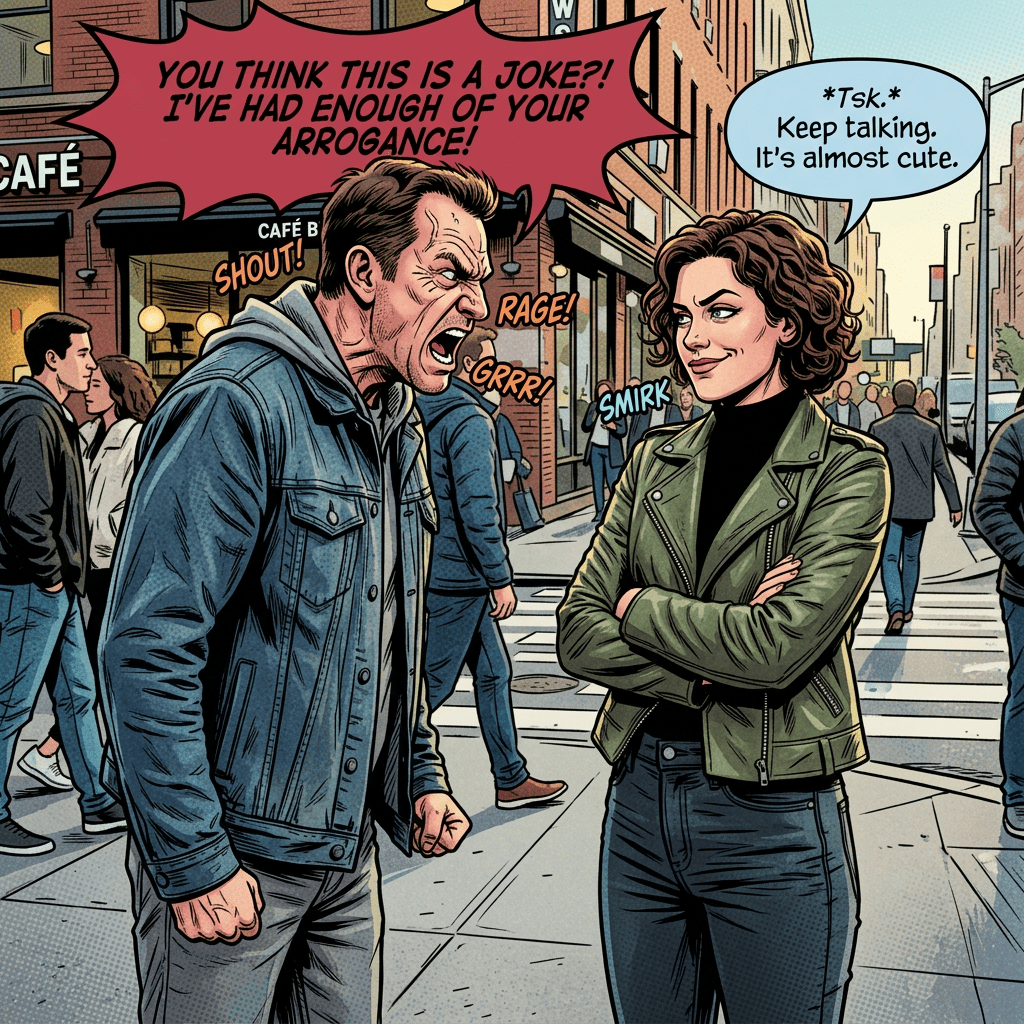
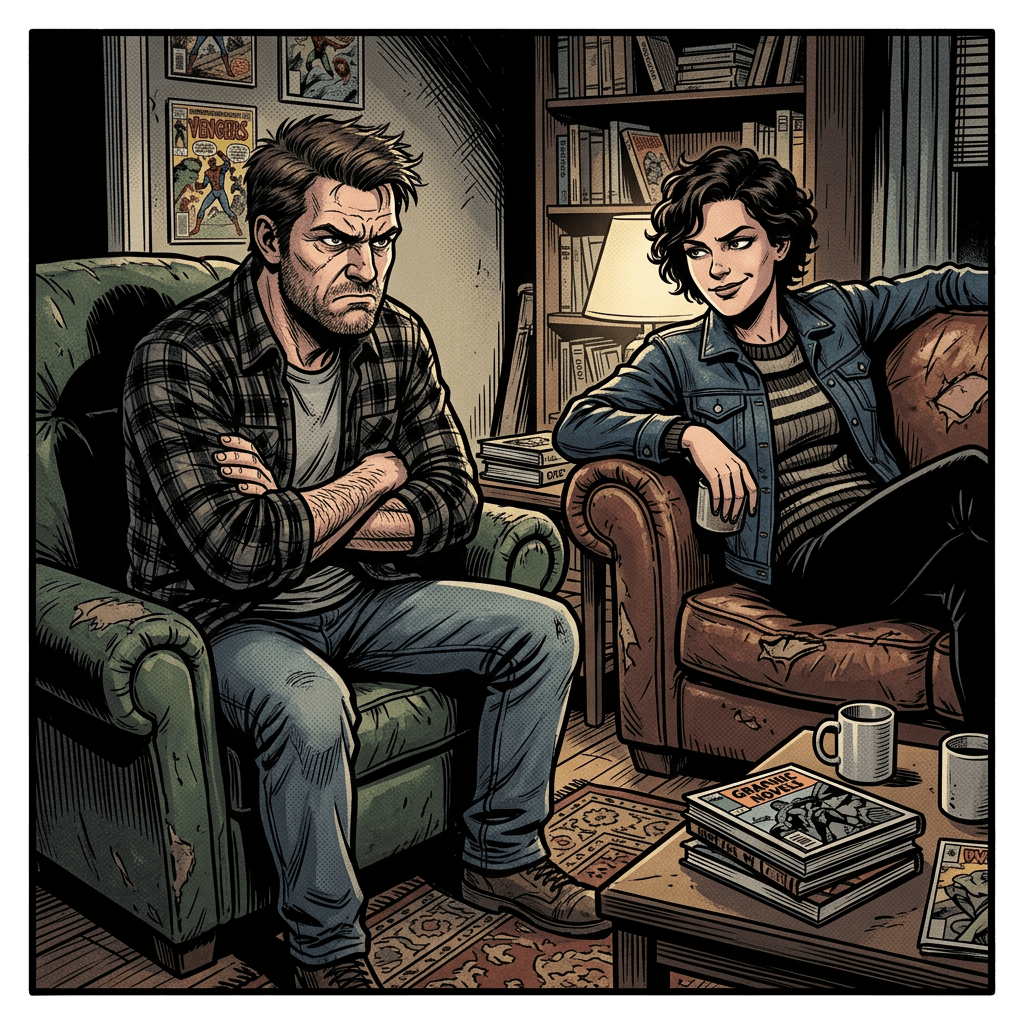

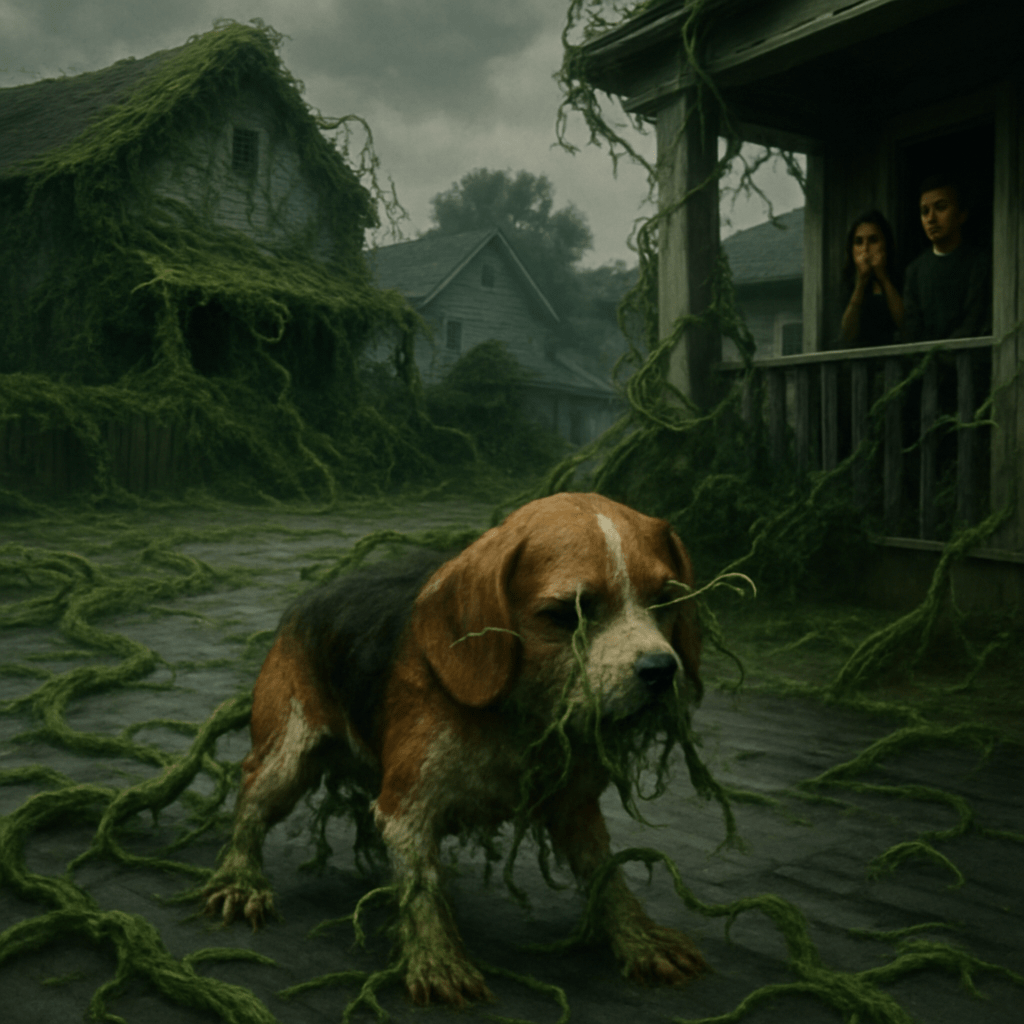

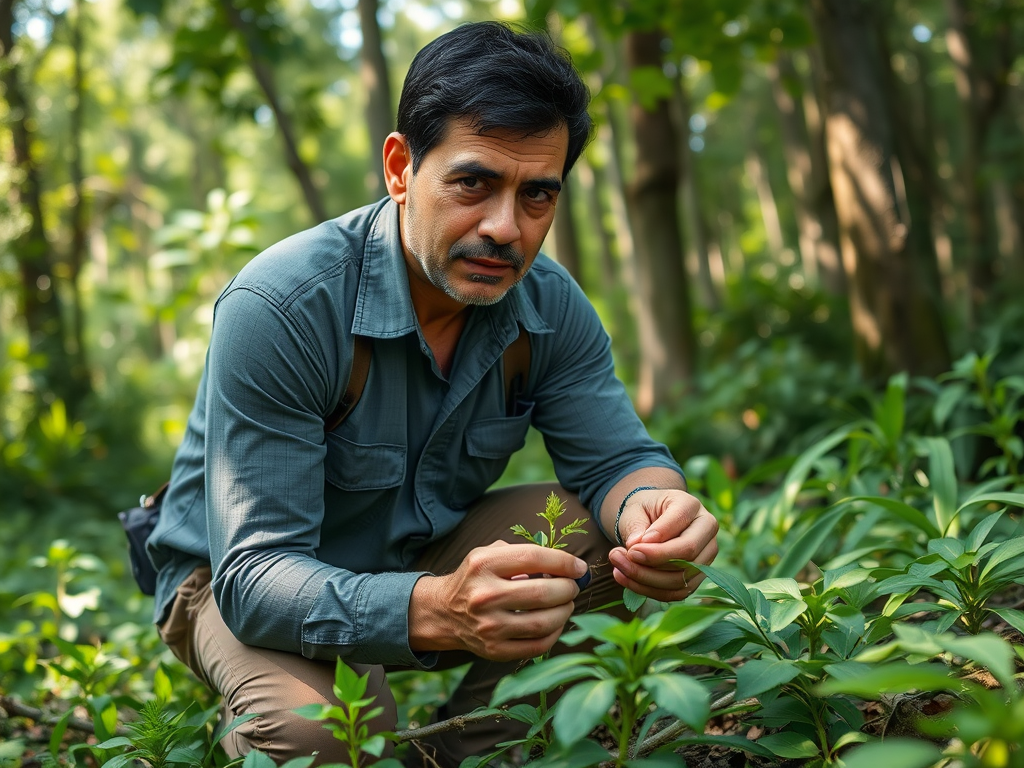



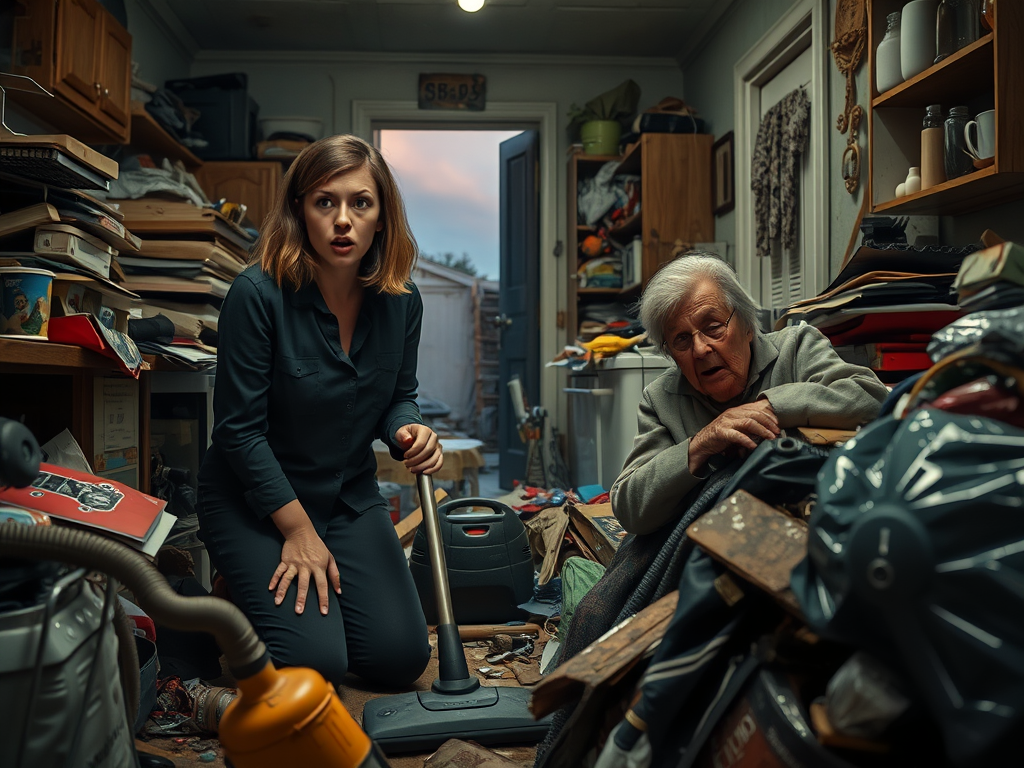

You must be logged in to post a comment.